Pink Addresses Controversy Surrounding Macklemore Onstage Comments Regarding the Israel-Hamas Conflict

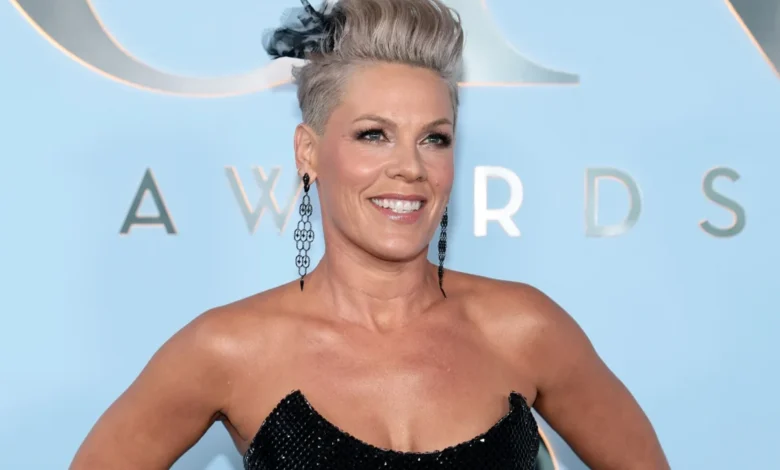
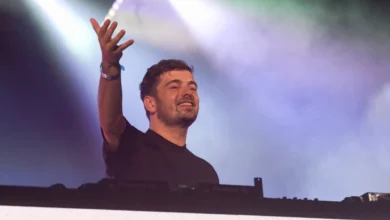
Pop icon Pink has issued a comprehensive statement clarifying her recent social media activity and her stance on the ongoing Israel-Hamas conflict, following a heated public discourse sparked by Macklemore’s recent performances. The controversy originated during the September 4 and 5 stops of Ed Sheeran’s "Loop Tour" at MetLife Stadium in East Rutherford, New Jersey, where Macklemore—the opening act—utilized his platform to call for a "Free Palestine."
The situation escalated rapidly when Pink, who has been a prominent voice in the music industry for over two decades, reshared a post from the advocacy group StopAntisemitism. The original post criticized Macklemore’s rhetoric and explicitly called for his removal from the remainder of Sheeran’s stadium tour. Pink’s amplification of this content, combined with her subsequent interactions on social media, drew immediate scrutiny from both fans and critics, leading the singer to provide a more nuanced explanation of her position on September 11.
Chronology of the Dispute
The sequence of events began in early September during the New Jersey tour dates. Macklemore, known for his vocal political activism, incorporated pro-Palestine messaging into his set. These remarks were met with mixed reactions from the stadium crowds, but they triggered a sharp rebuke from advocacy groups, which was subsequently shared by Pink.
By mid-week, the incident had gained significant traction on platforms such as X (formerly Twitter) and Instagram. On Friday, September 11, Pink posted a multi-part statement on Instagram. She admitted that her initial method of engaging with the controversy—sharing a post she had not written and engaging in "snarky" online behavior—was an inadequate way to address a complex geopolitical crisis. She expressed regret for the "cheap and fast" nature of social media discourse, noting that a repost does not capture the depth of her personal convictions.
The Singer’s Clarification and Personal Stance
In her statement, Pink, who is Jewish, addressed the assumptions made about her political leanings. She emphasized that she has never acted as a spokesperson for any government, including Israel, and explicitly stated that she views Hamas as a terrorist organization. Her central message focused on the protection of innocent life, asserting that the death of a child is a tragedy regardless of nationality or political affiliation.
"I have grieved every one of them, on both sides of that fence," she stated. "I didn’t do it from behind a screen; I went to those children and held them." The singer pointed to her long-standing history as a UNICEF ambassador, a role that has involved direct fieldwork in conflict zones, to substantiate her claim that her commitment to child welfare transcends regional borders.
She further addressed the specific incident involving Macklemore, referencing a 2014 event in which the rapper wore a costume that was widely denounced as antisemitic. Although Macklemore issued an apology at that time, Pink noted that the recent events at MetLife Stadium brought up past frustrations. Her contention was not that Macklemore should be silenced, but that his onstage commentary—coupled with the visual imagery displayed during his set—created an environment that made Jewish audience members feel unsafe and marginalized.
Reactions and External Advocacy
The controversy has drawn in the Israeli-American Council (IAC), which has taken formal steps to address the singer’s performance. The organization has launched an online petition demanding that Macklemore be removed from the final eight stops of the Ed Sheeran tour, which are scheduled to conclude in early November. The IAC’s involvement highlights the intensifying pressure on touring artists to navigate the increasingly polarized political climate.

Macklemore, for his part, has remained steadfast in his messaging. In response to the backlash, the rapper shared a video of his speech from the September 5 performance on X, accompanied by a caption stating, "Wanting all humans to be treated equal should never be controversial." His refusal to retract his comments suggests that the tension between his advocacy and the concerns of other public figures will likely remain a fixture of the current touring cycle.
Broader Implications for Artists and Industry
The exchange between Pink and Macklemore serves as a case study for the challenges artists face when balancing personal political expression with the realities of large-scale, corporate-sponsored stadium tours. In the digital age, artists are increasingly expected to take stances on complex global events. However, as Pink noted, the medium of social media often strips these issues of their necessary nuance.
Industry analysts observe that this incident reflects a broader trend: the "politicization of the arena." As stadiums become focal points for political discourse, promoters and management teams are forced to grapple with the potential for friction between opening acts and headliners, or between performers and their diverse fanbases. The debate over whether an artist’s platform should be used for political messaging or strictly for entertainment has intensified, with stakeholders on both sides citing the right to free speech versus the need for professional decorum and inclusivity.
Furthermore, the role of advocacy groups in touring logistics has become more pronounced. By mobilizing fans and creating petitions, these organizations are exerting tangible influence on concert programming. Whether this leads to a shift in how artists approach their sets or whether it results in more rigorous vetting processes remains to be seen.
Historical Context and Professional Responsibility
The timing of this discourse—coinciding with the 25th anniversary of the September 11 attacks and the onset of the Jewish high holy days, including Rosh Hashanah—has amplified the emotional weight of the debate. For many, the intersection of these dates with the ongoing conflict in the Middle East has heightened sensitivity toward rhetoric surrounding war and terrorism.
Pink’s reflection on the anniversary served as a bridge between her personal identity as a Jewish mother and the broader global context. Her decision to move the conversation from "snarky memes" to a detailed, long-form statement marks an attempt to regain control of her narrative. By explicitly stating that she does not want to see other artists fired or silenced, she has attempted to pivot the focus away from a call for censorship and toward a dialogue about the impact of public speech on the lived experience of minority groups.
Future Outlook for the Loop Tour
As the "Loop Tour" continues, the attention of the public and the media remains fixed on whether these tensions will subside or flare up again. The incident underscores the fragility of public discourse when high-profile individuals engage in conflict in front of audiences of tens of thousands.
For Pink, the goal appears to be moving past the social media cycle and back to her advocacy work, while for the industry at large, the controversy remains a reminder of the heightened expectations placed upon celebrities. As artists continue to leverage their massive followings to highlight humanitarian crises, the friction between competing perspectives is unlikely to dissipate. The case of Pink and Macklemore provides a stark illustration of how the digital public square has transformed private artistic disagreement into a matter of significant public and organizational concern.
As the calendar moves toward November and the tour approaches its conclusion, the industry will be watching closely to see if other artists adopt a more cautious approach to political commentary or if the trend of utilizing the concert stage as a soapbox for international affairs continues to gain momentum. Ultimately, the episode serves as a testament to the power of the platform and the heavy burden of responsibility that comes with addressing the world’s most intractable conflicts before a global audience.