Elon Musk’s AI-Generated "Odyssey" Sparks Hollywood Backlash and Debate on Artistic Integrity

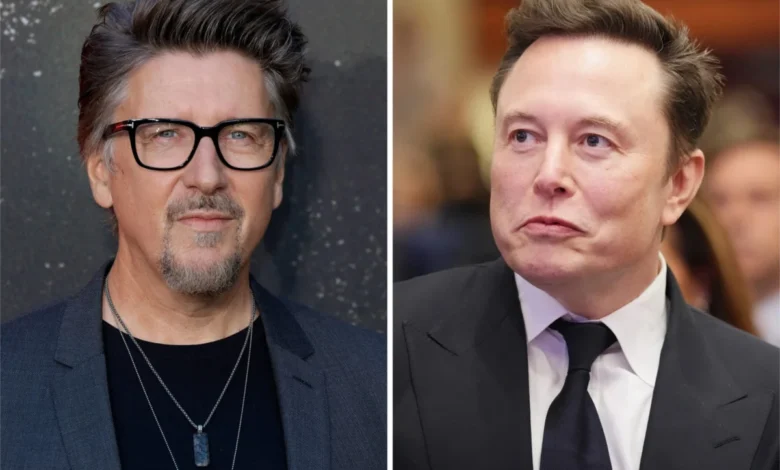
Elon Musk’s ambitious declaration that his artificial intelligence tool, Grok, will produce a “historically accurate and true to the art of Homer” full-length film adaptation of Homer’s epic poem, "The Odyssey," before the end of the year has ignited a firestorm of controversy within Hollywood and the broader cultural landscape. This bold assertion, coupled with the release of a three-minute AI-generated scene from the poem, has drawn sharp criticism from prominent figures in the film community, most notably director Scott Derrickson, known for his work on "Doctor Strange" and "The Black Phone." The controversy highlights a deepening divide over the role of AI in creative endeavors and the underlying principles of artistic interpretation.
The saga began when Musk, a newly minted trillionaire and CEO of multiple high-profile technology companies including Tesla and SpaceX, publicly stated his intention to leverage Grok for a definitive cinematic rendition of "The Odyssey." This initiative appears to be directly linked to his ongoing, vocal opposition to Christopher Nolan’s recent, highly successful film adaptation of the same classical epic. Musk’s critique of Nolan’s "The Odyssey" has been rooted in his perception of what he terms "woke" casting decisions, which he believes undermine the historical and artistic integrity of the source material.
A Clash of Titans: Musk vs. Nolan and the AI Intervention

Musk’s critique of Nolan’s "The Odyssey" predates its release. In March, he publicly accused Christopher Nolan of being an "anti-White racist" for casting Academy Award-winning actress Lupita Nyong’o in the pivotal role of Helen of Troy. Musk contended that Nolan’s casting choice was motivated by a desire to secure prestigious awards, rather than a genuine commitment to historical accuracy or artistic merit. He further asserted that Nolan had "lost his integrity" and that the casting was an "insult" to Homer, the ancient Greek poet credited with authoring "The Odyssey."
The criticism did not stop with Nyong’o’s casting. Musk also targeted actor Elliott Page, who portrays Sinon in Nolan’s film, by reposting comments that disparaged the transgender actor’s masculinity. This pattern of commentary suggests a broader ideological stance underpinning Musk’s objections, framing them as a defense of traditional narratives and identities against perceived progressive influences in media.
These criticisms, however, seem to have had little impact on the commercial success of Nolan’s "The Odyssey." The film, starring Matt Damon, has been a box office phenomenon, grossing an impressive $264 million worldwide since its release. Furthermore, it continues to draw audiences, with screenings selling out months in advance, indicating a strong public reception that transcends the debates surrounding its casting.
Hollywood’s Response: Directors Speak Out

The artistic implications of Musk’s AI-driven project have not gone unnoticed by established filmmakers. Scott Derrickson, a respected director in the genre and supernatural thriller space, did not mince words when addressing Musk directly on X, the social media platform formerly known as Twitter, which Musk himself owns. In a strongly worded post, Derrickson stated, "Clearly @elonmusk doesn’t know shit about cinema & he stopped reading in his 20s. His opinions on art are worthless." This direct rebuke from a peer highlights a significant segment of the film industry that views Musk’s pronouncements on cinema and art with skepticism, if not outright disdain.
Derrickson’s statement reflects a common sentiment within filmmaking circles: that artistic interpretation is a nuanced and complex process, not reducible to algorithmic accuracy or historical fidelity in a rigid, literal sense. The art of filmmaking, particularly in adapting classical literature, often involves translation, reinterpretation, and the injection of contemporary perspectives to resonate with modern audiences. Musk’s insistence on a singular, "historically accurate" version, to be dictated by an AI, is seen by many as fundamentally misunderstanding or devaluing the creative process.
The Rise of AI in Creative Fields: A Shifting Landscape?
Elon Musk’s foray into AI-generated filmmaking is part of a larger, accelerating trend of artificial intelligence making inroads into traditionally human-dominated creative fields. AI tools are increasingly capable of generating text, images, music, and even video, prompting both excitement about new possibilities and significant anxiety about the future of creative professions.

Grok, Musk’s AI model, has been positioned as a competitor to other advanced AI systems, with a particular emphasis on real-time information processing and an often provocative, opinionated output. The creation of a full-length film, especially one as culturally significant as "The Odyssey," represents a monumental leap in AI’s creative capabilities, if successful.
Historical Context and Artistic Interpretation of "The Odyssey"
Homer’s "The Odyssey" is one of the foundational works of Western literature, chronicling the long and perilous journey of the Greek hero Odysseus as he strives to return home after the Trojan War. The poem has been translated, adapted, and reinterpreted countless times throughout history, each iteration reflecting the cultural and artistic sensibilities of its era. From ancient Greek plays and Roman adaptations to modern novels, ballets, and films, "The Odyssey" has proven remarkably adaptable, its core themes of homecoming, perseverance, and the human condition resonating across millennia.
The concept of "historical accuracy" in the context of a mytho-historical epic like "The Odyssey" is itself a subject of debate. While Homer’s work draws upon a Bronze Age setting, it is imbued with mythological elements, divine intervention, and poetic license. Scholars and artists have long grappled with the balance between historical plausibility and the fantastical elements that define the epic. Musk’s assertion that an AI can achieve definitive "historical accuracy" in such a work raises questions about how such accuracy would be defined and measured, particularly when the source material itself is a blend of history and legend.

The "Woke" Debate and Cultural Commentary
Musk’s recurring use of the term "woke" in his critiques of contemporary media reflects a broader cultural and political discourse. The term, initially used to describe awareness of social injustices, has been co-opted and weaponized by critics who perceive progressive ideologies as compromising artistic integrity or historical authenticity. Musk’s targeting of Nolan’s "The Odyssey" for its casting choices aligns with a segment of public opinion that feels alienated by what they see as an overemphasis on diversity and inclusion in media, at the expense of perceived traditional values.
His criticism of "Barbie" for its feminist themes and Disney’s "Snow White" reboot, starring Rachel Zegler, further illustrates this pattern. These criticisms suggest a broader agenda to push back against what Musk perceives as a pervasive "woke" agenda in Hollywood and popular culture. The success of "The Odyssey," despite these criticisms, indicates that audience reception is not monolithic and that there is a significant appetite for diverse storytelling.
Implications for the Future of Filmmaking and AI

The implications of Musk’s AI-driven film project extend far beyond a single adaptation of "The Odyssey." If Grok or similar AI tools can indeed produce compelling, historically accurate, and artistically sound feature films, it could fundamentally alter the economics and creative processes of the film industry.
Potential impacts include:
- Democratization of Filmmaking: AI could lower the barriers to entry for aspiring filmmakers, allowing individuals or small teams to create high-quality content without the need for massive budgets or large crews.
- Disruption of Traditional Roles: The roles of screenwriters, directors, actors, and even visual effects artists could be significantly impacted as AI becomes more proficient in generating cinematic content.
- Ethical and Legal Challenges: Questions surrounding copyright, authorship, the authenticity of AI-generated art, and the potential for AI to perpetuate biases will become increasingly pressing.
- Re-evaluation of Artistic Value: The success of AI-generated art could force a re-evaluation of what constitutes artistic merit, creativity, and human expression.
However, the counterarguments are also significant. Many argue that art is inherently a human endeavor, driven by emotion, lived experience, and subjective interpretation, qualities that AI currently lacks. The "soul" or "intent" behind a work of art, often attributed to the human creator, is seen as irreplaceable. Derrickson’s critique of Musk points to this very distinction, suggesting that understanding cinema requires a depth of human experience and artistic sensibility that an algorithm, however advanced, cannot replicate.
Looking Ahead: A Divided Cultural Landscape

As Elon Musk continues to champion his AI-generated vision of "The Odyssey," the debate over artistic integrity, historical accuracy, and the role of technology in creativity will undoubtedly intensify. The film community, represented by voices like Scott Derrickson, remains largely skeptical of AI’s capacity to replicate the nuanced and deeply human process of filmmaking. Meanwhile, Musk’s considerable influence and technological prowess suggest that his endeavors in this space will continue to push boundaries, challenging established norms and forcing a broader societal conversation about the future of art and media. The outcome of this cultural clash will likely shape not only how we consume stories but also how we define creativity itself in the coming decades.