Matthew McConaughey Leads the Charge for Likeness Protection Amidst AI Revolution in Hollywood

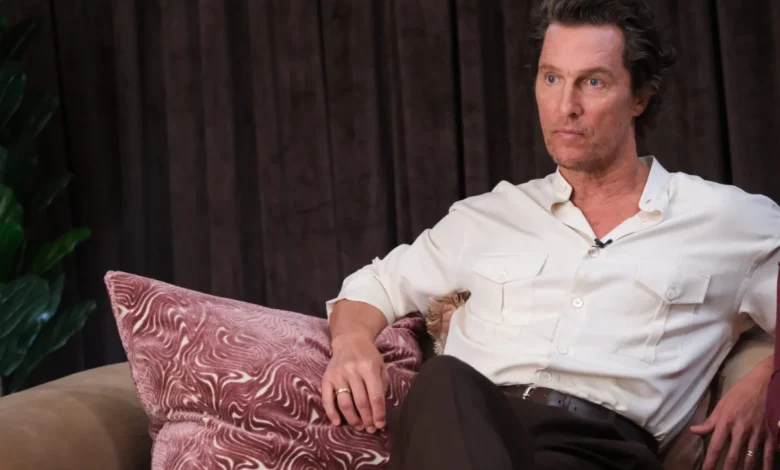
Matthew McConaughey, an actor synonymous with a laid-back, confident charm often encapsulated by his iconic phrase "Alright, alright, alright," recently shed his breezy demeanor to deliver a stark warning about the encroaching reality of artificial intelligence in the entertainment industry. During a CNN town hall discussion, a University of Texas student’s question about AI replacing actors prompted a grave and uncharacteristically serious response from the Oscar winner. His direct pronouncement – “It’s not coming. It’s here.” – signaled a profound shift in perspective, moving beyond mere speculation to an urgent call for action.
This pivotal moment underscores a rapidly accelerating concern within Hollywood: the profound and multifaceted impact of AI on the creative workforce, intellectual property, and the very definition of performance. McConaughey, speaking alongside fellow actor Timothée Chalamet, emphasized the futility of passive resistance. "Don’t deny it," he urged, stressing that "it’s not enough to sit on the sidelines and make the moral plea that this is wrong. That’s not going to last." His message was clear: adaptation and proactive measures are essential.
The "Own Yourself" Mandate: A Proactive Stance
McConaughey’s advice to creators facing this technological wave is both pragmatic and empowering: "Own yourself. Your voice, your likeness, whatever you’ve got—own yourself. So when it comes—not if it comes—no one can steal you.” This philosophy isn’t just rhetoric; it’s a strategy he has already implemented. As first reported by The Wall Street Journal, McConaughey has meticulously secured a series of trademarks encompassing his distinctive image and signature expressions, including his famous "alright, alright, alright." This legal fortification aims to establish a clear perimeter around his unique identity, making it significantly harder for AI entities or malicious actors to replicate or exploit his persona without explicit permission.
“My team and I want to know that when my voice or likeness is ever used, it’s because I approved and signed off on it,” he affirmed in an earlier statement. This isn’t merely a quest for financial gain from a catchphrase; it’s a strategic move to maintain agency in an industry rapidly embracing automation. The proliferation of AI-generated replicas of public figures, from digital doubles to synthetic voices, represents a tangible threat to the control artists have over their own work and identity. The case of TikTok star Khaby Lame, who reportedly secured a nearly billion-dollar deal to protect his likeness, highlights the burgeoning economic value and the critical need for safeguarding personal brands in the AI era.
A Chronology of AI’s Ascent in Entertainment
The journey of AI from a niche technological curiosity to a central industry concern has been swift and transformative.
- Early 2000s: The first noticeable integration of digital technologies to manipulate human likeness began with advanced CGI for de-aging actors or creating posthumous performances. Films like The Lord of the Rings trilogy showcased nascent digital character creation, hinting at future possibilities.
- 2010s: CGI capabilities rapidly advanced, making de-aging and digital doubles more convincing. The use of facial capture and motion capture became standard. Films like Tron: Legacy (2010) and Rogue One: A Star Wars Story (2016) famously featured digitally recreated young versions of actors or posthumous performances, sparking early ethical debates.
- Mid-2010s to Early 2020s: The rise of deepfake technology, initially a consumer-level novelty, demonstrated the alarming potential for realistic, AI-generated video and audio manipulation. This period saw a surge in non-consensual deepfakes, raising alarms about misinformation and reputational damage.
- Late 2022 – Present: Generative AI models (text-to-image, text-to-video, voice cloning) became widely accessible and incredibly sophisticated. Tools capable of generating realistic human faces, synthesizing voices with uncanny accuracy, and even creating entire video sequences from text prompts emerged, moving AI from post-production enhancement to content creation.
- 2023 – The SAG-AFTRA Strike: The Writers Guild of America (WGA) and Screen Actors Guild – American Federation of Television and Radio Artists (SAG-AFTRA) strikes brought AI to the forefront of labor disputes. A central point of contention for actors was the studios’ alleged desire to scan background performers for a single day’s pay and then use their digital likenesses in perpetuity without further compensation or consent. While a deal was eventually reached that included some protections, it highlighted the urgent need for clear guidelines and compensation models for AI-generated likenesses. The agreement included provisions requiring consent for the creation and use of digital replicas and outlining compensation for their reuse.
- Present Day: The film industry finds itself at a tipping point where the digital and physical realms are increasingly indistinguishable. From digitally de-aging legendary stars for commercials (such as the Jurassic Park actors in an Xfinity Super Bowl ad) to crafting entirely synthetic voices capable of conveying perfect emotion in any language, AI has moved decisively from the laboratory to the mainstream. This rapid integration necessitates robust protective measures and a re-evaluation of existing legal and ethical frameworks.
Supporting Data: The Expanding AI Frontier in Entertainment
The economic impetus behind AI’s integration into Hollywood is undeniable. The global artificial intelligence in media and entertainment market size, valued at approximately USD 6.2 billion in 2023, is projected to reach over USD 40 billion by 2032, exhibiting a compound annual growth rate (CAGR) of over 20%. This explosive growth is driven by AI’s potential to streamline production, reduce costs, personalize content, and create novel artistic possibilities.
Key areas of AI application include:
- Content Creation: AI tools for scriptwriting, storyboarding, character design, and even generating music scores are becoming more prevalent.
- Post-Production: AI-powered editing, visual effects, color grading, and sound mixing offer unprecedented efficiency and creative control.
- Personalization and Distribution: AI algorithms recommend content, optimize marketing campaigns, and even create personalized narratives for viewers.
- Digital Humans and Avatars: The ability to create hyper-realistic digital doubles or entirely synthetic virtual actors reduces the need for human talent in certain roles, especially for background or non-speaking parts, and for content localization.
However, this economic promise is shadowed by significant concerns regarding intellectual property, fair compensation, and the displacement of human artists. A recent survey by the entertainment industry union IATSE found that a majority of its members were "very concerned" about AI’s impact on job security and fair wages.
Official Responses and Legal Labyrinths
The rapid evolution of AI has outpaced existing legal frameworks, creating a murky landscape for intellectual property rights, particularly concerning individual likeness and voice.
- "Right of Publicity": In the U.S., the "right of publicity" protects individuals from the unauthorized commercial use of their name, likeness, or other identifying aspects. However, the scope and application of this right vary significantly by state and are often challenged by the nuances of AI-generated content, especially when it’s not explicitly selling a product. Is an AI-generated deepfake of a celebrity in a non-commercial viral video a violation? The legal answers are still being forged.
- Trademarking as a Defense: McConaughey’s strategy of trademarking his likeness and expressions is a proactive measure to strengthen his legal position. Trademarks provide exclusive rights to use a specific mark (like a phrase or image associated with an individual) in commerce. This makes it easier to pursue legal action against unauthorized commercial use, regardless of whether the content is AI-generated or traditional. It serves as a clear declaration of ownership.
- Platform Policies: Recognizing the challenge, major platforms like YouTube are implementing safeguards. YouTube, for instance, has been rolling out likeness-detection tools designed to help creators identify and combat deepfakes and unauthorized uses of their image or voice. These tools are crucial for content moderation and for empowering individual creators to protect their digital identities. However, the effectiveness of these tools against increasingly sophisticated AI remains an ongoing battle, and legal recourse can be costly and protracted.
- Legislative Efforts: Lawmakers at both state and federal levels are beginning to grapple with the need for updated legislation. States like California have enacted specific laws regarding deepfakes in political campaigns, and there are ongoing discussions about federal legislation to establish clearer protections for individual likeness rights in the digital age. Yet, drafting laws that effectively address the rapidly changing technological landscape without stifling innovation is a complex endeavor.
Broader Impact and Implications: Redefining Creativity and Performance
McConaughey’s conviction that artists cannot solely rely on "moral outrage or future legislation" points to a deeper truth: the responsibility to adapt and protect oneself now rests heavily on the individual. “When it starts to trespass, you’ll at least have your own agency,” he explained. “They’re going to have to come to you and ask, ‘Can I?’ Or they’re going to breach, and then you’ll have the chance to say yes for this amount… or no.” This agency, secured through proactive measures like trademarking, becomes the primary defense against unauthorized exploitation.
The long-term implications for the entertainment industry are vast and multifaceted:
- The Future of Acting: Will human actors become directors of their own digital selves? McConaughey even speculated that within five to ten years, awards shows could feature a "Best AI Actor" category, acknowledging a separate, legitimate space for synthetic performances. This raises fundamental questions about the nature of performance, authenticity, and the value of human artistry.
- Intellectual Property and Ownership: The battle over who owns the "performance" when AI is involved is intensifying. Is it the original actor whose likeness was scanned? The AI developer? The director who prompted the AI? Clear legal frameworks are desperately needed to define ownership, authorship, and compensation in this new creative paradigm.
- Ethical Dilemmas: Beyond legalities, the ethical landscape is fraught. The potential for AI to create content that misrepresents individuals, perpetuates stereotypes, or even generates non-consensual explicit material demands careful consideration and robust safeguards. The ability to resurrect deceased actors or create younger versions of living ones also raises questions about consent, legacy, and the boundaries of artistic license.
- The Creative Economy: While AI offers new tools, it also threatens established roles. Voice actors, stunt performers, background artists, and even leading actors could see their work augmented or, in some cases, replaced by AI. The challenge is to find a balance where AI serves as a powerful creative assistant rather than a wholesale replacement for human talent, ensuring that the benefits of technological advancement are shared equitably across the creative ecosystem.
Timothée Chalamet, representing a younger generation of artists, echoed McConaughey’s concerns while offering a nuanced perspective. He described the situation as a "dual responsibility" – established stars must use their influence to ensure opportunities remain for human performers, while the younger generation will ultimately shape how AI is integrated. “The dreamer in me wants to enable a 19-year-old to produce something they couldn’t otherwise,” Chalamet admitted, recognizing AI’s potential to democratize creativity. Yet, he emphasized the critical need to be “fiercely protective of actors and artisans.” This sentiment encapsulates the ongoing tension: embracing innovation while safeguarding the human element that has always been the heart of storytelling.
As Hollywood navigates this transformative era, the proactive measures taken by figures like Matthew McConaughey serve as a powerful blueprint. Their actions highlight the urgent need for artists, legal experts, and industry stakeholders to collaborate on establishing clear boundaries, ethical guidelines, and robust legal protections to ensure that the future of entertainment remains both innovative and equitable for human creators. The era of "alright, alright, alright" as a casual mantra may be over; it has been replaced by a more serious call to action: "own yourself, or risk being owned."