OLM Pioneers AI Integration in Anime Production to Streamline Coloring and Creative Workflows

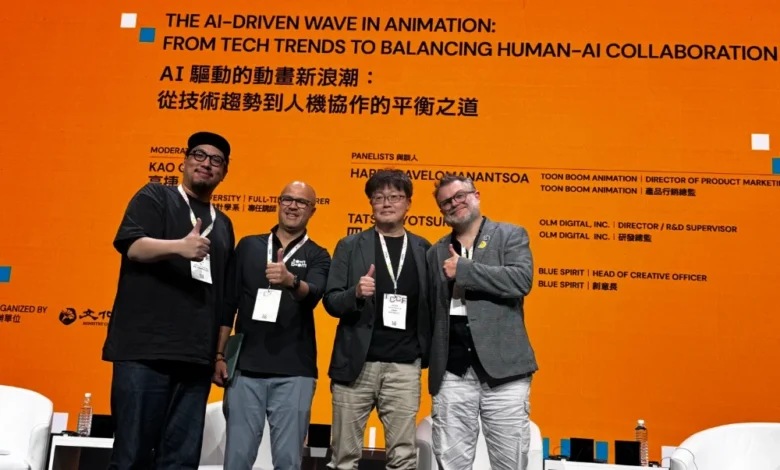
The landscape of Japanese animation is undergoing a significant technical transformation as OLM, the powerhouse studio behind the global phenomenon Pokemon, introduces a specialized AI coloring tool designed to augment, rather than replace, human artistry. Revealed at the Taiwan Creative Content Fest (TCCF) in Taipei, this innovation marks a pivotal shift in how traditional animation houses approach generative technologies. By leveraging a system that requires only three hand-painted frames to learn the specific aesthetic and color palette of a production, OLM is addressing the industry’s persistent labor bottlenecks while maintaining the high standards expected by global audiences.
The Genesis of the ANIMINS Project
The development of this tool was the culmination of a 15-month research initiative known as ANIMINS. Conducted under the auspices of GENIAC—a generative AI program backed by Japan’s Ministry of Economy, Trade and Industry (METI)—the project sought to integrate machine learning into the rigid, high-pressure workflows of professional animation. Unlike general-purpose generative AI models that rely on massive, often controversial datasets scraped from the internet, the OLM tool operates on a closed-loop system.
Yotsukura Tatsuo, OLM Digital board director and the project’s lead, emphasized that the system does not function as a traditional "generative" engine in the commercial sense. Instead, it acts as a pattern-recognition and execution assistant. Once an artist provides three hand-painted reference frames, the AI analyzes line weights, shading nuances, and color signatures. The system achieves a baseline proficiency in approximately 90 seconds, subsequently processing each additional frame in about 15 seconds. This "on-the-spot" training ensures that the model remains tethered to the specific visual identity of the project, eliminating the risk of infringing on external works or compromising the intended style.
Industry Context and the TCCF Showcase
The Taiwan Creative Content Fest (TCCF), held from November 6 to 9 at the Taipei Nangang Exhibition Center, provided a high-profile venue for these disclosures. The timing was particularly poignant as OLM simultaneously maintained a presence at the 2026-27 Pokemon Asia Championship Series, highlighting the studio’s massive output, which ranges from children’s staples like Beyblade and Hanakappa to critically acclaimed adult-oriented series such as The Apothecary Diaries.
For a Japanese animation company, maintaining an in-house R&D division is a rarity. OLM’s commitment to internal technological development is reflective of a broader industry need to balance artistic integrity with the sheer volume of production required to satisfy global streaming platforms and broadcast networks. OLM employs approximately 600 staff across Japan, Malaysia, Thailand, and the United States, providing a diverse testbed for these new digital tools.
Tackling the Coloring Bottleneck
The demand for efficiency in anime is driven by the labor-intensive nature of hand-drawn animation. In traditional workflows, coloring each frame—a process often outsourced to specialized studios—is a significant time-sink. Proof-of-concept data shared by Yotsukura suggests that OLM’s tool can reduce the coloring workload by approximately 30%. While this introduces a secondary need for human "checkers" to review the AI-assisted output, the net gain in production speed is substantial.
Parallel to OLM’s efforts, Canadian animation software giant Toon Boom is developing similar capabilities within its Ember AI suite. Harry Ravelomanantsoa, product marketing director at Toon Boom, noted that the beta phase for their coloring tools is nearing completion, with in-betweening capabilities expected to follow shortly. Test results from a Manila-based studio using Toon Boom’s technology were striking: a 90-second to two-minute scene that previously required 15 hours of manual labor was completed in just two to three hours. Such efficiency gains suggest that the industry is approaching a tipping point where digital assistance becomes a baseline requirement for competitive production.
Navigating the 80% to 100% Quality Gap
Despite these advancements, the transition to AI is fraught with technical and philosophical hurdles. Yotsukura compared the current state of AI in animation to the "gacha" experience—a gamble where the machine might provide an 80% accurate result, but the final 20% required for professional standards remains elusive.
"Raising [quality] from there to 90 or 100% turns into work so hard it can make you heartsick," Yotsukura explained. In professional animation, subtle shifts in RGB values—often imperceptible to a casual viewer—can ruin the continuity of a scene. Consequently, OLM maintains that the creative vision must remain strictly with the human artist. The AI is intended to handle mechanical, repetitive tasks, allowing animators to dedicate their time to high-level artistic direction.
Contrasting Perspectives: The Global AI Divide
The adoption of these tools is not uniform across the global animation sector. During a panel discussion at TCCF, Charles Beirnaert, Chief Creative Officer of Blue Spirit—the studio behind Netflix’s Blue Eye Samurai—offered a more cautious perspective. Beirnaert noted that for their Netflix-commissioned projects, the use of AI is strictly prohibited.
This policy aligns with Netflix’s 2025 production guidelines, which mandate full disclosure and written approval for any generative AI use. While Blue Spirit has experimented with AI for pre-visualization and modeling on non-Netflix projects—demonstrating that a team of 20’s three months of work could be condensed into days by one person—the studio maintains a firm stance against replacing human animators. For Beirnaert, the value of the animation lies in the human touch, and he remains skeptical of replacing the workforce entirely, stating that if the day comes where animators are no longer needed, he will pursue a different profession.
Future Implications and Strategic Shift
The divergence between OLM and Blue Spirit illustrates a split between Eastern and Western approaches to production. For Japanese studios, where the budget is often fixed at the start of production, AI is viewed as a means to expand creative freedom rather than a tool to slash costs. Yotsukura envisions a future where AI agents assist in knowledge management—recalling a director’s intent for a series that has run for decades, or managing complex licensing requirements for secondary revenue streams.
This transition is being likened to the introduction of 3DCG (three-dimensional computer graphics) into anime two decades ago. Initially met with resistance and skepticism, 3DCG is now an inextricable part of the industry’s toolkit. Yotsukura believes that AI adoption will occur at an accelerated pace because the baseline quality of current tools is already remarkably high.
Ultimately, the consensus among industry leaders at TCCF is that "not using AI" is no longer a viable long-term strategy. As the industry evolves, the relationship between human creativity and mechanical automation will likely resemble a "pair of wheels" driving the industry forward. OLM’s experiments with AI-assisted coloring represent a pragmatic step toward this future: one that prioritizes the preservation of the animator’s vision while utilizing modern technology to alleviate the crushing labor requirements that have defined the medium for generations. The focus is shifting from "how many people can we replace" to "what new creative possibilities can we unlock" with the aid of intelligent, production-integrated software.