Larry Ellison Cancels Planned Multi-Billion-Dollar Sale of Oracle Stock Amid Market Volatility and Major Strategic Shifts

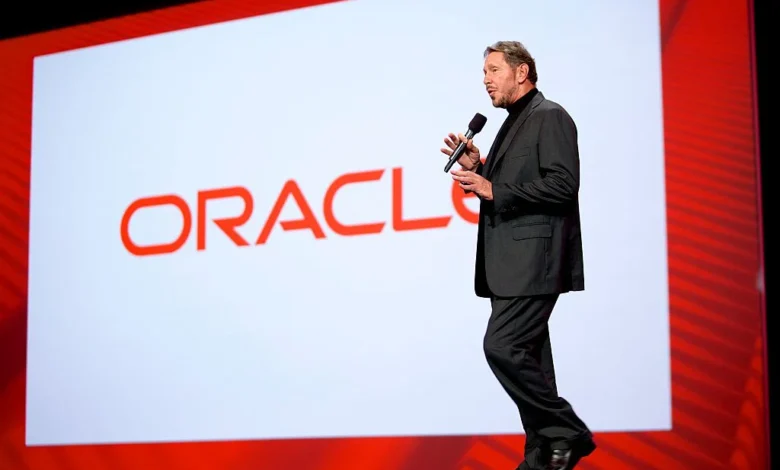
Oracle co-founder and executive chairman Larry Ellison has officially canceled a previously scheduled divestment of his company stock, reversing a move that would have seen the technology billionaire offload approximately 50 million shares valued at an estimated $7.5 billion. The decision, which was disclosed by the corporate enterprise software giant on a Saturday, eliminates a massive looming insider sale that had recently drawn significant attention from financial analysts, institutional investors, and market observers alike.
According to initial regulatory filings submitted to the United States Securities and Exchange Commission, the planned stock sale was structured under a pre-arranged trading plan. However, in its weekend announcement, Oracle confirmed that the entire transaction has been scrapped. The technology conglomerate explicitly noted that no shares were ever sold under the framework of the canceled plan, and further reassured stakeholders that Ellison currently harbors no alternative or secondary intentions to sell any portion of his substantial equity holding in the firm.
The abrupt cancellation comes at a crucial juncture for Oracle. The company’s stock performance has faced headwinds over the course of the year, declining roughly 22 percent since the beginning of January. While corporate leadership has remained largely tight-lipped regarding the precise motivations driving Ellison’s sudden reversal, financial experts and market analysts are examining the broader economic, strategic, and personal portfolio variables that may have influenced the billionaire’s decision to retain his equity stake.
Background and Chronology of the Canceled Transaction
To understand the weight of Ellison’s recent decision, it is necessary to examine the timeline of events leading up to the announcement. Ellison, who serves as Oracle’s executive chairman and chief technology officer, remains one of the world’s wealthiest individuals, deriving the vast majority of his net worth from his foundational stake in the database software giant he co-founded in 1977.
Months prior to the cancellation notice, regulatory filings revealed that Ellison intended to exercise and sell a block of 50 million shares. In the context of Oracle’s market capitalization, a transaction of that magnitude—valued at approximately $7.5 billion based on prevailing market valuations at the time—represented a substantial insider movement. Pre-arranged trading plans, commonly known as Rule 10b5-1 plans, are frequently utilized by corporate executives and insiders to buy or sell predetermined amounts of stock at specific times to avoid allegations of insider trading based on material non-public information.
Throughout the spring and summer, the pending sale remained a point of interest for market analysts tracking insider transactions within the mega-cap technology sector. However, as macroeconomic conditions shifted and Oracle navigated a series of high-profile corporate maneuvers, the calculus surrounding Ellison’s personal liquidity needs evidently changed. By mid-September, corporate communications teams released the definitive update confirming that the trading plan had been terminated in its entirety and that no equity had exchanged hands.
Current Market Performance and Capital Expenditure Pressures
The cancellation of Ellison’s stock sale unfolds against a backdrop of notable financial and operational transitions for Oracle. As of market close ahead of the weekend announcement, Oracle shares were trading down 22 percent year-to-date, reflecting a broader recalibration by investors weighing traditional enterprise software growth against the massive capital expenditures required to compete in the modern artificial intelligence landscape.
In recent quarters, Oracle has aggressively accelerated its spending on artificial intelligence infrastructure, most notably through the rapid expansion of its next-generation data centers. As enterprise demand for generative AI workloads surges, cloud service providers have been locked in an intense race to scale computational capacity, secure high-performance graphics processing units, and build out power-intensive data facilities. Oracle’s strategic pivot toward positioning its Oracle Cloud Infrastructure as a premier destination for AI developers has required immense upfront capital investments, temporarily impacting free cash flow metrics and drawing scrutiny from short-term-focused Wall Street analysts.
Compounding these infrastructural expenditures, Oracle has also woven itself into complex geopolitical and commercial partnerships. Earlier in the year, Oracle assumed a prominent role as one of the primary technological owners and security partners for TikTok’s United States operations. This involvement required navigating intricate regulatory frameworks, compliance protocols, and data-localization mandates designed to address national security concerns regarding the short-form video platform’s foreign ownership structure. The operational responsibilities associated with managing TikTok’s domestic data infrastructure have further anchored Oracle’s strategic positioning within the upper echelons of global technology governance.
Intersecting Family Ventures and High-Stakes Media Investments
Beyond his core commitments at Oracle, Larry Ellison’s personal financial ecosystem has seen extraordinary activity involving multi-billion-dollar investments in media and entertainment. Over the past year, Ellison has deployed a portion of his vast capital to financially back his son, David Ellison, in ambitious media consolidation efforts.
Most notably, Larry Ellison provided the essential financial backing for his son’s landmark acquisition bid for Warner Bros., a massive undertaking valued at approximately $40 billion. The transaction is designed to reshape the traditional Hollywood studio landscape by merging legacy entertainment assets with modern digital distribution frameworks. However, this high-stakes media play has not proceeded without friction. The acquisition has faced significant regulatory hurdles, antitrust evaluations, and complex legal battles, including contested settlement talks involving state attorneys general and regulatory bodies in jurisdictions such as California.
Financial analysts suggest that the intersection of Larry Ellison’s personal venture financing, ongoing legal and regulatory challenges surrounding the Warner Bros. acquisition, and the shifting dynamics of the entertainment sector may have provided alternative avenues or altered priorities for his personal wealth management strategy. Retaining his Oracle equity allows Ellison to maintain his voting power and economic stake in a cornerstone technology asset while deploying capital from other liquidity sources to support his family’s expanding media empire.
Analysis of Implications for Investors and the Market
The decision by a company’s founder and executive chairman to scrap a multi-billion-dollar stock sale typically carries significant signaling value for the broader investment community. Insider transactions are closely monitored barometers of executive sentiment, with large-scale planned sales often interpreted by retail investors as a sign of peak valuation or impending sector cooling. Conversely, the cancellation of such a massive sell-off is frequently viewed through a bullish lens.
By choosing to hold onto his 50 million shares, Ellison is effectively signaling long-term confidence in Oracle’s strategic trajectory, operational turnaround, and capacity to monetize its heavy investments in artificial intelligence data infrastructure. For institutional investors navigating a volatile macroeconomic environment characterized by fluctuating interest rates and sector-specific rotations, the preservation of insider alignment at the executive level provides a stabilizing psychological anchor.
Furthermore, the stability of Ellison’s equity position ensures that his voting power within the corporation remains undiluted. As Oracle continues to compete directly with hyperscale cloud titans such as Amazon Web Services, Microsoft Azure, and Google Cloud, maintaining unified and committed leadership at the top is paramount. The company’s ability to execute its multi-year cloud and AI roadmap depends heavily on strategic continuity, making the retention of its co-founder’s financial stake a welcomed development for long-term shareholders.
Looking Ahead
As Oracle moves past the distraction of the canceled transaction, the company’s leadership faces the task of translating massive capital expenditures into sustained revenue acceleration. Wall Street will closely monitor upcoming quarterly earnings reports to gauge the return on investment from Oracle’s data center buildouts, its cloud infrastructure growth rates, and the operational stability of its high-profile partnerships, including its domestic oversight responsibilities for TikTok.
Meanwhile, the legal and financial developments surrounding the Ellison family’s media endeavors will continue to run parallel to Oracle’s corporate narrative. While the immediate market uncertainty surrounding the $7.5 billion stock sale has been decisively resolved, Larry Ellison remains at the epicenter of multi-industry convergence, balancing the leadership of an enterprise software pioneer with the high-stakes evolution of modern entertainment and digital media.