Navigating the Fault Lines: Inside the Critical Strategic Crossroads Facing Global Travel Leaders at Skift Global Forum 2026

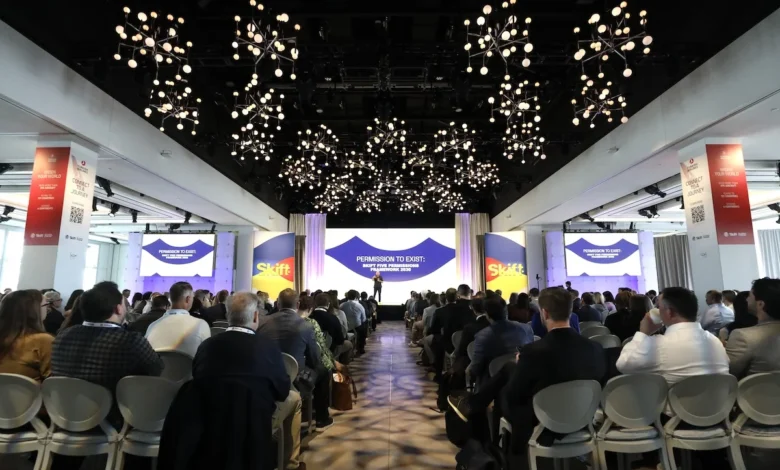
The global travel and tourism industry stands at a critical historical crossroads, characterized by profound technological disruption, macroeconomic volatility, and shifting consumer expectations. As executives, entrepreneurs, investors, and policymakers prepare to gather for the Skift Global Forum 2026, scheduled from September 22 through September 24, the fundamental question facing every corporate leader is not merely how to adapt to ongoing market shifts, but whether their current strategic recalibrations are calibrated for the correct decade. Long-standing industry assumptions that once reliably predicted travel demand patterns, distribution channels, and technology infrastructure stacks are rapidly losing their validity.
Two overarching tensions have injected an unprecedented sense of urgency into executive boardrooms across the globe. First, while the aggregate global travel market continues to expand in sheer financial volume, its structural shape is in a state of continuous transformation. Second, technological innovation—particularly artificial intelligence and automated booking architectures—is evolving at a velocity that far outpaces the rate at which consumer and corporate trust can securely integrate it. Every keynote, panel, and breakout session at the 2026 forum has been engineered around these consequential friction points, designed to force industry stakeholders to confront deeply ingrained preconceptions about their future relevance.
The Evolution of Travel Infrastructure and the AI Disruption Divide
At the core of the contemporary discourse is the four-layered travel stack identified by comprehensive industry research: consumers, commerce, operations, and experiences. Throughout the supply chain, legacy operators, agile challengers, and institutional investors are adopting divergent playbooks to secure their footholds in each layer.

For established incumbents, the primary financial return on investment from artificial intelligence has been realized through internal operational efficiencies rather than external consumer acquisition. For instance, platforms like Airbnb have successfully leveraged machine learning tools to slash customer support costs per booking by approximately 16 percent year-over-year while aggressively restructuring internal operations to become an AI-native organization. Conversely, venture capital firms are placing aggressive bets on external disruption, funneling roughly 45 percent of all travel startup funding into AI-enabled companies by mid-2025—a dramatic escalation from just 10 percent in 2023.
Yet, a stark disparity remains between operational adoption and consumer booking behavior. Referral traffic driven by external AI agents currently accounts for fewer than 1 percent of total room nights at major online travel agencies like Booking.com. Executives overseeing distribution are therefore locked in a high-stakes debate: Should they follow the path of incumbent giants who rely on massive existing cash reserves and entrenched distribution monopolies, or should they gamble on total architectural reinvention? As industry analysts note, the risk for traditional brands is that legacy technology systems may ultimately prevent them from keeping pace with autonomous booking environments.
Discovery, Distribution, and the Battle for the Consumer Funnel
The methodology by which travelers discover, evaluate, and purchase trips is undergoing its most radical transformation since the advent of online travel agencies. Traditional travel discovery—traditionally defined by a linear process of searching, scrolling, and manual comparison—is rapidly yielding to an intent-driven model centered on asking, shortlisting, and deciding.
Data from the Skift Research State of Travel report indicates that nearly 30 percent of global travelers reported extensive use of artificial intelligence for trip planning, representing a staggering doubling of adoption—an increase of 17 percentage points—in a single year. Despite this rapid embrace of planning tools, consumer trust to actually execute financial transactions through autonomous AI platforms lags significantly behind. Direct brand channels and established OTAs remain the most trusted mediums, while general consumer sentiment regarding the comfort of direct AI booking remains net negative.

This behavioral divide presents a structural dilemma for hospitality and aviation brands. AI systems naturally compile shortlists using structured data from sources they can easily read and parse. Brands that fail to optimize their data architectures risk becoming entirely invisible unless requested by name. However, ceding control of data presentation to third-party AI platforms forces companies to surrender direct ownership of the customer funnel, threatening customer relationship management and brand loyalty. Current metrics underline this precarious balance: only 6 percent of hotels successfully appear in advanced AI-generated search results, and a mere 2 percent of leisure travelers currently express a willingness to allow an AI system to complete a booking on their behalf.
Premiumization, Volume, and the Impact of Global Income Inequality
Macroeconomic pressures have simultaneously bifurcated consumer behavior, forcing travel brands to choose between chasing high-margin premium volume or fighting for mass-market scale. The current financial health of major aviation and hospitality balance sheets is being sustained primarily by affluent travelers who remain resilient in the face of persistent inflation and economic uncertainty.
Commercial airlines offer a clear case study of this divergence. Delta Air Lines reported a 7 percent year-over-year increase in premium revenue, while traditional main cabin revenue simultaneously declined. In response, major carriers including American Airlines and United Airlines are actively reconfiguring aircraft cabins to dedicate roughly half of their total seating capacity to premium classes, which deliver materially higher profit margins. During the final quarter of 2025, premium cabin revenue outpaced standard economy revenue for the first time in Delta’s operational history, with nearly all projected seat growth for 2026 allocated exclusively to premium configurations.
This strategic tilt toward affluence contrasts sharply with the reality facing price-sensitive travelers. According to industry surveys, approximately 62 percent of global travelers report that they will be forced to adjust, downgrade, or completely cancel travel plans due to rising costs. While focusing capital on the luxury and premium sectors establishes a resilient financial floor during economic downturns, it simultaneously risks eroding the broader customer base necessary to maintain high aircraft load factors and hotel occupancy rates when profit margins contract. Industry analysts view modern premiumization as a highly lucrative revenue strategy, but one that is fundamentally tethered to the trajectory of global income inequality.

Balancing Human Touchpoints with Automated Cost Efficiencies
As hospitality brands rush to deploy automated solutions to reduce overhead, executive leadership teams face a delicate operational dilemma: determining the precise threshold at which headcount reductions begin to degrade the guest experience.
The immediate corporate instinct is to treat artificial intelligence strictly as a labor-cost reduction mechanism. However, market research consistently indicates that guests still place a high premium on genuine human touchpoints, particularly during moments of service friction or high-value experiential travel. A uniform approach to labor reduction carries significant strategic risk. If personalized human service becomes an exclusive luxury item available only at the absolute top of the market, mid-market and economy brands risk losing a critical differentiator that cannot be easily reconstructed once frontline operational staff have been permanently eliminated. This tension is further compounded by broader demographic labor shortages, which continue to strain operations precisely where human empathy and service are most required.
Geopolitical Volatility and the Clash Between Speed and Certainty
Underpinning these technological and consumer shifts is an increasingly volatile geopolitical and macroeconomic landscape. Strategic planning cycles that once spanned multiple years have been compressed into quarterly, or even weekly, recalibrations.
Regional travel flows have shifted dramatically. In the United States, domestic travel volume has stabilized at real 2019 levels, while international inbound volume experienced a notable contraction of 5.5 percent. Revisions by tourism forecasting bodies have underscored this unpredictability; projections for full U.S. inbound tourism recovery were abruptly pushed outward from 2025 to 2029 following a single macroeconomic revision. Global enterprises operating across multiple continents must continually adjust their strategies to navigate sudden regulatory, currency, and geopolitical shocks.

For executive leadership, the central operational question remains whether to wait for absolute market certainty—thereby risking missing the strategic window of opportunity—or to act decisively on imperfect data, accepting the inherent financial risk of early capital deployment.
Strategic Implications for the Decade Ahead
As industry leaders converge at the Skift Global Forum 2026, the discussions in the room will transcend typical corporate forecasting. The travel sector has fundamentally recalibrated its operational models to match the disruptions witnessed over the past several years, shifting focus from international to domestic markets, from mature Western economies toward high-growth regions in South America and Asia, and from traditional search mechanics to autonomous AI discovery.
The defining challenge for executives attending the forum will be to determine whether their organizations are merely defending the operational models of the previous decade or actively architecting the infrastructure required for the next one. By examining how industry titans like Booking Holdings, Airbnb, and international hospitality groups navigate these strategic fault lines, corporate leaders will be forced to evaluate their own competitive posture and chart a definitive course through ongoing market disruption.