For the past ten years, the USC Games Expo has quietly established itself as a critical launchpad for emerging indie game developers. Held annually at the University of Southern California’s School of Cinematic Arts, this event has become a significant incubator for interactive storytelling, predating the mainstream recognition of groundbreaking titles like Journey, What Remains of Edith Finch, and Threes! Many of the creative minds behind these influential games honed their early concepts within the halls of USC’s Interactive Media & Games Division, presenting their ambitious ideas to the public for the first time at this very expo. This year’s iteration continued that tradition, offering a compelling glimpse into the future of interactive entertainment.
The USC Games Expo, a springtime tradition, showcases a diverse array of student-created works. Attendees have the opportunity to engage with everything from digital and tabletop games to immersive themed entertainment installations. For the student creators, it’s an invaluable opportunity to witness firsthand how real players interact with their meticulously crafted projects, offering immediate feedback and invaluable learning experiences.
"In layman’s terms, the USC Games Expo is the largest academic games showcase in the world," stated Jim Huntley, an associate professor of Interactive Media & Games and head of marketing for USC Games, in an interview following this year’s event. "We’ve been doing it for a little over 10 years now, and it’s been getting bigger and bigger each time." This consistent growth underscores the expo’s increasing importance within both the academic and professional gaming communities.
While the expo primarily features work from students enrolled in USC Games programs, it opens its doors to any USC student who has developed a game. This inclusive approach transforms the expo into a broad celebration of interactive storytelling across the entire university. However, the centerpiece of the showcase remains the Advanced Games Project (AGP), the program’s capstone course. Within this intensive program, multidisciplinary teams dedicate three semesters to conceptualizing and developing an original game, culminating in a playable demo presented at the expo.
"It’s the final expression of all the stuff that they’ve learned throughout their time learning with us," Huntley explained. Students embark on an approximately 18-month development journey, starting from an initial pitch and progressing to a finished project. They operate much like small, independent studios, with teams typically comprising around 30 collaborators before unveiling their creations to the public at the expo. This extended development period is crucial, allowing for a depth of iteration and refinement that is rare in many academic settings.
Huntley further elaborated on the program’s evolving structure, noting the recent addition of a dedicated pre-production semester. This enhancement provides students with even more time to meticulously refine their ideas before full production commences. "We value pre-production so much," he emphasized, highlighting its role in enabling teams to develop a profound understanding of their project before committing to the larger production effort. This emphasis on thorough planning reflects the program’s commitment to preparing students for the realities of the professional game development industry.
The curriculum at USC Games is designed to evolve alongside the ever-changing landscape of the game industry. Huntley revealed that the university regularly consults with external studios and publishers to ascertain the skill sets graduates will need upon entering the workforce. Crucially, this engagement is balanced with a discerning approach that avoids chasing fleeting trends. The objective is to differentiate between ephemeral industry buzz and fundamental, lasting shifts that warrant integration into the curriculum.
Artificial Intelligence (AI) serves as a pertinent example of this approach. Rather than instructing students to rely on AI-generated content, the program prioritizes the cultivation of foundational creative and technical skills. AI is positioned as a tool to augment, rather than replace, the core processes of game development. "We do want to make sure that the students know how to script and code and write and design by hand, so that they’re not relying on the tool as a crutch," Huntley stated. "It’s awesome to see the raw creativity that our students bring to bear. [The program is very] blue sky: what do you want to make? This is where they can make that dream happen, and it’s fun seeing what kind of dreams they have." This year’s expo exemplified this spirit of unbridled creativity.
Aftertaste: Exploring the Palate of Burnout and Rediscovery
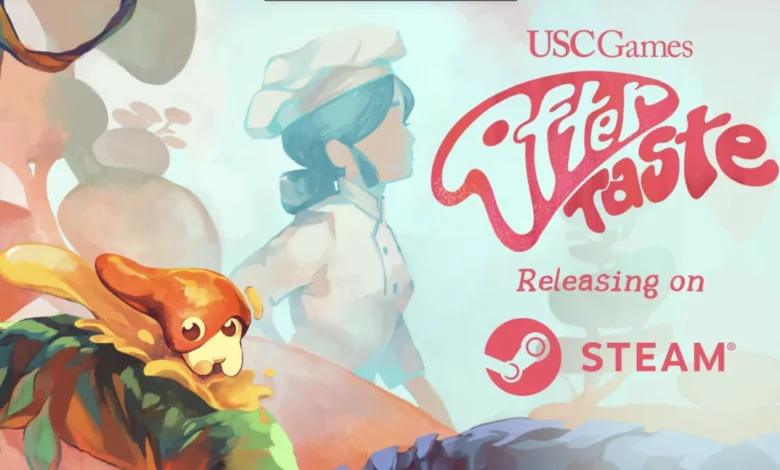
Among the standout projects featured at this year’s expo was Aftertaste, a surreal narrative platformer developed by a team of USC students. The game’s creative director, Baozee, a 22-year-old from Hefei, China, discussed the unique genesis of his project. Aftertaste follows Tammy, a sentient tongue, as she navigates the internal landscape of an overworked chef who has lost her culinary passion. Drawing inspiration from traditional Chinese medicine, Baozee transforms the chef’s organs into metaphorical emotional realms, blending quirky visuals with a poignant narrative about burnout, healing, and the rediscovery of creativity.
DEADLINE: What is Aftertaste?
BAOZEE: Aftertaste is a 2D side-scrolling platformer where you play as a tongue named Tami. Tami is assisting an overworked chef named Keh, who is experiencing burnout and has lost her sense of taste. Tami ventures inside Keh’s body to uncover the root cause of this affliction. It’s a story centered on regaining her sense of taste, reclaiming lost memories, and reigniting her passion. Essentially, it’s a narrative adventure game.
DEADLINE: When I watched the gameplay trailer, I was struck by its unique premise, but also a bit taken aback. How did the idea of a tongue as the main character come about?
BAOZEE: The concept emerged last year while I was studying Chinese medicine as part of a stress management class. We explored the profound connection between emotions and physical sensations, particularly taste. In Chinese medicine, specific tastes are associated with particular emotions and organs. This became a significant wellspring of inspiration for my game. We often overlook our tongue, yet it’s one of the most remarkable muscles in the human body. I thought, "Why not create a game centered around it?" That’s how the story for Aftertaste began to form.

DEADLINE: Were you concerned about how people might react to a game featuring a tongue as the protagonist?
BAOZEE: Yes, I was. During the AGP program at USC Games, my initial feedback was mixed. Many people found the concept unappealing and struggled to visualize it. However, others appreciated its blend of the peculiar and the charming.
DEADLINE: What was it like receiving that feedback? Was this your first experience getting direct responses to something you created?
BAOZEE: Yes, it was my first time, especially receiving feedback from professionals and a diverse group of individuals from within the school and various industries. Presenting the game to them during our second round was a significant step for me. As one of only two sophomore students leading projects, alongside the director of Sisyphus’s Worst Day (Again), it was challenging, but we learned a tremendous amount.
DEADLINE: What was the most challenging aspect of bringing the game to fruition?
BAOZEE: Recruitment. Our team comprised students from various schools across USC, and some lacked prior game development experience. In a professional studio, team members are compensated for their work. Here, each team consisted of around 50 to 60 individuals, making it difficult to gauge genuine enthusiasm versus a desire for class credit. I heavily relied on my friends. The design lead was my roommate, and the art director was a close friend. Trusting them was paramount, and I believe that friendship, love, and care are foundational to creating something beautiful.
DEADLINE: What was the most rewarding part of persevering with your vision for the game?
BAOZEE: Seeing the trailer released and witnessing the entire expo audience cheer for our work. We were also immensely proud of creating such a lovable and visually appealing character. We even produced merchandise, which was one of the greatest gifts from my team and the game itself.
DEADLINE: What games or films inspired Aftertaste?
BAOZEE: Super Mario Odyssey was a definite inspiration, particularly its themes of transformation, varied abilities, and tactile interactions, which align with Aftertaste‘s genre. The film Inside Out also served as a significant influence, with its masterful personification of organs and emotions.
DEADLINE: What games have personally inspired you?
BAOZEE: What Remains of Edith Finch. It was also developed by a former USC Games student. It’s rare to encounter games that explore such profound and serious themes. That particular game was instrumental in my decision to pursue game development in college.
DEADLINE: Finally, what is your dream job after graduation?
BAOZEE: I aspire to be a freelance game developer. I have a broad range of hobbies, and I’m currently studying anatomy, but my lifelong ambition has always been to create games, particularly compelling indie titles with a small, dedicated team.

Sisyphus’s Worst Day (Again): A Mythic Reimagining of Perpetual Struggle
Jason Lin, a 21-year-old from Taiwan, helmed the development of Sisyphus’s Worst Day (Again). What began as Lin’s fascination with cyclical mechanics evolved into a clever and darkly humorous reimagining of Greek mythology. The game is a 3D puzzle experience that challenges players to devise intricate contraptions to ensure Sisyphus remains trapped in his eternal, futile task. It masterfully blends dark humor, innovative puzzle design, and a playful subversion of an ancient myth.
DEADLINE: Why Sisyphus? His myth seems inherently suited for a game. How did you arrive at this concept?
LIN: My initial intention was to create a game focused on loops or cycles. I began exploring mechanics where players would reverse-engineer AI by preventing it from achieving its objectives. However, I soon realized this premise lacked narrative depth. I desired a story that players could connect with, so I turned to Greek mythology, a subject that has always fascinated me. The myth of Sisyphus proved to be a perfect fit, allowing me to craft my own interpretation to serve the game’s narrative.
DEADLINE: What was the most challenging aspect of developing this game?
LIN: In the initial stages, we were tasked with designing the game while simultaneously leading a large team that had only a nascent understanding of the project until we produced the first demo. Our design lead had to create levels with the conviction that they would eventually function as intended, and concurrently assign tasks to teammates, even though none of us could definitively foresee how everything would coalesce. This challenge permeated the entire team. Each member had to believe in the vision before they could fully comprehend it. Cultivating that collective confidence was arguably the most arduous part.
DEADLINE: What was the most rewarding aspect of bringing the game to completion?
LIN: Witnessing people play it. The first time we genuinely felt the game was fun was after completing our demo in December. Observing play-testers solve the puzzles and hearing them exclaim, "Oh my God, these puzzles are really interesting," was incredibly gratifying. Showcasing the game at the USC Games Expo was another significant highlight. We finally had the opportunity to present our creation to the public, observe their interactions, and hear their reactions. We also derived immense enjoyment from producing merchandise and curating an immersive experience around the game. The atmosphere at the Expo was truly exceptional.
DEADLINE: What games served as inspiration for Sisyphus’s Worst Day (Again)?
LIN: Two primary inspirations stand out. From a narrative standpoint, Hades and Hades II were major influences. They artfully blend ancient Greek mythology with a contemporary game genre. We drew inspiration from their art style, including the axonometric perspective and character design. From a gameplay perspective, we looked to traditional Sokoban-style puzzle games. We also found inspiration in Order of the Sinking Star, as its puzzle design and visual aesthetic closely mirrored our own aspirations.
Unrealtor: Navigating Surreal Labyrinths of Real Estate
Ariel Sol, a 25-year-old from Chicago, channeled her frustrations with the notoriously difficult Los Angeles apartment hunt into Unrealtor. This surreal co-op puzzle adventure transforms a mundane house tour into an extraordinary experience. Players must navigate impossible architecture and perspective-bending puzzles as reality contorts around them. Drawing inspiration from games like Superliminal, Sol has ingeniously merged optical illusions with an uncanny, dreamlike atmosphere, converting a familiar scenario into an inventive mystery.
DEADLINE: This is a remarkably trippy game. How would you describe it?
SOL: Unrealtor is a local co-op game designed for two players to enjoy together on a couch. You and a friend are touring an apartment with the intention of renting it, but the house tour descends into a surreal labyrinth. Your objective is to escape while the landlord persistently tries to convince you to sign the lease. It’s a puzzle game, and our core mechanic revolves around perspective. Objects can be manipulated by viewing them from specific angles, which then creates a 2D image across the split-screen display.
DEADLINE: How long were you at USC, and how long did it take to develop Unrealtor?
SOL: The master’s program spans two years, and the development cycle for Unrealtor took one year through the Advanced Games Project. Projects are greenlit in the fall, and from that point until the following USC Games Expo, the focus is entirely on ideation and development.

DEADLINE: How did the core concept for the game come together?
SOL: There were two primary starting points. The first was the mechanic itself. I was deeply interested in optical illusions and the interplay between 3D and 2D space. However, I also desired a narrative component, as I believe a game devoid of story functions more akin to a toy. Concurrently, I was navigating the challenges of moving around Los Angeles and reflecting on the truly dreadful apartments I had toured. I would often find myself asking, in these cramped spaces, "Where could I even fit a bed?" and be told, "Just put it diagonally." Without the immediate pressure of real-life stress, apartment hunting can almost become a game of deciphering spatial arrangements. It was then that I realized these disparate ideas could be harmoniously integrated.
DEADLINE: What was the most significant challenge you faced during development?
SOL: Interdisciplinary communication was paramount. I am incredibly proud of my team because I presented them with an idea that was already challenging for me to articulate. If it proved difficult for the director to explain, it was exponentially more so for everyone else. The primary challenge lay in merging design and art. Typically, designers conceptualize the mechanics, and artists then imbue them with aesthetic appeal. However, because our core mechanic relied on precise visual alignment within a 3D space, art had to be intrinsically involved in the design process, and designers, in turn, had to contribute to visual considerations. Establishing this communication pipeline required considerable time and effort.
DEADLINE: How did you ultimately resolve this communication hurdle?
SOL: Initially, we conducted separate meetings for the designers and artists. However, it eventually became far more efficient to convene everyone in a single room and pose the question, "What do you need from each other?" This approach significantly streamlined the entire development process.
DEADLINE: What was the most rewarding aspect of creating Unrealtor?
SOL: Playtesting, without a doubt. Especially with a puzzle game, there’s nothing more satisfying than observing a player experience that "aha!" moment, that sudden realization of what they need to do. When you’re designing the puzzles, you are already privy to the solutions, so you are essentially estimating when players will reach that point of understanding. Witnessing them actually achieve that breakthrough is profoundly gratifying.
DEADLINE: What games inspired Unrealtor, or what games inspire you as a developer?
SOL: Superliminal was likely our most significant reference point, as it also utilizes unconventional puzzle mechanics. We also studied games like Blueprints and Monument Valley. Personally, the game that truly reshaped my perception of what games could be was Journey. It demonstrated to me that games could transcend mere entertainment and achieve artistic merit. It’s such a clean, experiential game with a beautifully crafted narrative arc, a realization that has stayed with me ever since.
The USC Games Expo continues to serve as a vital proving ground, nurturing the next generation of game developers and providing a platform for their innovative visions to reach a wider audience. The success of past alumni and the diverse, imaginative projects showcased annually underscore the expo’s enduring legacy in shaping the future of interactive storytelling.