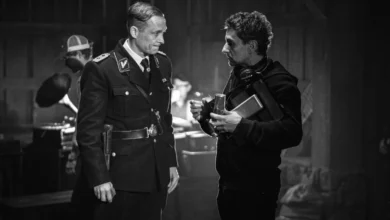
Constance Wang slams Netflix series The Altruists for stereotypical portrayal and historical inaccuracies regarding the collapse of FTX


The release of the Netflix limited series The Altruists, a dramatized retelling of the meteoric rise and catastrophic fall of the cryptocurrency exchange FTX, has ignited a sharp backlash from those who lived through the events firsthand. Among the most vocal critics is Constance Wang, the former Chief Operating Officer of FTX, who has publicly denounced the production for what she characterizes as a "stereotypical" and "racist" depiction of her and the corporate culture that defined the firm’s early days in Hong Kong.
The eight-episode series, created by Graham Moore, attempts to condense the complex collapse of a multi-billion dollar financial empire into a narrative-driven format. However, according to Wang, the series prioritizes sensationalist storytelling over factual accuracy, failing to consult with the key figures who operated within the inner circles of Sam Bankman-Fried’s organization.
The Critique of Representation and Authenticity
Wang’s primary grievance centers on her own depiction in the show, played by actress Madison Hu. In a series of statements posted to social media, Wang highlighted the problematic nature of the character’s performance, specifically citing the use of a "Chinese accent" that she does not possess. For Wang, this creative choice was not merely an aesthetic error but a reliance on harmful tropes.
"People have asked whether Netflix consulted me. They didn’t," Wang wrote. "One conversation would at least have saved Madison Hu, who plays me, the trouble of putting on a Chinese accent I don’t have. It feels very stereotypical, then again, it’s Netflix. What did we expect?"
Wang’s critique extends beyond her own character to the show’s broader treatment of the company’s origins. FTX was founded in Hong Kong, and its early workforce was predominantly composed of Asian professionals. By importing Western-centric stereotypes into the portrayal of these individuals and the surrounding culture, Wang argues that the show undermines the reality of the firm’s international roots. She described the overall experience of watching the show with former colleagues as "hard to watch," noting that they struggled to recognize anything beyond the names of the individuals involved.
Chronology of the FTX Collapse: A Brief Overview
To understand the friction between the reality of FTX and its portrayal on screen, it is necessary to revisit the timeline of the collapse that shook the global financial system:
- 2019: Sam Bankman-Fried and Gary Wang (no relation to Constance) launch FTX in Hong Kong, positioning it as a high-performance exchange for crypto derivatives.
- 2021: FTX reaches a valuation of $25 billion, attracting massive institutional backing from firms like Sequoia Capital and Temasek.
- November 2022: A report by CoinDesk exposes the precarious balance sheet of Alameda Research, Bankman-Fried’s proprietary trading firm, revealing that it relied heavily on FTT, the exchange’s own token.
- November 8, 2022: A liquidity crunch forces FTX to halt withdrawals. Binance initially expresses interest in an acquisition but pulls out within 24 hours after reviewing the company’s internal books.
- November 11, 2022: FTX, Alameda Research, and over 100 affiliated entities file for Chapter 11 bankruptcy in the United States.
- December 2022: Federal prosecutors in the Southern District of New York charge Bankman-Fried with multiple counts of fraud and conspiracy.
- November 2023: A jury finds Bankman-Fried guilty on all seven criminal counts of fraud and conspiracy.
Discrepancies in Narrative and Characterization
Beyond the issues of representation, Wang challenges the show’s central premise—the romantic entanglement between Sam Bankman-Fried (played by Anthony Boyle) and Caroline Ellison (played by Julia Garner). The series frames their relationship as a core driver of the company’s downfall, a narrative device that Wang insists bears little resemblance to the actual corporate dynamics.
Wang disputes the show’s characterization of Bankman-Fried as a highly expressive or impulsive leader, describing him instead as one of the least emotionally transparent individuals she has encountered in her professional career. She further argues that the show’s depiction of Ellison—portrayed as a reckless mastermind—is a distortion of her actual role and temperament within Alameda Research. According to Wang, the series appears to have constructed these characters from public personas, such as those found in Michael Lewis’s book Going Infinite or from Ellison’s private writings, rather than from a nuanced understanding of their professional behaviors.
"The idea that she was the mastermind behind everything made us laugh," Wang remarked, suggesting that the show treats a complex financial failure as a romantic comedy, thereby stripping the event of its technical and systemic realities.
The Impact of Dramatization on Historical Record
The friction between the subjects of a biopic and the creative team behind it is a perennial issue in the entertainment industry. When dealing with recent history, particularly events involving criminal litigation and significant financial loss, the stakes are elevated.
The primary concern for participants like Wang is that such "based on a true story" productions tend to harden into the public consciousness as the definitive history. For millions of viewers, the dramatic narrative of The Altruists will likely replace the nuanced, technical, and often mundane reality of corporate management and regulatory failure.
This phenomenon is often referred to as "the docudrama effect," where viewers perceive the emotional and narrative beats of a script as historical facts. When these scripts rely on stereotypes or simplify complex power dynamics, they can cause lasting reputational damage to the individuals portrayed, regardless of their actual legal or moral culpability in the events being depicted.
The Broader Industry Context
The collapse of FTX was a watershed moment for the cryptocurrency industry, leading to increased scrutiny from the U.S. Securities and Exchange Commission (SEC) and the Commodity Futures Trading Commission (CFTC). The fallout resulted in the loss of billions of dollars in customer deposits and triggered a wave of regulatory crackdowns across the globe.
In the aftermath, figures like Constance Wang have transitioned into new ventures. Wang, now a co-founder of the AI-crypto trading platform Pacifica, is attempting to move forward, yet the persistent shadow of the FTX collapse continues to impact the industry. Critics of the show argue that by turning the collapse into a personality-driven drama, Netflix has ignored the systemic failures of risk management, audit processes, and corporate governance that were the true causes of the catastrophe.
Conclusion and Future Implications
The backlash from figures like Constance Wang highlights an ongoing tension between artistic license and the responsibility of storytelling. As the demand for content based on "real-life" financial crimes grows, studios and streamers face increasing pressure to balance dramatic appeal with ethical representation.
For Netflix and creator Graham Moore, the criticism serves as a reminder that the stories of living individuals are not merely intellectual property to be manipulated for viewership. The controversy surrounding The Altruists may prompt future productions to adopt more rigorous consultation processes, particularly when dealing with sensitive, ongoing, or recently concluded legal matters.
As the legal proceedings surrounding FTX have concluded, the focus has shifted toward the historical record. If the industry continues to prioritize dramatized, stereotypical tropes over the lived experiences of those involved, it risks not only public backlash but also the degradation of the historical record itself. For now, the takeaway from Wang’s critique is clear: when the cameras stop rolling and the dramatization concludes, the actual truth remains far more complex than a screen adaptation can capture. The rift between the screen and the boardroom remains, for the time being, unbridged.