A Career-Long Obsession with Industrial Form
Christopher Payne, a 57-year-old photographer known for his extensive documentation of American industrial heritage, brings a unique perspective to the MTA’s request. His career has been defined by a fascination with the "wow factor" of heavy machinery and the architectural skeletons of public utilities. For Payne, this commission is a full-circle moment. As a college student at Columbia University four decades ago, he was a self-described transit enthusiast who would occasionally "appropriate" subway station signs—a youthful indiscretion he now balances with a professional mandate to access the city’s most restricted zones.
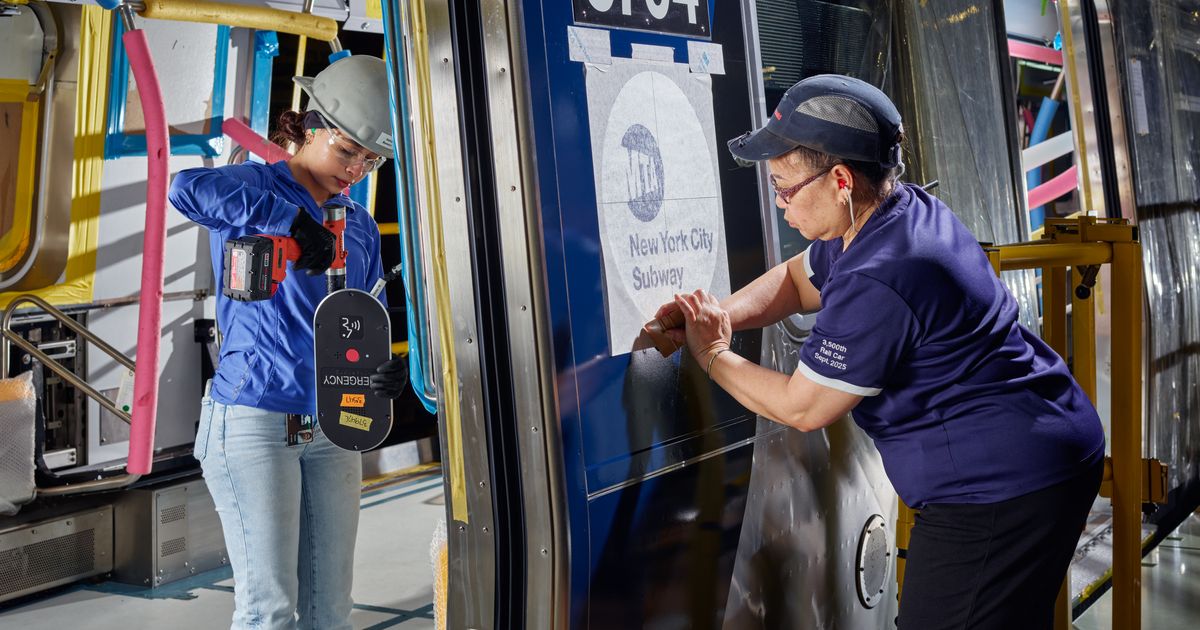
The exhibition is the culmination of five months of rigorous field work. During this period, Payne traversed the country, documenting the specialized manufacturing processes behind the transit system. His itinerary included high-security bus manufacturing plants in Sacramento and complex subway-car assembly lines in Lincoln, Nebraska. By moving beyond the passenger experience, Payne documents the vast network of human labor and mechanical maintenance that remains hidden from the average rider’s view.
The Engineering of the Invisible
The core of the exhibition focuses on the maintenance of critical infrastructure, such as the Hugh L. Carey Tunnel. During a late-night closure—a period of intense activity for the Metropolitan Transportation Authority—Payne was granted access to photograph the cleaning of the tunnel’s 400,000 wall tiles.
Payne’s work emphasizes the "toothbrush" method used by maintenance crews to scrub the tunnel walls, a detail that highlights the sheer scale of manual effort required to maintain public assets. His photographs aim to move away from purely utilitarian documentation toward a more artistic interpretation of industrial environments. By carefully balancing the artificial lighting of his gear with the inherent, often grimy, aesthetic of the tunnels, Payne elevates the mundane tasks of maintenance to a form of visual art.
Technical Challenges and Artistic Rigor
The production of these photographs involved significant logistical hurdles. At the Marine Parkway-Gil Hodges Memorial Bridge, for instance, Payne was suspended 200 feet above the Rockaway Inlet on a catwalk. His objective was not merely to capture the panoramic beauty of the bridge, but to photograph the structure from within its cramped, obsolete control room.
When a fixed, grimy window hindered the shot, Payne negotiated with bridge operators to remove the pane. When the window’s ancient screws proved resistant, his team engineered a custom support arm to extend the lens out into the open air. This level of persistence reflects his philosophy: he is not interested in the "pretty picture" that a casual tourist might snap, but rather in the "intersections of beauty, architecture, and design."
Contextualizing the Infrastructure
The New York City transit system is one of the oldest and most complex in the world, with origins dating back to the late 19th century. Managing this system requires a permanent, multi-billion-dollar effort to repair, replace, and modernize equipment that operates 24 hours a day. The MTA’s current infrastructure maintenance budget reflects the ongoing pressure to keep aging components—some dating back over a century—in functional condition.
Payne’s documentation of the Coney Island Overhaul Shop serves as a poignant reminder of this reality. By photographing workers like Conrad Samuels, who repairs the complex gearboxes of subway-car wheel motors, Payne highlights the human element of the transit system. His work argues that while the MTA is often defined by its massive budget and public controversies, it is ultimately a human-powered machine. The skill, time, and precision required to maintain these components are the invisible forces that prevent systemic collapse.
Data and Infrastructure Significance
To understand the scope of the MTA’s maintenance, one must consider the sheer volume of assets. The system operates:
- 472 subway stations, the most of any system in the world.
- 6,000+ subway cars that require constant mechanical inspection.
- Thousands of miles of track, tunnels, and bridges that demand round-the-clock structural monitoring.
The exhibition also features the Morris Park Diesel Shop, a site that houses a 19th-century functioning turntable. This facility is a testament to the longevity of the city’s rail history. Payne’s experience there, struggling to find the right composition until he shifted his focus from the "dramatic" to the "graceful" movement of a small switch engine, highlights the difference between static architectural photography and the dynamic narrative of an active workshop.
Official Response and Institutional Role
The MTA Arts & Design program, which commissioned the project, has historically used public art to humanize the transit experience. By bringing images of the "backstage" of the system into the stations themselves, the authority hopes to foster a greater appreciation for the complexity of transit maintenance among daily commuters.
Industry analysts note that such public-facing initiatives play a role in shaping public perception of the transit agency. By opening its doors to a high-profile photographer like Payne, the MTA is essentially participating in a transparency project. It allows the public to see, for the first time, the specific environments where their tax dollars are put to work, thereby bridging the gap between the agency and the millions of people who rely on its services.
Analysis of the Exhibition’s Impact
The significance of In Service lies in its ability to transform how the public views "public space." Most commuters experience the subway as a place of transit—a corridor to be moved through as quickly as possible. Payne’s photography forces a pause. By hanging these images in the very stations where the bustle occurs, the exhibition encourages a momentary shift in perspective.
Furthermore, from a historical standpoint, Payne’s work serves as an archive. As the MTA undergoes modernization, incorporating digital signaling and new, automated maintenance technologies, the human-centric, mechanical processes he documents are slowly evolving. The images captured by Payne may eventually serve as a visual record of a bygone era of transit maintenance, documenting a specific technological epoch in New York’s history.
Conclusion
Christopher Payne’s exhibition is more than a portfolio of industrial photography; it is an intimate study of a city’s nervous system. By documenting everything from the grimy windows of a bridge control room to the precision of a gearbox overhaul in Queens, he provides a narrative that is both gritty and reverent.
As the public walks past these light boxes, they are presented with a challenge: to see the subway not just as a means of getting from Point A to Point B, but as a vast, living, and labor-intensive masterpiece of 20th-century urban engineering. The exhibition, running throughout the city’s transit hubs, invites the viewer to look closer, to recognize the human labor behind the machine, and to appreciate the intricate design that keeps the city, quite literally, in service. Through Payne’s lens, the hidden, often neglected corners of the metropolis are finally brought into the light, demanding the respect and curiosity of the millions who rely on them every single day.