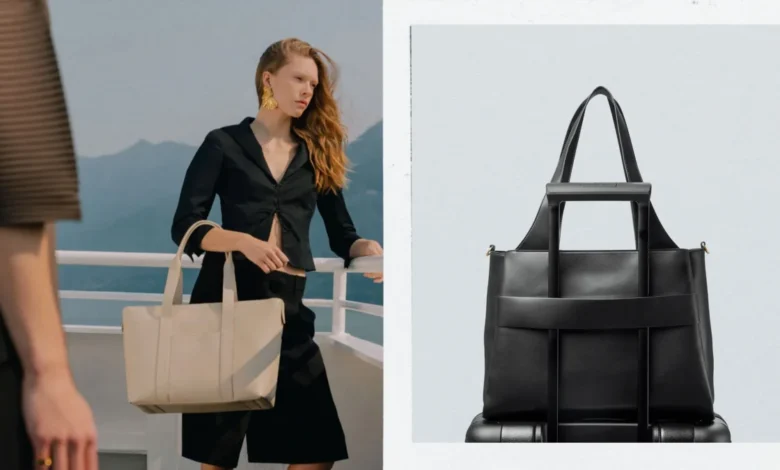
The modern travel and commuter landscape has undergone a significant functional evolution over the past decade, driven largely by the tightening of airline baggage restrictions, the rise of the hybrid work model, and an increasing consumer preference for versatile, multi-use accessories. Among the various categories of carry-on goods, the traditional tote bag has emerged as the definitive champion of daily utility. Once viewed strictly as a casual shopping companion or a beach accessory, the structured and engineered tote bag is now a staple of corporate offices, international airports, and urban transit systems worldwide. Industry analysts and retail experts attribute this resurgence to a broader cultural shift toward intentional consumption, where consumers demand higher value and multifaceted performance from a single accessory.

The Evolution of the Everyday Carry-All
The historical roots of the tote bag trace back to the mid-20th century, most notably exemplified by utilitarian designs like the L.L.Bean Boat and Tote, introduced in 1944 as an ice carrier. Constructed from heavy-duty canvas, these early iterations were celebrated entirely for their durability and lack of ornamentation. Over successive decades, fashion houses and specialized luggage brands recognized the potential to marry this raw utility with sophisticated aesthetics, durable leathers, performance nylons, and precision-engineered interiors.
Today’s market reflects a diverse array of design choices tailored to distinct consumer segments. For the modern business traveler and corporate commuter, brands such as Cuyana, Monos, and Coach have introduced structured leather and faux-leather silhouettes equipped with dedicated laptop compartments, trolley sleeves, and modular organization systems. Meanwhile, brands like MZ Wallace and Calpak cater to overpackers and frequent flyers by incorporating ultra-lightweight quilted materials, expandable base zippers, and extensive pocket matrices that maximize storage capacity without sacrificing ergonomic comfort.

Editor-Tested Recommendations: Top Contenders for 2026
To determine the most reliable options currently available on the market, editors and commerce specialists from leading travel publications subjected a wide selection of tote bags to rigorous, real-world testing. Their evaluations spanned early morning flight departures, multi-city international itineraries, daily subway commutes, and weekend excursions.
For the corporate environment, the Cuyana System Tote emerged as a standout favorite among professionals. Reviewers praised its minimalist exterior, absence of overt branding, and the availability of modular interior accessories that allow users to customize internal organization. Built from sustainable Italian leather, it functions seamlessly as an underseat personal item on commercial flights while maintaining the polished aesthetic required for executive boardrooms.

Travelers requiring maximum capacity without cumbersome weight frequently turn to the MZ Wallace Medium Metro Tote Deluxe. Constructed from signature quilted nylon, this bag features an impressive array of interior and exterior pockets, a detachable pouch, protective feet, and a dedicated luggage sleeve. Reviewers noted that despite being stuffed with a 13-inch laptop, a full change of clothes, a lunchbox, and an umbrella, the ultra-soft shoulder straps evenly distribute weight to prevent physical strain during extended commutes.
For long-term durability and frequent flyers who log hundreds of thousands of miles, the Monos Metro Tote and the Cuyana Paloma Tote offer refined structural integrity. The Monos Metro Tote utilizes high-grade vegan leather, appealing to commuters navigating urban environments through changing seasons and career transitions. Conversely, the Cuyana Paloma Tote provides a luxurious, structured silhouette featuring secure leather ties, interior zip pockets, and a snap-to-close key leash, making it an ideal companion for resort destinations such as Aruba or rigorous domestic travel schedules.

Canvas and heritage designs also retain a dominant market share. The L.L.Bean Boat and Tote continues to captivate consumers with its indestructible 24-ounce cotton canvas construction. According to retail commentary, its classic appeal successfully bridges the gap between rugged outdoor utility and aspirational coastal aesthetics, serving interchangeably as a beach bag, a gym tote, or a compact weekender.
Chronology of Market Trends and Material Innovations
The surge in demand for high-end, functional tote bags accelerated rapidly between 2020 and 2026. This timeline highlights the intersection of changing workplace dynamics and airline policy adjustments:

- 2020–2021 (The Hybrid Shift): As global workforce models shifted toward hybrid and remote setups, professionals required bags capable of securely transporting sensitive technology—such as laptops and tablets—alongside personal items, sparking a wave of innovation in built-in tech sleeves.
- 2022–2023 (Airlines and Baggage Fees): Budget airlines implemented stricter overhead bin policies and increased fees for standard carry-on suitcases. Travelers quickly pivoted toward maximized personal items that could slide under the seat in front of them while holding up to 40 liters of clothing, popularized by flexible models like The Foldie Travel Bag.
- 2024–2025 (Material Science and Sustainability): Consumer demand shifted heavily toward sustainable alternatives, including recycled nylons, ethical leather sourcing, and water-resistant vegan textiles. Brands responded by introducing modular add-ons, trolley sleeves, and easy-to-clean puffy exteriors, such as the Calpak Luka line.
- 2026 and Beyond (The Luxury-Utility Convergence): High-end fashion houses and specialty travel brands have largely erased the boundary between luxury handbags and travel accessories, integrating weather-resistant hides, animal prints, and sophisticated hardware into everyday carry-alls.
Analyzing the Broader Economic and Travel Implications
The sustained popularity of the premium tote bag carries notable implications for both the retail apparel sector and the travel industry. From an economic perspective, accessories manufacturers are experiencing robust year-over-year growth within the travel-adjacent lifestyle category. Consumers are increasingly willing to invest in higher-priced, durable staples—ranging from $150 to upwards of $800 for luxury iterations from brands like Strathberry and Longchamp—viewing them as long-term investments rather than disposable seasonal purchases.
From a logistical standpoint, the widespread adoption of structured tote bags as primary personal items has subtly influenced airport processing times. By utilizing integrated luggage trolley sleeves that secure directly onto rolling suitcases, travelers can navigate busy terminal corridors, security checkpoints, and jet bridges with greater agility. Furthermore, internal organizational features such as dedicated passport slips, key leashes, and TSA-friendly laptop compartments reduce the friction points commonly associated with hand-baggage screening.

As airline regulations remain stringent and modern professionals continue to embrace dynamic, on-the-go lifestyles, the versatile tote bag has solidified its status far beyond a fleeting fashion trend. It represents a masterclass in functional design, proving that utility and elegance can successfully coexist within a single, indispensable everyday accessory.