Listening to the Cosmos: How Astronomers and Artists Are Translating Fast Radio Bursts into Sound

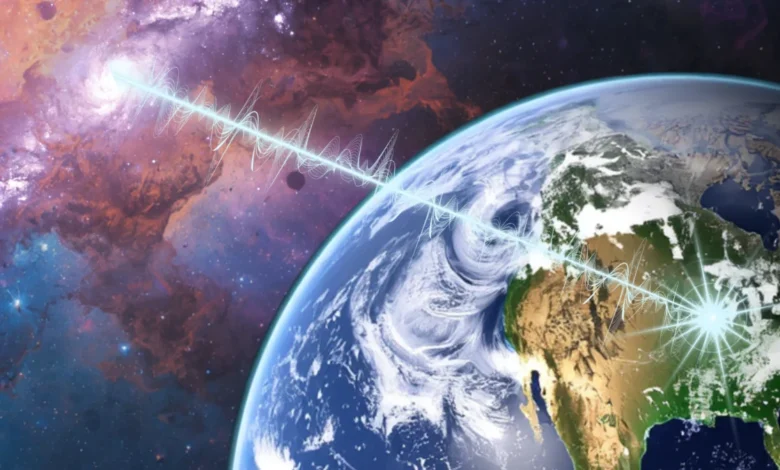
Fast radio bursts are among the most enigmatic and energetic phenomena in the known universe, and for the first time, researchers and artists are transforming these silent cosmic signals into an immersive auditory experience. These transient flashes of radio waves, which release as much energy in a single millisecond as the Sun radiates over three days, have long challenged our understanding of high-energy astrophysics. By bridging the gap between raw data and human perception, a unique collaboration between MIT researchers and composer Andrew Melchior has turned these elusive signals into a resonant symphony, currently being showcased at the Oulu Cathedral in Finland.
The Science of the Transient Flash
Fast radio bursts (FRBs) are incredibly brief, intense pulses of radio emission that originate from galaxies located millions or even billions of light-years away. Despite their staggering power, their nature is inherently fleeting. A typical FRB lasts only a few thousandths of a second, making them notoriously difficult to catch. Before the advent of specialized wide-field survey telescopes, astronomers could only hope to detect these signals by chance, often while observing other phenomena.
The scientific community’s ability to track these bursts changed dramatically with the deployment of the Canadian Hydrogen Intensity Mapping Experiment (CHIME) in British Columbia. Unlike traditional, narrow-field radio telescopes that require precise pointing, CHIME utilizes a fixed, wide-field design paired with advanced supercomputing power. This setup allows it to scan a significant portion of the sky continuously. In its inaugural year, CHIME outperformed all previous efforts, increasing the catalog of known FRBs by several orders of magnitude. Between 2018 and 2023, the instrument recorded a staggering 4,539 bursts originating from 3,641 distinct sources, providing a massive, high-quality dataset for researchers to analyze.
Sonification: Turning Data into Art
While the data gathered by CHIME is invaluable to astrophysicists, it remains inaccessible to the human senses in its raw state. To bridge this gap, MIT associate professor of physics Kiyoshi Masui and artist Andrew Melchior undertook the task of "sonification"—the process of mapping quantitative data points to audible frequencies.
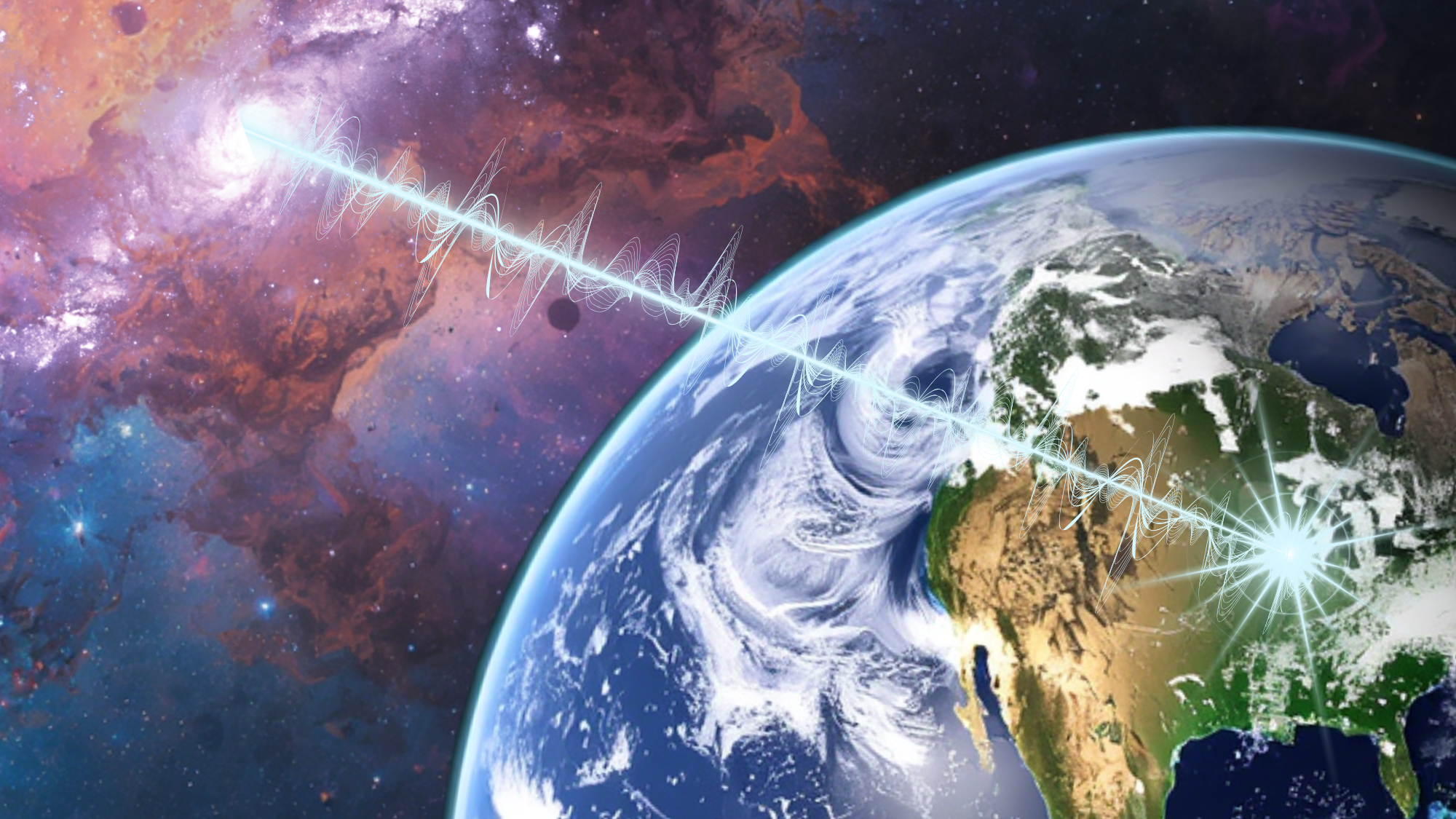
The installation, titled The Logos, currently housed in Oulu Cathedral, represents a meticulous translation of celestial physics into musical form. Melchior mapped the structure of each FRB signal to varying musical pitches, which are then broadcast through a sophisticated array of 12 loudspeakers positioned throughout the cathedral. This creates a multi-dimensional soundscape where the listener can hear the unique "signature" of different bursts, ranging from deep, resonant rumbles to sharp, high-pitched pops and ethereal whistles.
The physics of these signals is embedded directly into the music. As an FRB travels through intergalactic space, it passes through clouds of plasma and gas. This interaction causes "dispersion," where higher-frequency radio waves travel slightly faster than lower-frequency waves. Consequently, by the time the signal reaches Earth, it arrives as a "downward chirp." Melchior’s composition preserves this physical reality; listeners can hear the dispersion as the sound falls from the high ceiling of the cathedral, providing an intuitive, visceral understanding of the vast distances these signals have traversed. The youngest signals heard in the installation have been traveling for roughly 50 million years, while the oldest date back to the early universe, approximately 8 to 9 billion years ago.
The Mystery of the Engine: Magnetars vs. Collisions
Beyond the artistic merit of the project, the study of FRBs remains one of the most active frontiers in modern astronomy. The primary question driving the research is: What mechanism could possibly generate such immense power in such a short window of time?
Current theories generally fall into two categories. One hypothesis suggests that FRBs are the result of catastrophic events, such as the collision and merger of two neutron stars. This theory aligns with the extreme energy release observed in these bursts. However, recent findings have introduced complexities that challenge this model.
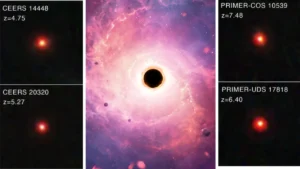
Last month, astronomers using the James Webb Space Telescope (JWST) identified the host galaxy of the most distant FRB ever recorded. The burst originated from a galaxy that existed when the universe was only 3 billion years old. Crucially, this host galaxy was identified as a small, young, star-forming dwarf galaxy. This discovery presents a challenge to the merger theory, as the coalescence of two neutron stars generally requires billions of years of orbital decay, making it unlikely that such a merger would occur in such a young, small stellar system.
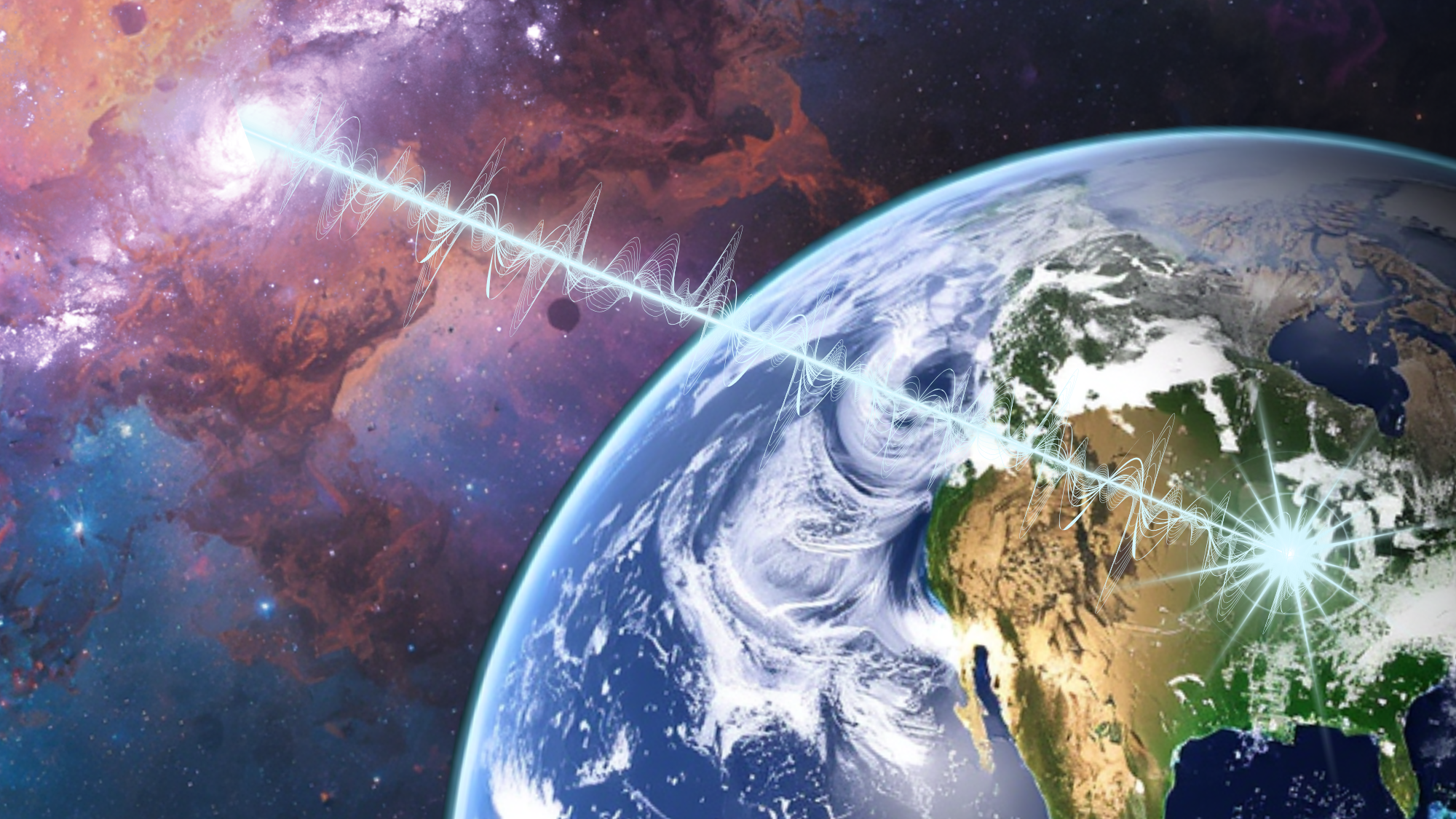
This has shifted focus toward a second, more compelling theory: the magnetar model. Magnetars are a type of neutron star characterized by exceptionally powerful magnetic fields. According to this model, an FRB is produced shortly after the birth of a young, highly magnetic neutron star, likely in the immediate aftermath of a massive star’s supernova explosion. This scenario fits the observations of young, star-forming galaxies much more closely than the merger theory, as it allows for the rapid onset of the phenomena following the life cycle of short-lived, massive stars.
The Future of Multi-Sensory Astronomy
The The Logos project is not merely an art installation; it serves as a proof-of-concept for how complex scientific data can be interpreted by the public. By moving beyond charts, graphs, and academic papers, this collaborative effort provides a new way to engage with the reality of our universe.
The project is set to culminate in a unique performance on November 21, where 30 singers will perform within the cathedral, interacting with the "voice" of the cosmos. Melchior will play the FRB data live from a keyboard, with the singers responding to the celestial signals in Finnish. Professor Masui noted in an official MIT statement that the performance is designed to be layered and rich, intended to reveal the true nature of these signals that have crossed billions of years of cosmic history to reach our sensors.
Implications and Broader Context
The rise of FRB research is indicative of a broader shift in observational astronomy. We are moving from an era of "discovery by accident" to an era of "systematic monitoring." With the integration of supercomputing and machine learning, instruments like CHIME are setting a standard for how we handle large-scale transient data.
Furthermore, the involvement of the James Webb Space Telescope provides a necessary "multi-wavelength" approach. By combining radio observations with infrared imaging, scientists can now link the location of these bursts to specific types of galaxies, providing crucial context that was previously unavailable.
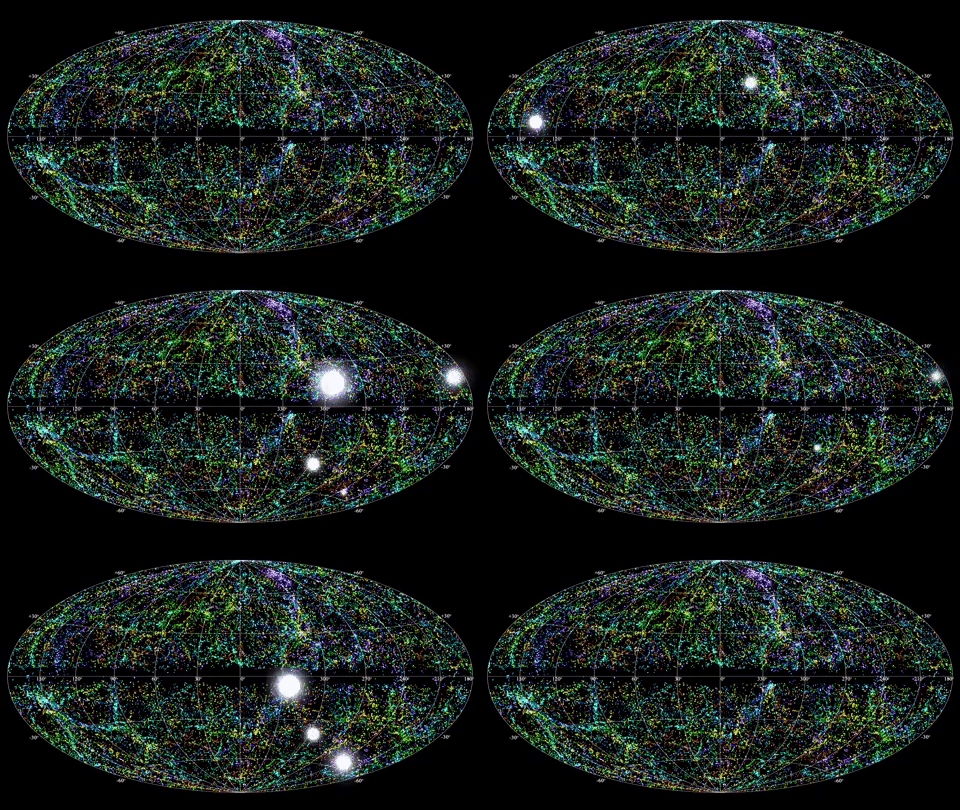
The scientific community’s continued analysis of these 4,539 recorded bursts will likely lead to a deeper understanding of the intergalactic medium—the vast, sparse clouds of gas that occupy the space between galaxies. Because these radio pulses are affected by the matter they pass through, they act as cosmic "probes." By measuring the degree of dispersion and signal scattering, researchers can effectively "map" the distribution of matter in the universe, essentially using FRBs as lighthouses to illuminate the dark, invisible structure of the cosmos.
As we continue to refine our models and expand our detection capabilities, the "melody" of the universe—as translated by Melchior and his colleagues—serves as a reminder that the most powerful events in space are not just data points to be crunched. They are profound, historical events that carry the history of the universe across time and space, waiting to be heard. The intersection of physics and art may prove to be one of the most effective tools for bringing the sheer scale of the cosmos into focus, allowing us not only to see the light of distant galaxies but to finally listen to their stories.
Related posts: