Spirit Airlines Flight Attendants Secure Crucial Privacy Protections in Landmark $10 Million Data Sale Agreement with Google

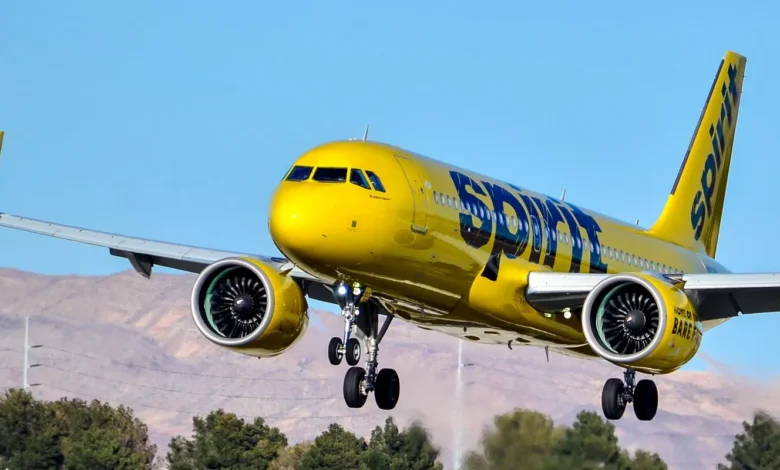
The ongoing financial and structural restructuring of Spirit Airlines has taken a significant turn, intersecting with the rapidly evolving landscape of corporate artificial intelligence development. The Association of Flight Attendants-CWA (AFA-CWA), the labor union representing thousands of flight attendants across the carrier, successfully negotiated unprecedented employee privacy safeguards regarding a proposed $10 million data transaction between Spirit Airlines and technology giant Google. Under the terms of the newly secured agreement, Google intends to utilize proprietary operational, scheduling, and logistical datasets provided by Spirit to further train and enhance its expanding suite of enterprise artificial intelligence models.
This hard-fought labor agreement removes a critical obstacle that previously threatened to derail the transaction, clearing a direct pathway for formal judicial approval. According to comprehensive court documentation totaling 157 pages released late Monday evening, a definitive judicial hearing to evaluate and potentially authorize the data sale is officially scheduled for November 17. The resolution highlights the growing tensions—and eventual negotiations—between financially distressed legacy and ultra-low-cost carriers monetizing non-traditional assets, and the labor unions tasked with safeguarding workforce digital rights and personal privacy in an era of aggressive technological expansion.
Background and Context of the Transaction
The roots of this unprecedented data sale trace back to the intense financial pressures currently facing Spirit Airlines. Operating within the ultra-low-cost carrier segment, Spirit has faced compounding economic headwinds over recent years, driven by fluctuating fuel costs, engine recall issues that grounded portions of its Airbus fleet, shifts in consumer travel preferences, and the collapse of its attempted merger with JetBlue Airways following an antitrust ruling in early 2024. As the airline sought various avenues to bolster its liquidity and streamline its balance sheet, leadership identified non-flight digital and operational assets as potential streams of revenue.
Concurrently, Silicon Valley technology firms have engaged in an intense race to acquire high-quality, real-world operational datasets to train artificial intelligence models capable of predictive analytics, workflow automation, and resource optimization. Google, which maintains extensive cloud computing and artificial intelligence divisions, identified Spirit Airlines’ operational records—encompassing complex scheduling algorithms, crew routing matrices, passenger movement analytics, and internal communication logs—as valuable inputs for its machine learning frameworks.
However, the proposed $10 million valuation of the data raised immediate red flags among labor representatives. Crew members and aviation unions grew deeply concerned that proprietary corporate datasets might inadvertently or intentionally encompass personally identifiable information (PII), biometric records, schedule histories, and internal communications, effectively monetizing the daily labor and digital footprints of frontline employees without their explicit consent or compensation.
Chronology of the Dispute and Negotiations
The conflict intensified during late summer and early autumn as court filings revealed the contours of the proposed transaction. What management initially characterized as a routine corporate asset monetization strategy was swiftly reframed by labor organizers as a potential overreach into workers’ digital privacy.
- Early September: Reports emerge within aviation industry circles regarding confidential negotiations between Spirit Airlines and a major technology conglomerate regarding the sale of operational data assets.
- Late September: Court documents associated with Spirit’s restructuring filings formally disclose the $10 million valuation and Google’s identity as the prospective buyer.
- Mid-October: The Association of Flight Attendants (AFA-CWA) issues formal warnings to corporate leadership, threatening legal intervention unless stringent privacy firewalls are established to protect flight attendant data.
- Early November: Intensive tripartite negotiations commence between Spirit Airlines legal counsel, Google representatives, and AFA-CWA leadership to draft binding privacy riders.
- Monday Night: A comprehensive 157-page court filing is released, officially confirming that the union successfully secured robust privacy protections, thereby clearing the way for the November 17 approval hearing.
Official Statements and Stakeholder Reactions
The successful negotiation of these privacy protections elicited strong statements from labor leaders, who framed the outcome as a necessary defense of worker rights in an increasingly digitized corporate environment.
"Without our union, there would have been no one to speak for workers in this fire sale of their private information," declared Sara Nelson, president of the Association of Flight Attendants-CWA, in an official statement released shortly after the court documents became public. Nelson emphasized that while unions have traditionally focused on wages, healthcare, and working conditions, the modern labor movement must aggressively adapt to protect workers from the commodification of their digital identities and workplace behaviors.
"As corporations look for new ways to generate cash through data monetization, the boundaries between corporate property and personal privacy are increasingly blurred. Our members’ schedules, communications, and daily operational interactions cannot simply be bundled and sold to the highest bidder in Silicon Valley without absolute guarantees that individual privacy remains inviolable," Nelson added.
Representatives for Spirit Airlines declined to comment extensively on the specifics of the negotiations prior to the judicial hearing, but corporate insiders noted that management views the $10 million infusion as a helpful component of its broader financial stabilization plan. Google representatives likewise maintained a measured stance, reiterating the company’s commitment to responsible data governance and compliance with all negotiated privacy stipulations.
Supporting Data and Industry Metrics
To contextualize the scale of this transaction, the $10 million price tag represents a modest yet meaningful liquidity injection for an ultra-low-cost carrier navigating severe restructuring pressures. To put the figure in perspective:
- Spirit Airlines’ annual operating revenues historically exceed $5 billion, making a $10 million asset sale a fractional percentage of total top-line revenue, yet disproportionately impactful as pure cash generation during a liquidity squeeze.
- The Association of Flight Attendants represents roughly 6,000 flight attendants at Spirit Airlines, meaning the privacy protections directly impact thousands of frontline aviation professionals whose daily operational logs feed into scheduling software.
- The technology sector’s expenditure on specialized enterprise datasets for AI training has grown exponentially, with global market research indicating billions of dollars annually funneled into proprietary B2B data acquisitions across aviation, logistics, and supply chain sectors.
Broader Impact and Industry Implications
The resolution of the Spirit-Google data dispute establishes a crucial legal and operational precedent for the entire aviation industry and the broader corporate landscape. As airlines and other service-sector companies increasingly digitize their operations, the algorithms that manage crew scheduling, aircraft routing, and customer service generate vast oceans of data.
Historically, corporate management viewed such data as exclusively belonging to the company, free to be licensed, sold, or utilized for algorithmic development without consulting the workforce whose actions generated the metrics. The intervention by the AFA-CWA signals a definitive shift. Future corporate restructurings involving data sales or AI partnerships will likely face heightened scrutiny from labor unions demanding explicit privacy carve-outs, anonymization guarantees, and restrictions on employee surveillance.
Furthermore, the involvement of artificial intelligence developers like Google highlights the insatiable demand for domain-specific training data. While general-purpose language models and consumer AI applications have largely exhausted publicly available internet text, specialized enterprise applications require complex, real-world operational logic—such as the intricate domino effects of airline delays, crew reserve assignments, and weather rerouting. By securing privacy protections without entirely blocking the transaction, the union has demonstrated that labor and technological innovation can coexist, provided that strict guardrails protect the workforce.
All eyes now turn to the scheduled November 17 court hearing. With the primary labor objection resolved and formal privacy protections codified into the transaction framework, the presiding bankruptcy or civil court judge is widely expected to review the agreement favorably, marking a unique milestone in the intersection of aviation labor law and artificial intelligence development.