A Legacy Untethered from Dogma
Unlike many of his European contemporaries who felt beholden to the rigid, austere tenets of the Bauhaus movement, Gio Ponti occupied a distinct, fluid space in the design world. Throughout his six-decade career, Ponti functioned as an architect, industrial designer, editor, and painter, maintaining a consistent refusal to be categorized by a single "utopian" aesthetic. His work often functioned as a dialogue between the deep history of the Mediterranean and the forward-looking trajectory of Italian industry.
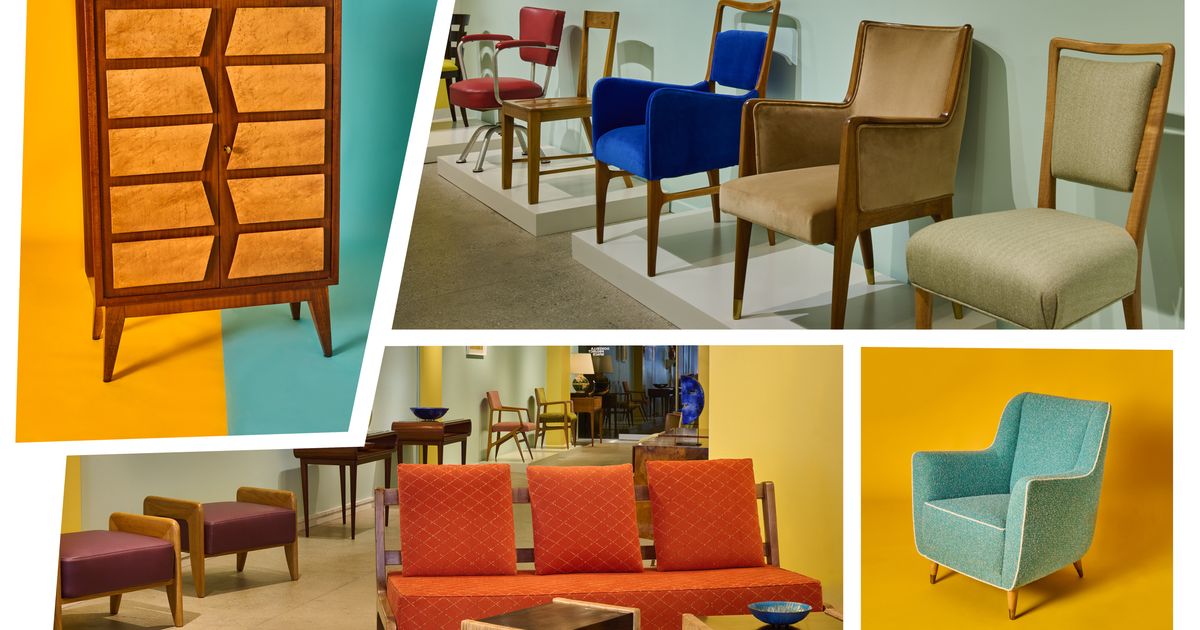
This retrospective, which brings together nearly 80 pieces—many of which have not been available for public viewing in two decades—highlights this versatility. The exhibition was curated through a collaborative effort between gallerist Paul Donzella and noted design historian Brian Kish. Their curation process involved years of extensive research, spanning from high-profile auction houses to the discovery of rare, private caches of Ponti artifacts. Among the most notable finds were pieces secured through unconventional channels, including those previously held by European nobility and charitable organizations, underscoring the scarcity and historical importance of the items currently on display.
A Chronology of Innovation
To understand the scope of the exhibition, one must view Ponti’s timeline as a series of aesthetic evolutions rather than static periods.
- The 1920s and 1930s: During his early years, Ponti experimented with neoclassical motifs. However, these were never mere recreations of the past; he infused them with modern geometry, often playing with material pairings that were considered radical at the time. This era marked the birth of his signature "paradigmatic curved edge," a form that would evolve from rigid, Deco-inspired geometry to the fluid, organic shapes that became his hallmark.
- The 1940s and 1950s: Following the conclusion of World War II, Ponti’s work became increasingly defined by the economic realities of Italy’s postwar recovery. He leaned into industrial viability, developing furniture that could be mass-produced without sacrificing his insistence on decoration. It was during this time that he demonstrated an uncanny ability to navigate between "high" and "low" design—producing luxury pieces for the wealthy while simultaneously refining accessible designs for veterans and middle-class homes.
- The 1960s and 1970s: In the later stages of his career, Ponti shifted toward what historians describe as "weightlessness." The lounge chairs designed for the Parco dei Principi hotels serve as the quintessential example of this period. Featuring ultra-thin legs and curved shells, these pieces appeared to defy gravity, pushing the limits of structural engineering and demonstrating that, even in his 70s, Ponti was arguably more avant-garde than his younger competitors.
Materiality and the Role of Decoration
A critical takeaway from the current exhibition is Ponti’s staunch defense of ornamentation. While peers like Le Corbusier championed the "ornament is crime" philosophy of high modernism, Ponti viewed decoration as a necessary conduit for emotional engagement. He believed that even the most functional object should provide aesthetic delight, particularly in times of societal struggle.
His material choices further reflect this philosophy. He was known for bold, sometimes shocking combinations: the marriage of low-cost Formica with high-end burled walnut, or the pairing of inexpensive bamboo caning with exotic African padauk wood. These experiments were not merely stylistic choices; they were intentional efforts to democratize beauty. His work in editing Domus—the magazine he established—provided him with a platform to test these theories and document the evolving tastes of the global design community, often using the magazine to provide a theoretical framework for his own physical output.
The Superleggera: A Case Study in Failure and Success
The exhibition features a 1950 prototype of the iconic 699 Superleggera chair, a piece that serves as an essential historical lesson. While the final, mass-produced version of the chair is celebrated for its extreme lightness (weighing roughly 3.75 pounds), the prototype on display highlights the complexities of production. The original design, featuring intricate carvings and brass hardware, proved too difficult to manufacture at scale.
This serves as a reminder that Ponti’s career was defined as much by his willingness to fail as by his successes. His persistent iterations on the Superleggera design eventually led to such widespread success that the manufacturer, Cassina, was forced to issue public warnings in Domus regarding copyright infringement—a testament to the chair’s status as a quintessential piece of modern furniture.
Professional Perspectives and Market Implications
According to Paul Donzella, the challenge of the retrospective was not in finding pieces, but in narrowing down the selection. "I knew no matter how big the collection we could gather, there would always be key pieces that were left out," Donzella noted. The exhibition aims to bridge the gap for a new generation of collectors and designers who may only know Ponti through secondary markets or digital archives.
For Brian Kish, the importance of the show lies in the "generosity" of Ponti’s design ethos. In a modern landscape where designers are often risk-averse—fearing the scrutiny that comes with any minor deviation from established stylistic norms—Ponti’s career offers a roadmap for creative autonomy. The exhibition is not merely a nostalgia piece; it is a clinical look at how one individual managed to maintain a consistent internal logic while adapting to the rapidly shifting political and economic landscape of the 20th century.
Broader Impact and Future Outlook
"Designing Optimism" is the first in a series of planned international retrospectives slated for the next several years, coinciding with the establishment of a permanent archive for Ponti’s papers and drawings in Milan. This movement suggests a broader critical reevaluation of mid-century Italian design.
Beyond the aesthetic appeal of the furniture, the exhibition prompts a discussion on the role of the designer as a cultural mediator. By refusing to conform to the narrow definitions of "Modernism," Ponti ensured his work would remain relevant to future generations. He proved that industrial design does not have to be cold, and that mass production does not have to be devoid of human touch.
As the exhibition runs through December 22, it stands as a testament to the idea that design is a living process. For those who view furniture as an extension of architecture and social history, the Donzella show provides a necessary, granular look at a career that helped define the modern home. The lasting implication of this retrospective is clear: Ponti’s refusal to stick to one trend or movement was not a sign of indecision, but a strategic, lifelong commitment to the idea that optimism is a vital component of utility. In an era often characterized by digital transience, the endurance of these wooden, metal, and fabric forms serves as a compelling argument for the value of tangible, thoughtfully crafted objects.