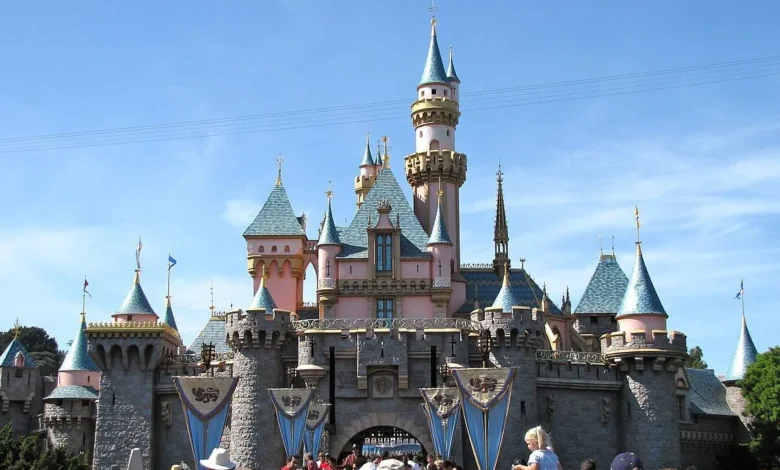
The Walt Disney Company has executed a round of layoffs impacting between 100 and 200 employees within its lucrative theme park division, according to sources familiar with the matter. The workforce reduction primarily targeted the renowned Walt Disney Imagineering (WDI) team—the creative engine responsible for designing and developing groundbreaking attractions, immersive lands, and physical experiences across the global portfolio of Disney resorts, cruise lines, and parks.
While modest in comparison to the massive enterprise-wide restructurings of previous years, the cuts signal a targeted recalibration within Disney’s Experiences division. As the company navigates evolving macroeconomic pressures, rising operational costs, and shifting consumer behavior in the post-pandemic tourism landscape, leadership appears to be tightly managing its overhead while continuing to pour billions of dollars into major capital expenditure projects.
The targeted nature of the layoffs has sent ripples through the creative community and labor advocates alike, raising questions about how Disney plans to maintain its historical standards of innovation and storytelling with a leaner workforce.
Anatomy of the Layoffs: The Focus on Imagineering
The recent workforce reduction specifically zeroed in on the Imagineering wing, a legendary division founded by Walt Disney himself—originally under the name WED Enterprises—to conceptualize and build Disneyland. Over the decades, Imagineers have transformed the amusement park industry by pioneering audio-animatronics, ride-simulation technology, and richly themed immersive environments.
According to insiders, the impacted roles span various disciplines within the creative and technical pipeline, including concept design, project management, engineering, and architectural support. While Disney has not publicly detailed the exact breakdown of the departures, the decision to trim headcount in the creative arm of the Experiences division indicates a strategic shift in how the company resource-allocates for future pipeline developments.
The layoffs come at a peculiar juncture for Disney’s parks business. Historically, the experiences segment—which encompasses domestic and international theme parks, cruise lines, vacation clubs, and consumer products—has served as the financial anchor for the broader conglomerate, consistently offsetting volatility in linear television and streaming revenues. However, recent quarterly earnings reports have pointed toward moderating growth, normalization of consumer demand following post-pandemic "revenge travel" surges, and rising wage and infrastructure expenses.
A Chronology of Restructuring and Strategic Pivots
To understand the context of these recent layoffs, it is necessary to examine Disney’s corporate restructuring trajectory over recent years, particularly under the leadership of CEO Bob Iger, who returned to the helm in November 2022.
In early 2023, shortly after his return, Iger announced a sweeping corporate overhaul aimed at slashing $5.5 billion in costs and eliminating 7,000 jobs globally across three distinct waves. That historic restructuring was designed to restore authority to creative executives, streamline operations, and aggressively steer the company’s streaming business toward profitability.
While the 2023 layoffs heavily impacted television, film, corporate administration, and general entertainment divisions, the domestic theme parks largely escaped the deepest cuts due to their booming financial performance at the time. As visitors flooded back to parks in California, Florida, and international hubs, the Experiences division was treated as an engine of uninterrupted growth.
By mid-2024 and into 2025, however, early signs of consumer fatigue began to emerge. Higher inflation, exhausted consumer savings, and increased pricing sensitivity prompted Disney executives to acknowledge a cooling in domestic park attendance. In response, leadership emphasized targeted promotional offerings, such as discounted multi-day tickets and dining card deals, to stimulate demand.
Despite these consumer-facing adjustments, the underlying pressure to optimize profit margins remained high. The late 2026 decision to trim 100 to 200 roles within Imagineering represents a continuation of this cost-discipline ethos, shifting from broad corporate reorganizations to surgical, division-specific efficiencies.
The Massive Capital Expenditures Contrast
The decision to cut personnel within the creative development team appears contradictory on the surface, given Disney’s simultaneous announcement of historic, multi-billion-dollar investments in its theme park infrastructure.

Earlier in 2026, Disney executives doubled down on a previously announced plan to invest roughly $60 billion into its Experiences division over the coming decade. This monumental capital expenditure plan is earmarked for expanding theme park footprints, updating aging attractions, introducing entirely new intellectual property (IP) lands, and expanding the Disney Cruise Line fleet.
Major upcoming projects currently in various stages of design and construction include expansions inspired by Cars and Villains at the Magic Kingdom in Walt Disney World, a massive Monsters, Inc. land at Disney’s Hollywood Studios, and ongoing international developments at Disneyland Paris, Tokyo Disney Resort, and Hong Kong Disneyland.
Industry analysts note that a capital-heavy strategy does not necessarily require a static or growing internal labor force. Corporations often rely heavily on third-party vendors, specialized engineering contractors, and external architectural firms to handle peak periods of project execution. By trimming permanent staff within Imagineering, Disney may be shifting toward a more flexible, outsourced model for project-based development, mitigating long-term fixed labor costs while still executing its ambitious capital roadmap.
Financial Performance of Disney’s Experiences Division
The economic health of Disney’s parks and resorts business provides crucial context for understanding management’s current operational posture. For years, the Experiences segment has been the crown jewel of the company’s financial statements.
In fiscal reports leading up to 2026, the division frequently reported quarterly revenues exceeding $8 billion, driven by robust per-capita spending, high occupancy rates at resort hotels, and steady yield management practices like Lightning Lane monetization. Operating income within the segment routinely anchored corporate performance during quarters when the film studio faced box office misfires or the direct-to-consumer streaming business was deep in the red.
However, the rate of growth has inevitably slowed. During recent earnings calls, Chief Financial Officer Hugh Johnston and other senior executives noted that consumers were behaving more cautiously, prompting a normalization from the record-shattering margins observed in 2022 and 2023. International parks, particularly Tokyo Disney and Disneyland Paris, have generally continued to perform strongly, bolstered by favorable international tourism flows and local demand. Conversely, domestic properties in Orlando and Anaheim have faced increased scrutiny over pricing models, accessibility, and competition from rival universal destinations.
Industry Reactions and Labor Implications
News of the layoffs has elicited concern from industry observers, union representatives, and Disney enthusiasts who monitor the artistic integrity of the parks.
Walt Disney Imagineering holds a mythic status among fans and industry professionals. The division operates at the intersection of architecture, cinematic storytelling, mechanical engineering, and software development. Workforce reductions in this specialized niche risk the loss of institutional knowledge—decades of proprietary expertise regarding how to build, maintain, and innovate physical entertainment spaces.
While major labor unions representing front-line operational cast members—such as ride operators, merchandise hosts, and food service workers—have largely been focused on collective bargaining and wage negotiations at Disneyland Resort and Walt Disney World, professional and creative employees often lack the same collective bargaining structures, leaving them more vulnerable to sudden corporate downscaling.
Furthermore, competitors such as Universal Destinations & Experiences are aggressively expanding their domestic and global footprints, most notably with the opening of Universal Epic Universe in Orlando. In an increasingly competitive landscape where immersive themed entertainment is rapidly evolving through augmented reality, projection mapping, and advanced robotics, retaining top-tier creative talent is widely considered paramount to maintaining a market leadership position.
Broader Implications for the Future of Themed Entertainment
The reduction of 100 to 200 Imagineering jobs, while numerically small in the context of Disney’s global workforce of over 220,000 employees, serves as a bellwether for the broader entertainment and tourism sectors. It highlights a corporate reality where even highly profitable divisions are subject to rigorous cost-containment measures as companies adapt to higher interest rates, economic uncertainty, and shareholder demands for disciplined capital allocation.
For Disney, the challenge moving forward will be balancing financial prudence with the artistic ambition that defines its brand. The magic of a Disney park relies fundamentally on the illusion of boundless creativity and flawless execution. As the company presses ahead with its multi-decade, multi-billion-dollar expansion plans, the remaining Imagineers will be tasked with bearing a heavier workload, relying more heavily on external partnerships, and demonstrating that leaner teams can still deliver the world-class experiences guests have come to expect.
As Disney prepares for its upcoming fiscal disclosures and strategic updates, stakeholders and industry analysts will be watching closely to see whether these workforce adjustments remain isolated to the creative development arm or signal a broader operational tightening across the global resort ecosystem.
Related posts: