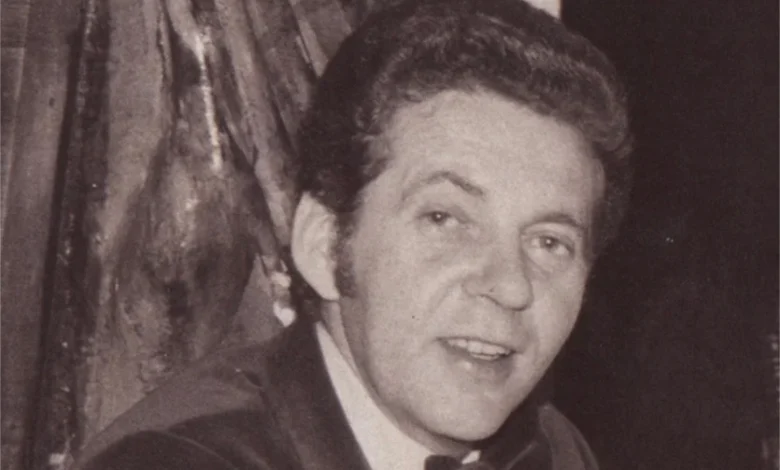
His passing on October 22 marks the end of a career that spanned more than three decades at the center of American television’s golden age of comedy. From the zany, science-fiction infused humor of the 1960s to the domestic sitcoms that defined the 1980s, Barret’s narrative voice helped shape the cultural landscape for millions of viewers.
A Career Born from the Classroom
The trajectory of Barret’s professional life was fundamentally altered in 1961 when he enrolled in a weekly television writing course taught by industry veteran Robert C. Dennis. At the time, Barret was already an established member of the Screen Actors Guild (SAG) and possessed a background in performing arts that included childhood training in tap dancing and the violin. However, it was his transition to the writer’s room that would prove to be his most enduring legacy.
The mentorship between Barret and Dennis quickly evolved into a creative partnership. The two men began collaborating on scripts, marking the beginning of a prolific run that saw Barret contribute to over 30 television series throughout his career. This period represented a transition for the medium, as television moved from live broadcasts to the sophisticated multi-camera sitcom structures that would dominate the ratings for decades.
Chronology of a Prolific Writer
Barret’s filmography reads like a syllabus for the history of 20th-century American television. His early work was defined by the high-concept, stylized humor of the 1960s. He contributed scripts to some of the most iconic programs of the era, including:
- 1960s: My Favorite Martian, Batman, Bewitched, The Andy Griffith Show, and I Spy.
- 1970s: The Partners, Sanford and Son, and Welcome Back, Kotter.
- 1980s: Too Close for Comfort.
These shows were instrumental in establishing the tropes of the sitcom genre. For instance, his work on Bewitched required a balance of slapstick and fantasy, while Sanford and Son demanded a sharp, character-driven grit that challenged the norms of television at the time. By the time he reached the 1980s, Barret had mastered the art of pacing, timing, and the "setup-punchline" structure that served as the backbone of the television industry.
The Creation of Too Close for Comfort
While Barret’s contributions to existing shows were significant, his greatest success arrived in 1980 when he teamed up with his longtime writing partner, Arne Sultan, to create Too Close for Comfort. The series, which aired on ABC, became a hallmark of the early 80s, centered on the domestic friction between a conservative, neurotic cartoonist, Henry Rush (played by Ted Knight), and his two adult daughters living in the apartment directly below him in San Francisco.
The show was a significant cultural artifact of the era, often highlighting the generational divide between the "Baby Boomer" children and their traditionalist parents. With Nancy Dussault and Jim J. Bullock rounding out the cast, the show achieved strong syndication numbers, ensuring that it reached audiences long after its initial broadcast run concluded in 1987. Beyond writing and executive producing, Barret took a more active role in the show’s later years, directing 13 episodes and exerting a unique creative control that was rare for writers of that period.
Beyond the Screen: Plays and Feature Films
Barret’s creative ambitions were not confined to the small screen. Along with Arne Sultan, he expanded his repertoire to include theatrical plays and feature film writing. Most notably, the pair wrote the screenplay for the 1989 comedy See No Evil, Hear No Evil, starring Gene Wilder and Richard Pryor. The film, which capitalized on the immense chemistry between the two leads, remains a cult classic and serves as a testament to Barret’s ability to transition his comedic sensibilities from the television format to the big screen.
Personal Background and Formative Years
Before his ascent in Hollywood, Barret was a product of the Los Angeles public education system, graduating from Hollywood High School and later attending Los Angeles City College. His daughter, J.K. Barret, noted that her father’s creative instincts were rooted in a lifelong intellectual curiosity.
"He was a lifelong learner with a keen, curious mind and a gift for impeccable comic timing," J.K. Barret stated. "He spent nine decades cultivating his passion for the performing arts, music, and entertainment that began with the tap dancing and violin lessons he took in childhood in Guangzhou, Ohio."
This diverse background—ranging from musical performance to acting—provided him with a rhythmic understanding of dialogue. In comedy, timing is frequently compared to musical composition; Barret’s early training in the arts likely provided the foundation for the "impeccable timing" his family and colleagues often cited.
Industry Impact and Legacy
The passing of Earl Barret invites a reflection on the role of the "staff writer" during a period when television was consolidating its power as the primary medium of American entertainment. Unlike the "showrunner-as-auteur" model that dominates the streaming era, writers like Barret functioned as the engine room of the industry. They were responsible for maintaining consistency across seasons, developing character arcs, and ensuring that humor remained accessible to a massive, broad-spectrum audience.
Industry analysts note that the work of writers from Barret’s generation provided the blueprint for the modern sitcom. The structural efficiency of his scripts—balancing A-plots and B-plots within a tight 22-minute timeframe—remains the industry standard. His ability to work across genres, from the superhero antics of Batman to the social commentary found in Sanford and Son, demonstrates a versatility that is increasingly rare in a modern television landscape often characterized by hyper-specialization.
Family and Personal Life
Barret’s personal life was marked by long-standing relationships and a deep connection to his family. He is survived by his wife, Barbara Barnett Barret; his daughter, J.K. Barret; his son, John Nelson; and five grandsons. He was predeceased by his daughter, Lisa Nelson.
Friends and industry peers have characterized him as a man of great humility who preferred the quiet satisfaction of a well-crafted joke to the fanfare of celebrity. His move to Sherman Oaks, a community that has long served as a quiet enclave for many of Hollywood’s veteran writers and directors, allowed him to maintain his focus on his creative projects and his family throughout his later years.
Conclusion
The death of Earl Barret serves as a reminder of the foundational figures who built the edifice of modern television comedy. As the industry continues to evolve, the legacy of writers who navigated the transition from the mid-century broadcast era to the syndication-heavy 1980s becomes ever more significant. Barret’s work provided a shared cultural vocabulary for generations of viewers, and his influence remains embedded in the DNA of the sitcom format.
While the landscape of media consumption has shifted toward on-demand streaming and fragmented audiences, the fundamental principles of comedy that Barret refined over his 30-year career remain the touchstones for any writer attempting to capture the human condition through humor. His journey from a childhood of music lessons in Ohio to the heights of Hollywood success is a definitive chapter in the story of American entertainment.