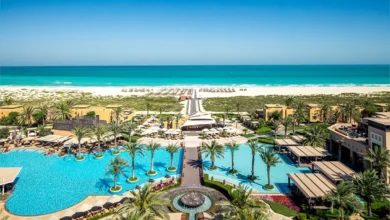
Hyatt Hotels Corporation has reported a robust financial performance for the third quarter, driven primarily by an unyielding surge in demand from affluent vacationers. The hospitality giant announced strong metrics across its global portfolio, underpinned by exceptional growth in its luxury, resort, and all-inclusive segments. During a subsequent earnings call with investors and financial analysts, company leadership pointed to the high-net-worth demographic as the foundational pillar of the brand’s current expansion trajectory, prompting an upward revision of corporate forecasts for the remainder of the fiscal year.
The robust quarterly results signal a broader, ongoing shift within the post-pandemic travel ecosystem. While budget-conscious and mid-tier travel segments have exhibited signs of normalization and price sensitivity, the high-end luxury sector continues to defy broader economic headwinds. For Hyatt, this resilience has translated into significant top-line growth, expanded profit margins, and increased confidence from Wall Street.
Main Facts and Financial Highlights
During the third quarter, Hyatt demonstrated notable financial strength, outperforming several consensus estimates set by financial analysts. A primary driver of this success was the performance of its Revenue Per Available Room (RevPAR)—a critical industry metric measuring hotel asset profitability—which climbed by 8.2% across the United States.
Executives noted that approximately 50 basis points of this RevPAR lift were directly attributable to the commercial tailwinds provided by the FIFA World Cup events hosted across North America. However, the overarching driver remained the sustained, long-term appetite for high-end hospitality experiences.
Adjusted EBITDA (Earnings Before Interest, Taxes, Depreciation, and Amortization) saw a dramatic 19% increase, reaching $295 million after adjusting for the financial impact of properties sold over the previous year. This metric highlights not only the operational efficiency of Hyatt’s core properties but also the successful execution of its asset-light business model, which relies increasingly on management and franchise fees rather than direct real estate ownership.
Buoyed by these strong third-quarter figures, Hyatt’s executive leadership elevated the company’s full-year outlook. The corporation now projects full-year RevPAR growth to land between 5% and 5.5% for 2026. This represents a notable upward revision from the previous guidance of 3.5% to 4.5% issued during the July earnings report. The newly projected range comfortably exceeds the roughly 4.7% average growth rate anticipated by Wall Street analysts prior to the earnings release.
Chronology and Market Evolution
The trajectory leading to Hyatt’s current financial standing has been carefully engineered over several years through strategic acquisitions, portfolio diversification, and a deliberate pivot toward lifestyle and all-inclusive leisure properties.
In late 2021, Hyatt completed its landmark $2.7 billion acquisition of Apple Leisure Group (ALG), a move that radically transformed the company’s footprint in the luxury all-inclusive resort space, particularly in Mexico and the Caribbean. This acquisition brought renowned brands such as Secrets, Dreams, and Ziva into the Hyatt fold, positioning the company to capture the pent-up demand for experiential, premium leisure travel that exploded as global travel restrictions receded.
Throughout 2022 and 2023, Hyatt integrated these properties while simultaneously expanding its World of Hyatt loyalty program, which crossed significant membership milestones. By 2024 and 2025, the company focused heavily on expanding its luxury lifestyle portfolio through organic development and strategic conversions, ensuring that high-end travelers had access to bespoke properties in both urban centers and premier resort destinations.
By mid-2026, as macroeconomic pressures—including fluctuating inflation rates and high interest rates—began to impact consumer discretionary spending in lower-income brackets, Hyatt’s strategic bet on the affluent demographic began to pay substantial dividends. The third quarter of 2026 served as a validation period for this strategy, proving that the luxury leisure segment possesses unique insulation against broader economic softening.
Supporting Data and Industry Context
The financial metrics reported by Hyatt align with broader macroeconomic data regarding luxury consumer behavior in the mid-2020s. According to various hospitality and tourism analytics firms, while middle-market consumers have increasingly sought out value-driven accommodations, shorter booking windows, and domestic road trips, the affluent traveler segment has continued to prioritize long-haul international travel, premium cabin flights, and five-star resort stays.
Hyatt’s focus on all-inclusive luxury resorts—exemplified by properties such as Impression Isla Mujeres by Secrets—has struck a chord with modern consumers who value seamless, all-inclusive experiences without sacrificing upscale design, fine dining, and personalized service. These properties have consistently reported higher-than-average occupancy rates and robust average daily rates (ADR), allowing Hyatt to protect and expand its profit margins even as labor and operational costs have risen globally.
Furthermore, the integration of major global sporting and cultural events, such as the FIFA World Cup, provided temporary yet powerful boosts to urban markets during the quarter. Major host cities experienced influxes of international visitors who typically command higher daily budgets, lifting overall urban RevPAR metrics and complementing the steady, baseline performance of Hyatt’s leisure resort portfolio.
Official Responses and Executive Insights
Addressing investors and analysts during the Thursday earnings conference call, Hyatt Chief Executive Officer Mark Hoplamazian emphasized the structural nature of the company’s recent gains.
"Luxury leisure has just remained the juggernaut of growth for us," Hoplamazian stated. He elaborated that the sustained demand is not merely a temporary post-holiday or seasonal spike, but rather a fundamental shift in consumer values where experiences, wellness, and travel take precedence over material goods in the discretionary spending hierarchy of high-net-worth individuals.
Hyatt’s Chief Financial Officer and other members of the executive leadership team echoed these sentiments, noting that forward-looking booking curves for the upcoming holiday season and early next year remain strong. They highlighted that group travel and business transient segments have also shown steady, incremental improvements, providing a dual-engine recovery model where corporate demand supports urban properties while luxury leisure props up resort portfolios.
Industry analysts have responded favorably to the management team’s commentary, noting that Hyatt’s disciplined approach to capital allocation, combined with its high-margin fee-based revenue streams, places the company in a defensive yet opportunistic posture relative to its major competitors in the global hospitality sector.
Broader Impact and Market Implications
The success of Hyatt’s luxury-centric strategy carries significant implications for the broader hospitality and tourism industry. As hotel chains evaluate their development pipelines in an era of elevated construction financing costs, Hyatt’s results provide a clear signal that capital is best deployed toward upscale, luxury, and lifestyle segments where pricing power remains intact.
Competitors such as Marriott International, Hilton Worldwide, and IHG Hotels & Resorts have likewise accelerated their own luxury and lifestyle brand expansions in recent years. However, Hyatt’s early and aggressive entry into the luxury all-inclusive market via the Apple Leisure Group acquisition has given it a distinct competitive moat.
For real estate developers and property owners, Hyatt’s stellar RevPAR growth and rising EBITDA make its flag increasingly attractive for conversions and new builds. This franchisee confidence is crucial for Hyatt’s ongoing asset-light transition, enabling the company to expand its global footprint without taking on substantial balance-sheet liabilities.
Looking forward, the primary challenge for Hyatt will be sustaining this momentum against potential macroeconomic headwinds, currency fluctuations, and geopolitical uncertainties that could impact international travel patterns. Nevertheless, with a raised full-year guidance, a loyal and growing World of Hyatt membership base, and an entrenched position in the resilient luxury leisure market, the corporation enters the final stretch of 2026 on exceptionally solid footing.