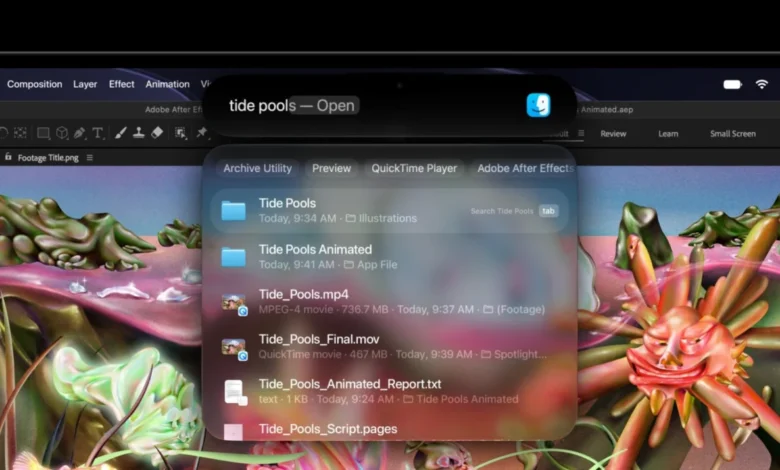
The boundary line separating iOS and macOS has grown significantly fainter following a major hardware announcement that marks a watershed moment in Apple’s product design philosophy. On Wednesday, the culmination of Apple’s heavily publicized "Pro and Tell" week of product announcements arrived with the official unveiling of the redesigned MacBook Pro. While industry analysts and consumers spent the days leading up to the event focusing heavily on the integration of a long-awaited touch-enabled PROLED XDR display, a more subtle and transformative interface change was quietly tucked away inside the technical specifications of the official press release. For the first time in the history of personal computing at Apple, a Mac product will feature the Dynamic Island module, bridging a prominent hardware and software design language previously exclusive to the iPhone lineup.
The inclusion of the Dynamic Island on the new MacBook Pro represents more than a mere cosmetic crossover; it signifies a structural shift in how macOS manages real-time information, system notifications, and background processes. Although Apple dedicated a relatively brief portion of its official documentation to the feature, the implications for desktop and laptop computing are profound. As Apple continues to unify the user experience across its entire hardware ecosystem, the arrival of the Dynamic Island on the Mac signals a concerted effort to streamline interactions between mobile and desktop environments.
Anatomy of the Mac Dynamic Island
According to Apple’s official product release notes and accompanying media demonstrations, the MacBook Pro’s Dynamic Island functions largely parallel to its smartphone counterpart. The pill-shaped software-and-hardware cutout acts as an interactive hub for system alerts, persistent activities, and contextual actions. Prominently featured functions include a dedicated integration point for the company’s evolving Siri AI assistant, system-wide Spotlight searches, and real-time Live Activities.
Promotional screenshots and interface walkthroughs released by Apple indicate that users can leverage the Dynamic Island pop-up to manage a variety of streamlined desktop tasks. These include controlling active music and media playback without opening full applications, monitoring incoming AirDrop file transfers, and receiving immediate system status updates. Despite the functional parity with the iPhone implementation, one notable hardware distinction remains: the MacBook Pro does not incorporate Face ID infrared facial recognition technology. Biometric authentication and system security on the new laptop continue to rely exclusively on the physical Touch ID sensor embedded within the keyboard deck.
The Pro and Tell Week Chronology
The announcement of the touchscreen MacBook Pro and its integrated Dynamic Island serves as the apex of a meticulously orchestrated product rollout. Throughout the "Pro and Tell" announcement week, Apple utilized its digital channels to systematically refresh several key hardware lines. The sequence began early in the week with updates directed at the portable and compact computing segments, drawing considerable consumer interest toward high-performance mobile silicon and refined form factors.

By mid-week, attention shifted squarely to the professional computing tier. The unveiling of the new MacBook Pro models captured the primary headlines, introducing not only the controversial and long-requested touchscreen interface—long dismissed by former Apple executives in the early years of the iPad—but also advanced display technologies branded under the PROLED XDR nomenclature. The revelation of the Dynamic Island arrived as the final major hardware surprise of the multi-day event, completely reshaping expectations regarding the future trajectory of macOS interface design.
Technological Context and Industry Evolution
The convergence of iOS and macOS interface paradigms has been a slow, deliberate process spanning more than a decade. Beginning with the introduction of the Mac App Store and Launchpad in macOS Lion, followed closely by the integration of Continuity and Handoff features in subsequent years, Apple has consistently sought to ease the friction of transitioning between mobile devices and desktop computers.
The introduction of Apple Silicon M-series processors further accelerated this convergence by allowing native iOS and iPadOS applications to run directly on Mac hardware without translation layers. However, until this week’s announcement, the physical display boundary of the Mac had remained strictly traditional. The physical hardware notch introduced in previous MacBook Pro generations was strictly static, housing the FaceTime camera and hardware sensor array without interactive software capabilities. By transforming this camera housing into a dynamic, responsive UI element via the Dynamic Island, Apple is maximizing the utility of the necessary screen cutout, turning an aesthetic compromise into an interactive asset.
Market Implications and Ecosystem Synergy
Industry observers and human-interface design experts have already begun analyzing the broader commercial and ergonomic implications of bringing a mobile-first UI element to a desktop operating system. For professionals who split their daily workflows between an iPhone, an iPad, and a Mac, the presence of a familiar interaction model reduces cognitive load. Finding a consistent visual language for notifications, media controls, and AI interactions across all primary screens creates a cohesive digital ecosystem that few competitors can replicate.
Furthermore, the introduction of the Dynamic Island opens new creative avenues for third-party software developers. Software houses that have already optimized their iOS applications to take advantage of Live Activities and interactive notifications can now extend those capabilities to the macOS platform with minimal friction. This unified development approach reinforces Apple’s long-term strategy of lowering barriers between its software ecosystems.
As these new touchscreen MacBook Pro units prepare to hit store shelves and arrive in the hands of consumers and enterprise customers alike, the tech industry will be watching closely to evaluate real-world ergonomics. Whether the Dynamic Island proves as indispensable on a 14-inch or 16-inch laptop screen as it has proven on a handheld smartphone remains to be seen. Nonetheless, Wednesday’s announcement cements a new design direction for Apple, establishing that the future of the Mac will look increasingly interconnected with the rest of the company’s hardware family.