Sylvester Stallone Reveals Complicated Relationship With Father During Rocky Production While Promoting Upcoming Memoir

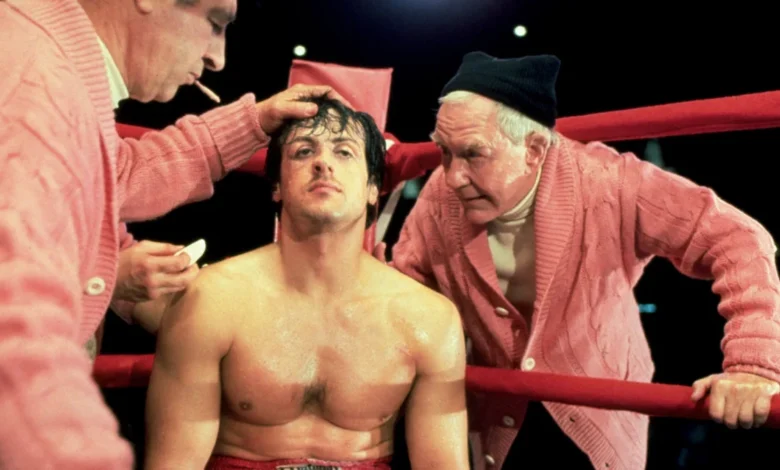
The meteoric rise of Sylvester Stallone, sparked by the 1976 cultural phenomenon Rocky, is a story often told through the lens of Hollywood triumph. However, as the three-time Academy Award nominee prepares for the October 23 release of his memoir, The Steps, a more complex, somber narrative has emerged regarding the personal toll behind the scenes. Stallone recently revealed that the production of his breakout film was marked by a volatile and deeply painful confrontation with his late father, Frank Stallone Sr., shedding new light on the strained paternal dynamics that defined the actor’s early years.
A Quest for Paternal Approval
The production of Rocky was, for Stallone, more than just a professional endeavor; it was an attempt to bridge an emotional chasm between himself and his father. In a candid interview with The New York Times, Stallone described the casting of his father as the bell ringer in the film’s climactic title fight as a deliberate gesture—a plea for validation.
“It was like: I just want you to love me for a little bit,” Stallone explained. “Like, look what I did! Share it with me. I know you thought I was a fool my whole life, but here we are.”
For Stallone, who wrote the screenplay while struggling to find his footing in the industry, the inclusion of his father was meant to be a moment of reconciliation. Instead, it devolved into one of the most stressful episodes of the production. The tension on set became palpable, serving as a microcosm of a lifetime of suppressed grievances and unmet expectations.
The Breakdown on Set
The specific incident occurred during the filming of the final bout between Rocky Balboa and Apollo Creed. The scene required precise technical execution, with the bell ringer acting as a critical marker for the rhythm of the cinematic fight. Stallone noted that his father failed to adhere to the established choreography, ringing the bell inconsistently and disrupting the flow of the scene.
“He didn’t ring the bell properly,” Stallone recalled. “I kept fighting and fighting and fighting. Everything’s choreographed. It’s one, two, three, four, bell. Not six, seven, eight, nine, ten. Carl Weathers is like, ‘What’s going on?’”
The friction between the son’s professional intensity and the father’s inability to perform the task quickly escalated. What began as a technical misunderstanding transformed into a heated, public argument. Stallone described the incident as a “really nasty” affair, characterizing it as a “really bad Italian drama.” While the scene eventually reached completion, the emotional residue left a lasting mark on the actor.
A Pattern of Volatility
The incident on the Rocky set was not an isolated event but rather a manifestation of a volatile home life. In his memoir, Stallone provides a sobering look at his upbringing, describing his father as a man who was “very, very cold and tough.” This rigidity was punctuated by outbursts that Stallone suggests left him constantly on guard.
“It would be these constant bombastic explosions and then total silence,” Stallone noted. “If he and I were talking and I said, ‘I don’t know if I agree with that,’ he’d start spinning his fork and suck his teeth, and you knew what was coming. The next thing you know, wham! He had very big hands. You learn to duck.”
Stallone admits that he deliberately omitted many of these darker accounts from his memoir to avoid a “pity party,” yet the stories he does share underscore the "insane" nature of his formative years. The reconciliation between the two did not truly arrive until the final years of Frank Stallone Sr.’s life, culminating before his death in 2011.

The Historical Context of Rocky
To understand the significance of this revelation, one must consider the historical weight of the film itself. Released in November 1976, Rocky was produced on a modest budget of approximately $1 million. Against all odds, it became the highest-grossing film of that year, earning over $225 million worldwide. It fundamentally shifted the landscape of sports cinema and cemented Stallone as a global icon.
The film’s success was driven by its gritty, authentic portrayal of the underdog—a theme that mirrored Stallone’s own struggle to get the script produced. The studio, United Artists, had initially wanted a star like Robert Redford or Burt Reynolds in the lead role, but Stallone’s insistence on playing the title character himself became a defining moment in his career. The internal pressure of proving his worth to the industry was compounded by the external pressure of seeking approval from a father who, according to Stallone, viewed his aspirations with skepticism.
Cinematic Retrospective: I Play Rocky
The industry’s fascination with the origins of this legendary film continues, with the upcoming biopic I Play Rocky, scheduled for a November 6 theatrical release. The film, which stars Anthony Ippolito as a young Sylvester Stallone, promises to dramatize the tumultuous period during which the script was written and the difficult negotiations that followed.
The film serves as a reminder of the industry’s enduring interest in the “making-of” narrative, particularly when that narrative involves the personal struggle of a cultural icon. The inclusion of the father-son dynamic in the public discourse surrounding the biopic provides a necessary counterweight to the mythos of the film, highlighting the human frailty behind the celluloid legend.
Analyzing the Impact of Familial Strife on Creative Output
Psychological studies often suggest that high-achieving individuals who navigate turbulent childhoods frequently channel their emotional turmoil into their creative work. Stallone’s career is, in many ways, a testament to this phenomenon. The themes of perseverance, rejection, and the search for respect that permeate the Rocky franchise are not merely tropes of the genre; they appear to be deeply rooted in the actor’s personal experiences.
The “nasty” altercation on set serves as a sobering reminder of the blurred lines between reality and fiction. For the cast and crew, the scene was a professional challenge; for Stallone, it was an emotional battleground. The fact that the film succeeded despite such volatility speaks to the professionalism of the production team, including the late Carl Weathers, whose confusion on set provided the only external evidence of the private drama unfolding between father and son.
Professional and Public Implications
The publication of The Steps arrives at a time when Stallone has reached a retrospective phase of his career. By addressing the darker aspects of his upbringing, he invites the public to view his cinematic achievements not just as commercial successes, but as personal victories over a challenging history.
This transparency is increasingly common among A-list stars who utilize memoirs to humanize their public personas. By detailing the abuse and the complexities of his relationship with his father, Stallone effectively bridges the gap between the untouchable action hero and the vulnerable individual. This shift in narrative framing can influence how audiences interpret his body of work, providing a new layer of depth to the Rocky Balboa character—a man who, much like his creator, is defined by his capacity to absorb punishment and keep moving forward.
Conclusion: A Legacy of Reconciliation
The revelations regarding the Rocky set serve to highlight the profound influence of paternal relationships on the development of personal ambition. While the incident was painful, it serves as a piece of the puzzle that explains the tenacity of the Rocky Balboa character. The journey toward reconciliation, which Stallone eventually found with his father, suggests that the "nasty" moments of the past did not permanently define their relationship.
As audiences prepare to revisit the origins of Rocky through the upcoming biopic and Stallone’s own written reflections, they are invited to appreciate the complexity of the man behind the gloves. The saga of the bell ringer—a man who couldn’t get the timing right—becomes, in retrospect, a poignant symbol of the imperfections that exist in even the most celebrated lives. Sylvester Stallone’s willingness to share these truths adds a layer of depth to his legacy, ensuring that the story of Rocky remains as compelling for its human heart as it is for its cinematic prowess.
Related posts: