Star Trek 60th Anniversary Celebrations Reach the Final Frontier Aboard the International Space Station

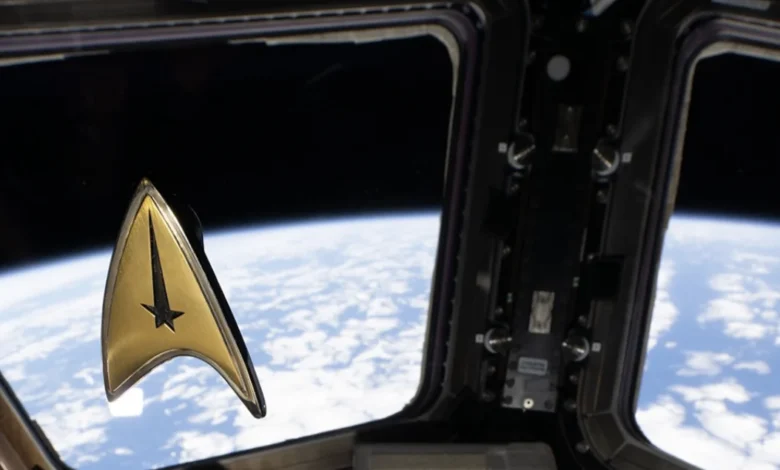
The enduring legacy of Gene Roddenberry’s seminal science fiction franchise, Star Trek, has officially transcended the boundaries of terrestrial pop culture to reach the Earth’s low orbit. As the franchise approaches its 60th anniversary, the European Space Agency (ESA) has highlighted a symbolic bridge between fiction and reality by showcasing a Starfleet insignia aboard the International Space Station (ISS). This gesture, centered on the mission of astronaut Sophie Adenot, serves as a poignant reminder of how speculative media has long influenced the ambitions of real-world aerospace professionals and the global scientific community.
A Mission Bridging Fiction and Orbit
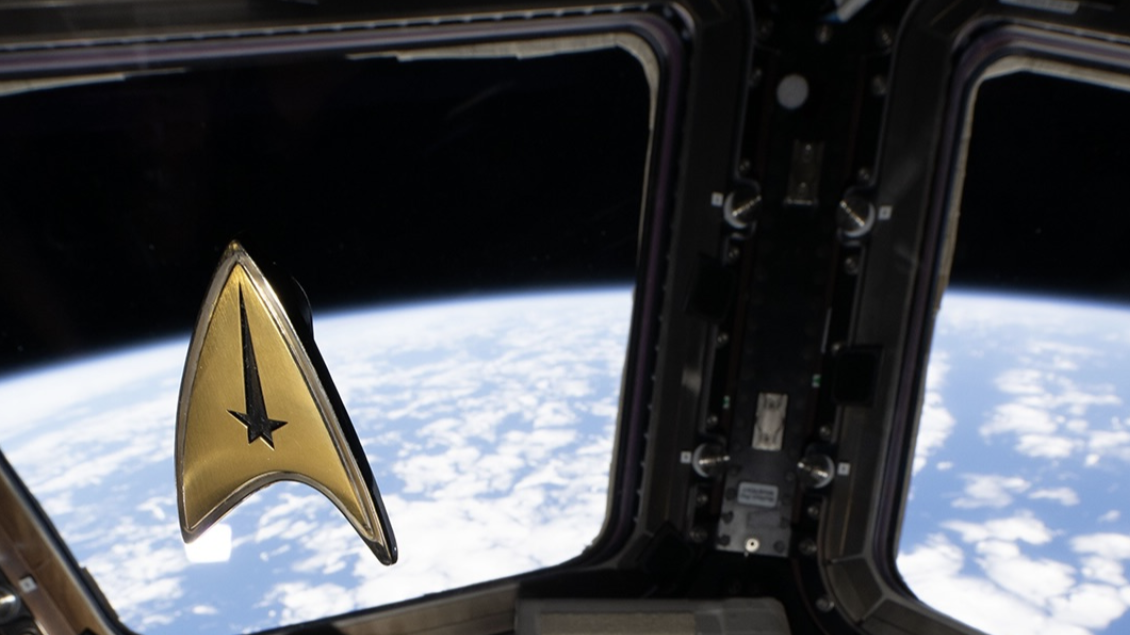
ESA astronaut Sophie Adenot, currently serving as a flight engineer for ISS Expedition 75, recently brought a piece of Star Trek memorabilia into the station’s Columbus laboratory module. The object—a golden Starfleet delta badge featured in the contemporary series Star Trek: Strange New Worlds—was captured in a series of promotional images and videos floating weightlessly against the backdrop of the Earth, visible through the station’s iconic Cupola windows.
The act was more than a mere tribute to a television show; it functioned as a deliberate alignment of values. Adenot, who launched to the ISS on February 13 via a SpaceX Dragon capsule as part of NASA’s Crew-12 mission, has utilized the platform to emphasize the collaborative nature of modern space exploration. For the scientific community, the badge represents the thematic intersection of exploration, curiosity, and the international cooperation required to sustain a continuous human presence in space.
Chronology: From 1966 to the Modern Space Station
To understand the significance of this moment, one must look at the historical trajectory of the Star Trek brand alongside the evolution of human spaceflight.
- September 8, 1966: Star Trek premieres on NBC, introducing the concept of the United Federation of Planets—a utopian organization dedicated to peaceful exploration and the scientific pursuit of knowledge.
- 1976: NASA names its first space shuttle prototype Enterprise after a grassroots campaign from Star Trek fans, marking the first time the fictional universe influenced actual aerospace hardware naming conventions.
- 1990s–2000s: The International Space Station project begins, mirroring the multi-national, collaborative spirit of the Federation depicted in the various iterations of the show.
- February 2025: ESA astronaut Sophie Adenot, during her inaugural mission to the ISS, integrates the Starfleet badge into her orbital activities to commemorate the upcoming 60th anniversary of the franchise.
The longevity of the show is often attributed to its ability to predict, or at least inspire, technological and social progress. From the development of personal communicators that resemble modern smartphones to the emphasis on diverse, international crews, the series has served as a cultural blueprint for what many in the aerospace industry strive to achieve.
Data and Infrastructure: The Reality of Life on the ISS
While the Starfleet badge serves as a symbolic touchstone, the environment in which it floats represents a triumph of engineering and international diplomacy. The ISS remains the largest modular space station ever built, a collaborative effort involving NASA (USA), Roscosmos (Russia), ESA (Europe), JAXA (Japan), and CSA (Canada).
The station orbits Earth at an average altitude of approximately 400 kilometers (250 miles), traveling at speeds of 28,000 kilometers per hour. For astronauts like Adenot, the station is not just a laboratory but a habitat that requires constant maintenance and supply chain support. The Crew-12 mission, which facilitated Adenot’s arrival, is part of a complex, ongoing cadence of logistics missions provided by private partners like SpaceX. With the upcoming Crew-13 mission scheduled to arrive in the coming weeks, the station remains a bustling hub of activity where the practical realities of life support, microgravity research, and systems engineering remain the primary focus.
Official Perspectives and Philosophical Alignment
The ESA’s commentary on the event underscores a deliberate philosophy. In official communications, the agency stated, "Science fiction imagines the future. We build it." This perspective highlights a shift in how space agencies view their relationship with the public. By embracing the iconography of Star Trek, the ESA is effectively acknowledging that public interest in space exploration is often ignited by narratives that portray it as an inherently noble and cooperative endeavor.
Gene Roddenberry’s own philosophy, famously articulated in the 1976 album The Star Trek Philosophy, remains the cornerstone of this connection. Roddenberry posited that humanity’s maturity would be measured by its ability to embrace diversity—not just as a tolerance of differences, but as a "positive delight" in them. This aligns with the current operational model of the ISS, where astronauts from disparate cultural and political backgrounds must operate in tight, high-stakes conditions, relying on one another for survival and success.
"The mission hasn’t really changed," the ESA noted in their social media release. "Explore. Discover. Do it together."
Implications for Future Space Exploration
The collaboration between pop culture entities and space agencies is becoming an increasingly powerful tool for STEM (Science, Technology, Engineering, and Mathematics) advocacy. By utilizing familiar imagery, agencies like the ESA and NASA can reach a broader demographic, potentially inspiring the next generation of engineers and explorers who grew up viewing the stars as a destination rather than an abstraction.
Furthermore, as humanity looks toward the Artemis program—which aims to return humans to the moon and eventually facilitate missions to Mars—the "Star Trek" model of international partnership becomes increasingly relevant. The challenges of deep-space exploration, such as radiation shielding, long-term life support, and psychological sustainability, will require a level of global cohesion that has historically been the sole domain of science fiction.
The presence of the badge in the ISS laboratory serves as a reminder that the "final frontier" is not a static place, but a dynamic goal that requires constant commitment. Whether it is the fictional crew of the USS Enterprise or the very real, international crew of Expedition 75, the objective remains the same: to move beyond the confines of Earth, to document the unknown, and to refine the human capacity for cooperation.
As the world approaches the 60th anniversary of the Star Trek premiere in 2026, the symbolic gesture by Sophie Adenot acts as a temporal handshake between the imagination of the 1960s and the tangible, ongoing accomplishments of the 21st century. It reinforces the notion that the dreams of writers and filmmakers have played a tangible role in the development of the modern aerospace industry, turning the "dreaming" into "doing." In the vacuum of space, where the physical borders of Earth are rendered invisible, the ideals of Star Trek provide a unifying framework for the diverse crews that continue to push the envelope of human potential.