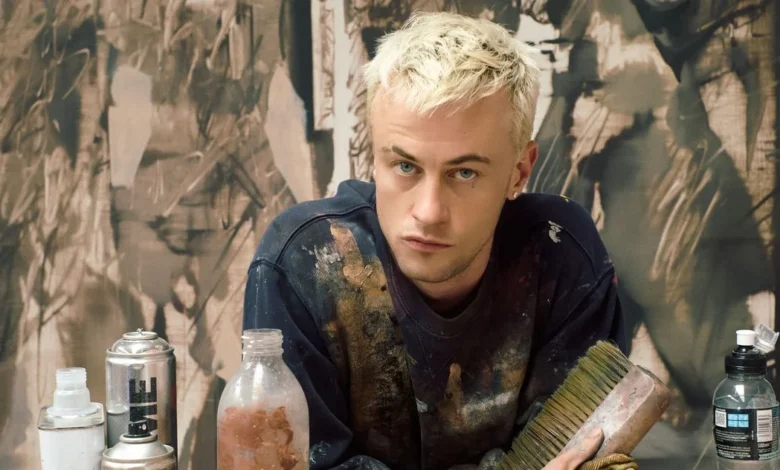
The 32-year-old British painter George Rouy, known for his distinct, hauntingly figurative style, has officially transitioned to the pinnacle of the contemporary art world with his debut exhibition at Hauser & Wirth. Titled "Reprise," the exhibition serves as a definitive marker in a career that has rapidly ascended from obscurity to international acclaim. As the youngest male painter currently represented by the global megagallery, Rouy’s arrival on the main stage represents a significant moment for both the artist and the institution, highlighting the industry’s ongoing effort to balance the hunger for new, youthful talent with the necessity of long-term artistic sustainability.
A Rapid Ascent in the Art Market
Rouy, who resides in Kent, England, has spent the last several years carefully navigating the volatile ecosystem of the contemporary art market. His rise has been characterized by a meteoric trajectory: from his graduation from the Camberwell College of Arts roughly a decade ago to a series of strategic, high-impact exhibitions. Prior to his current partnership with Hauser & Wirth, which began in 2024, Rouy held solo exhibitions at notable New York venues, including Anna Zorina in 2018 and Nicola Vassell in 2023.
The economic profile of his work has mirrored his institutional success. Works by the artist have already commanded six-figure sums at auction, a rarity for an artist of his age. This financial momentum often invites scrutiny regarding the "It-boy" phenomenon in the art world—a cycle that typically involves rapid price appreciation followed by intense institutional vetting. However, Rouy’s move to Hauser & Wirth is viewed by market analysts as a stabilizing force, moving the artist away from the hyper-speculative secondary market and into a framework managed by a gallery with the infrastructure to cultivate a long-term legacy.
The Aesthetics of "Reprise"
The "Reprise" exhibition, which debuted in late 2026, features a series of canvases that further explore Rouy’s preoccupation with the human figure. His current work depicts nude figures characterized by glitched, smudged facial features and dynamic, rhythmic mark-making. These stylistic choices have drawn comparisons to the late Cy Twombly—an association reinforced by Rouy’s recent work in Rome, a city central to Twombly’s legacy—and the visceral, psychological depth of Francis Bacon.
Unlike the clinical, specimen-like portrayal of subjects found in Bacon’s oeuvre, Rouy’s figures retain an element of vitality and abstraction. This tension is intentional. Rouy has noted that he aims to keep his subjects at a "remove," utilizing a "smoke-and-mirrors" approach that avoids total revelation. By obscuring the "real" identity of his figures, he forces the viewer to engage with the painting as a performance of light, shadow, and movement rather than a straightforward portrait.
Integrating Technology and Tradition
One of the more compelling aspects of Rouy’s evolving practice is his integration of generative artificial intelligence into his creative process. While his early work relied on traditional photographic references modified in Photoshop, his recent series incorporates the output of AI tools. Rouy describes these digital artifacts as "anti-portraits"—generic, super-realistic, yet fundamentally "fucked" images that capture the uncanny nature of a digital society.
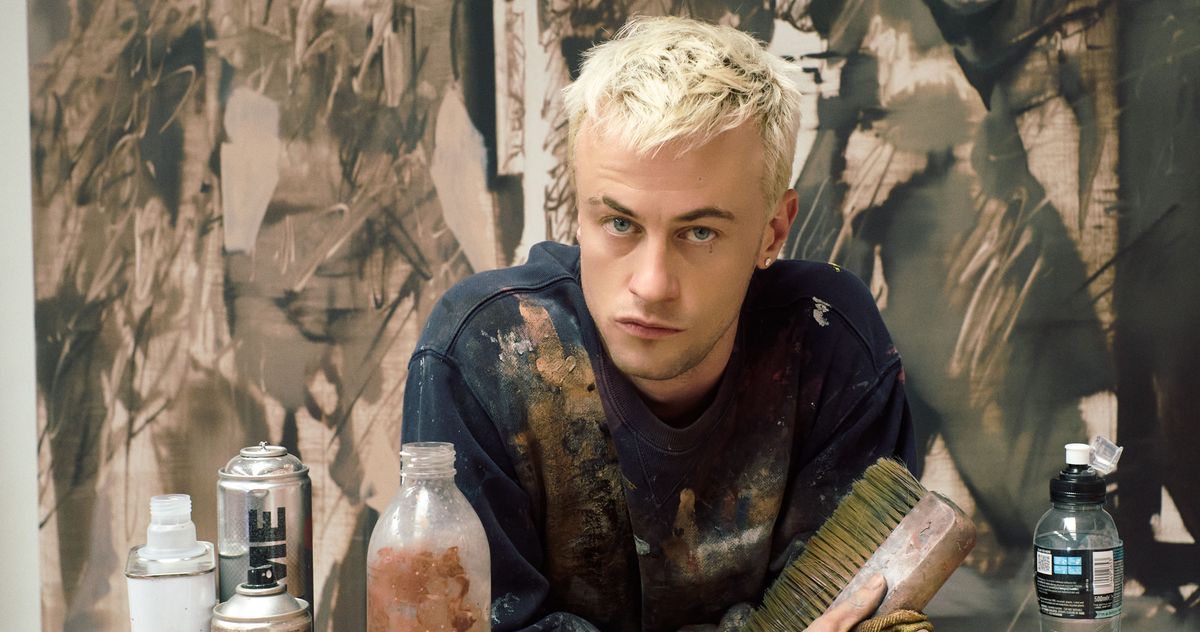
By feeding these AI-generated images back into the tactile, manual process of oil painting, Rouy is commenting on the loss of "truth" in an era defined by ones and zeros. This synthesis of classical painting techniques with the hyper-modernity of generative technology has provided his work with a contemporary relevance that appeals to both traditionalist collectors and a younger, tech-literate audience.
Institutional Strategy and the "Legacy" Model
For a powerhouse like Hauser & Wirth, the acquisition of a talent like George Rouy is a calculated move. The gallery, which manages a significant portfolio of high-value estates and established living masters, faces the perennial challenge of avoiding stagnation. With the average age of their living artists hovering around 60, the integration of younger, "edgy" artists is essential to the gallery’s future-proofing.
Neil Wenman, global creative director and partner at Hauser & Wirth, has emphasized that the gallery’s goal is to move beyond the "first ten minutes of fame." The partnership is designed to focus on the long-term, incremental development of the artist’s career. By spacing out exhibitions and maintaining strong ties with previous collaborators, such as the Hannah Barry Gallery in London—which hosted the first half of the "Reprise" project earlier in 2026—the institution aims to prevent the "pump and dump" cycles that have derailed many promising young careers in recent years.
The Shifting Landscape of Figurative Art
Rouy’s success also reflects a broader shift in the art world’s reception of figurative painting. During his time at art school, the concept of "beauty" was often treated with suspicion, if not outright disdain, within academic circles. However, the last decade has seen a resurgence in figurative art, with artists like Salman Toor and Louis Fratino successfully reintroducing elements of narrative and aesthetic appeal into the high-art conversation.
Rouy’s willingness to embrace the "handsome" or "decorative" nature of painting is not a concession to commercial pressures, but rather a strategic entry point. As he has stated, beauty serves as the "catalyst for entry," allowing him to draw the viewer into deeper, more complex questions regarding human mortality, the influence of technology, and the nature of the self in the 21st century.
Looking Ahead
The implications of Rouy’s debut at Hauser & Wirth extend beyond his personal success. It underscores a shift in how major galleries identify and support talent in the age of social media. With an Instagram following approaching 100,000, Rouy is part of a generation of artists who have a sophisticated understanding of their own public image. While some might view this as a form of art-world performance, Rouy maintains that his control is limited to the studio, while the public reception remains an "unknown."
As he enters this new stage of his career, the expectations are undeniably high. The "Reprise" exhibition is not merely a showcase of new work; it is an assertion of artistic longevity. By balancing his aesthetic provocations with a pragmatic approach to his professional trajectory, George Rouy is positioning himself as a rare bridge between the hyper-speed culture of today and the enduring, traditional values of the art historical canon. Whether he can sustain this momentum as the "clamor" of the current market cycle eventually subsides will be the true test of his career, but for now, the art world is watching closely to see what this "It-boy" paints next.