California’s 2026 June Primary Sees Nearly 150,000 Mail Ballots Rejected Amid USPS Scrutiny and Voter Access Concerns

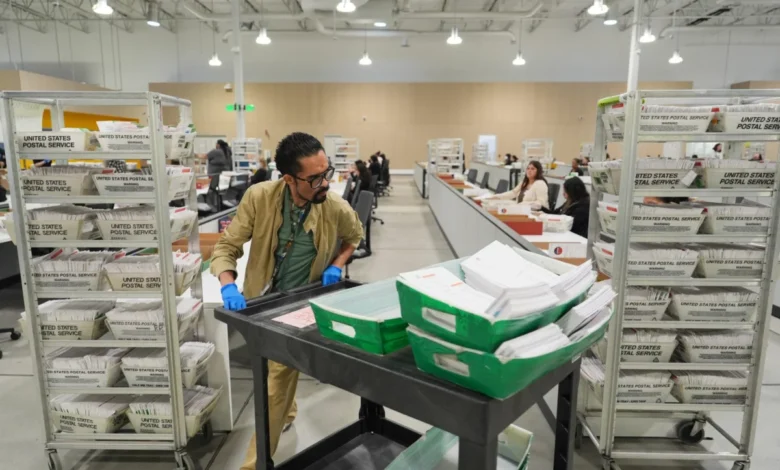
California’s ambitious efforts to enhance voter participation and simplify the electoral process faced a significant setback in the recent June 2026 primary, with a staggering 148,241 mail-in ballots rejected. This represents a notable surge in disqualifications compared to previous elections, casting a shadow over the state’s commitment to counting every ballot and prompting renewed scrutiny of mail-in voting procedures and the role of the U.S. Postal Service (USPS). The rejection rate of 1.73% for all mail ballots in 2026 marks an increase from the 1.56% seen in the 2024 primary, when 108,982 ballots were rejected, and the approximately 1.5% rate from the 2022 primary which saw 105,818 voided ballots. This upward trend in rejected ballots occurs despite California having implemented some of the nation’s most voter-friendly laws, including universal mail-in ballot distribution and a generous grace period for ballot receipt, highlighting a complex interplay of systemic and operational challenges.
California’s Evolving Electoral Landscape and the Paradox of Access
For years, California has been at the forefront of expanding voter access, driven by a legislative philosophy aimed at boosting turnout and ensuring every eligible citizen can cast a ballot. A cornerstone of these reforms has been the move to universal mail-in voting, a measure significantly accelerated and codified during the COVID-19 pandemic. Under this system, every registered voter automatically receives a ballot by mail, eliminating the need to request one. Furthermore, the state introduced a unique provision allowing ballots to arrive at election offices up to seven days after Election Day, provided they are postmarked by Election Day itself. This seven-day grace period was designed to accommodate potential mail delays and reduce rejections due to late delivery, a common issue in other states.
However, these progressive measures have paradoxically coincided with California’s reputation for having some of the most protracted vote counts in the nation. The "ponderously slow vote counts," as they are often described, can stretch for weeks, contributing to public frustration and sometimes fueling distrust in the electoral process. This extended timeline is partly a consequence of the very reforms intended to increase turnout, such as the extended ballot receipt window, the time required to process a high volume of mail-in ballots, and the multi-step verification process for provisional ballots and signature matching. While these procedures are vital for ensuring accuracy and integrity, they inherently prolong the final tabulation.
The recent spike in rejected ballots suggests that while California has made voting easier in terms of access, there remain significant hurdles in ensuring those votes are counted. The primary driver behind the elevated rejection numbers in the 2026 June primary was late-arriving ballots, according to data compiled by the Secretary of State’s office. This category alone accounted for 93,479 rejected ballots, a substantial increase from approximately 70,000 in the 2022 primary and 76,000 in the 2024 primary, even considering potential differences in turnout levels across these election cycles.
Deep Dive into Rejection Causes: Lateness and Beyond
The data from the 2026 June primary paints a detailed picture of why nearly 150,000 Californians were disenfranchised. Of the 148,241 mail ballots rejected, lateness was overwhelmingly the leading cause. This means that despite the state’s seven-day grace period for ballot arrival, a significant portion of ballots either arrived too late or were postmarked after Election Day, rendering them ineligible. Voting experts, including Kim Alexander, president of the nonpartisan California Voter Foundation, strongly suspect the latter. Alexander emphasized, "Ballots rejected due to lateness are caused primarily to being postmarked too late to count, not because they arrived too late to count." This crucial distinction shifts the focus from voter procrastination to potential issues within the mail processing system.
Beyond lateness, other significant reasons for rejection included:
- Mismatched Signatures: Nearly 44,000 ballots were set aside because the signature on the return envelope did not match the one on file with county election officials. California, like many states, employs signature verification as a key security measure. While voters are typically notified and given an opportunity to "cure" or correct a mismatched signature, this process can be time-sensitive and may not always reach voters in time or be successfully completed.
- No Signature: Over 8,300 ballots were rejected simply because the voter failed to sign the return envelope. This seemingly minor oversight can invalidate an otherwise perfectly cast ballot.
- Voter Already Cast Ballot: In 743 instances, a mail ballot was voided because the voter had already cast a ballot, likely in person. This prevents duplicate voting and maintains the integrity of the "one person, one vote" principle.
- Other Reasons: Miscellaneous reasons included ballots missing from the return envelope, or multiple ballots being sent back in a single envelope, indicating procedural errors by voters.
The rejection rates were not uniform across the state. Several counties exhibited significantly higher rates than the statewide average. Tulare County, located in the agriculture-heavy Central Valley, recorded the highest mail ballot rejection rate at 3.52%. It was closely followed by Alpine County, south of Lake Tahoe, and Merced County, also in the Central Valley, both of which registered a 3.36% rejection rate. These geographical disparities may point to localized issues related to voter education, access to postal services, or demographic factors. For instance, rural areas might have fewer post offices or mail collection points, potentially leading to delays in postmarking.
The Lingering Shadow of USPS Policy Changes
The increasing number of ballots rejected due to late postmarks has brought the operations of the U.S. Postal Service under intense scrutiny. Concerns about USPS changes are not new, but they have escalated in an election year. In January 2026, a bipartisan group of U.S. senators, predominantly Democrats, sent a strongly worded letter to the USPS leadership. Their alarm stemmed from recent mail-processing changes that they feared could negatively impact postmark dates for mail-in ballots, especially in a critical election cycle that will determine control of Congress.
The core of the concern lies in an updated agency policy regarding postmarks. Traditionally, a postmark would indicate the day the mail was received by the Postal Service. However, under the new policy, postmarks might not reflect the initial day of receipt but rather the day the mail was handled and processed at one of its larger processing centers. These centers are increasingly consolidated and located further away from many communities as part of the USPS’s broader "Delivering for America" 10-year plan, initiated by Postmaster General Louis DeJoy. The stated goal of this plan is to modernize operations, improve efficiency, and stabilize the agency’s finances. However, critics argue that these consolidations and operational shifts have inadvertently led to slower mail service and, crucially for elections, delays in applying accurate and timely postmarks.
The impact of these changes is not unique to California. In April 2026, two prominent Wisconsin Democrats, U.S. Senator Tammy Baldwin and Governor Tony Evers, publicly called on the Postal Service to address delays that resulted in hundreds of ballots arriving after Election Day in their state’s spring elections. This highlights a national pattern of concern among election officials and lawmakers regarding the interaction between postal service efficiency and the integrity of mail-in voting. California election officials, anticipating potential issues, had proactively urged voters to send their mail ballots early in 2026, explicitly warning that Postal Service changes could lead to slower mail service and potential disenfranchisement.
Expert Analysis and Calls for Action
The growing number of rejected ballots, particularly those due to lateness, has prompted calls for deeper investigation and potential remedies from election experts. Mindy Romero, director of the Center for Inclusive Democracy, a nonpartisan research group, remarked that the trend "does really demand the question why this is happening." Her sentiment echoes the broader concern that systemic issues may be at play, rather than solely voter error.
The confluence of a "late surge in ballots" in the 2026 June primary, possibly driven by a "wide-open and chaotic race for governor" where many voters waited until the final days to make a decision, combined with potential USPS delays, creates a perfect storm for increased rejections. Voters who meticulously filled out their ballots but dropped them in the mail just a few days before Election Day might have found their efforts negated by a delayed postmark, despite intending to comply with the deadline. This underscores the need for enhanced voter education that not only stresses the importance of mailing ballots early but also clearly explains the implications of postmark timing.
Broader Implications and the Path Forward
The significant number of rejected ballots in California’s 2026 June primary carries substantial implications for voter confidence, the democratic process, and future elections. Each rejected ballot represents a citizen whose voice was silenced, often due to technicalities rather than a lack of intent or eligibility. This can lead to disillusionment among voters and erode trust in the fairness and accessibility of elections.
Politically, high rejection rates can become fodder for partisan debate. Following past California primaries, figures like former President Donald Trump have seized upon the state’s reputation for slow vote counts to renew long-standing criticisms of its election administration, sometimes leading to federal investigations. While the article notes that there is "no indication of any widespread problems with mail voting" and a 2025 Brookings Institution report found that mail voting fraud cases are minuscule (about four cases per 10 million mail ballots), the perception of inefficiency or disenfranchisement can be exploited. This makes it crucial for election officials to be transparent about the causes of rejections and proactive in addressing them.
Looking ahead to the critical general election, stakeholders face urgent questions. What legislative or administrative solutions can be implemented to mitigate these issues? Could California election officials work more closely with the USPS to address postmarking delays, perhaps through dedicated election mail protocols or more frequent mail pickups closer to Election Day? Should the state consider expanding the use of official ballot drop boxes, which circumvent the need for postmarks entirely and guarantee timely receipt? These secure drop boxes have gained popularity among both Democrats and Republicans and could offer a vital alternative.
Furthermore, enhanced and targeted voter education campaigns are essential. These campaigns need to go beyond simply encouraging early voting, explicitly detailing the mechanics of postmarks and the risks associated with late mailing, especially in light of USPS operational changes. Providing clear instructions on how to properly sign ballots and what to do in case of a signature mismatch can also drastically reduce rejections.
California’s experience in the 2026 June primary serves as a cautionary tale: while expanding voter access is paramount, equal attention must be paid to the logistical infrastructure that ensures those votes are accurately and fairly counted. The complex interplay between state election laws, voter behavior, and federal postal service operations demands a comprehensive and collaborative approach to safeguard the integrity and accessibility of the democratic process. Without addressing these underlying issues, the paradox of easier voting leading to more rejected ballots will continue to challenge the Golden State’s electoral ambitions.