Exploring the Eternal Legacy of Homers Odyssey and the Intersection of Ancient Myth with Modern Science and Literature


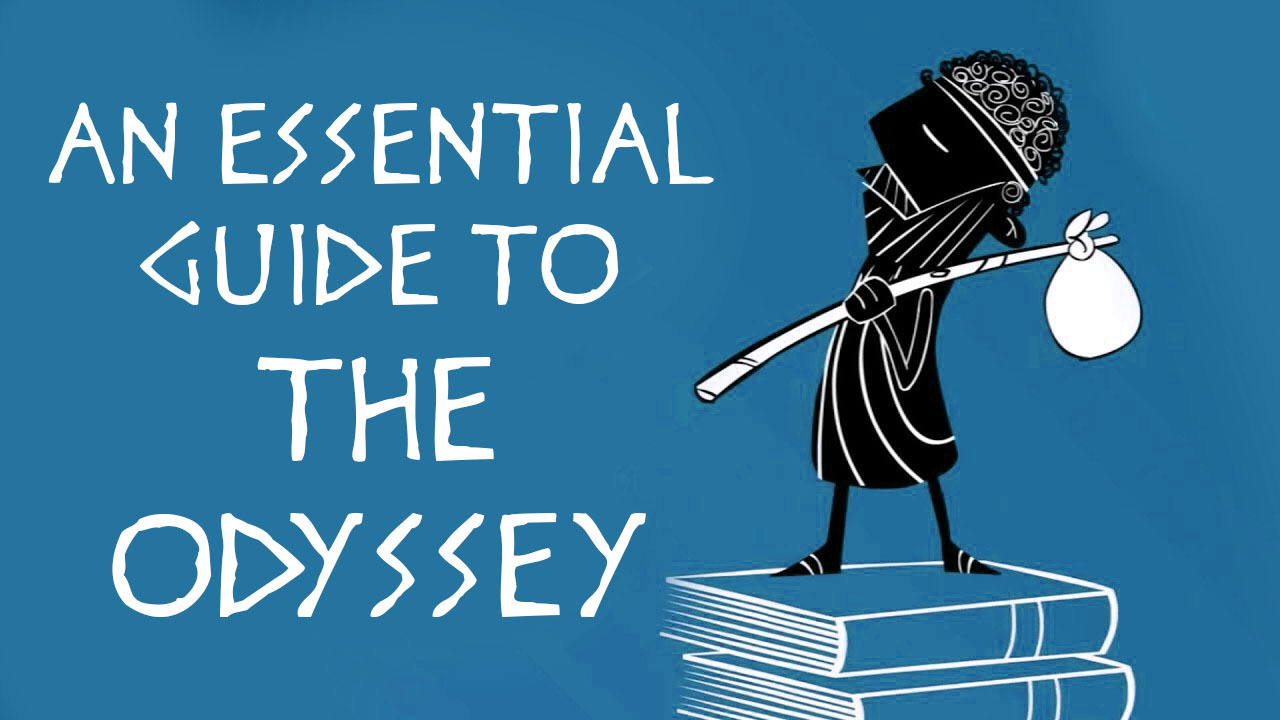
The enduring legacy of Homer’s "The Odyssey" continues to captivate scholars, educators, and the general public, serving as a foundational pillar of Western literature that bridges the gap between ancient oral traditions and modern narrative structures. As a 12,000-line epic poem composed approximately in the 8th century BCE, the work chronicles the ten-year journey of Odysseus, the King of Ithaca, as he attempts to return home following the fall of Troy. This narrative is not merely a tale of adventure; it is a complex tapestry of Greek history, mythology, and social codes that has influenced millennia of storytelling. Recent interdisciplinary studies involving archaeology, astronomy, and literary analysis have provided new insights into the poem, suggesting that the line between myth and reality may be thinner than previously assumed.
The Structural Complexity of the Homeric Epic
"The Odyssey" is celebrated for its sophisticated narrative structure, which departs from a simple linear progression. The poem begins in media res—in the middle of things—ten years after the end of the Trojan War. While Odysseus is trapped on the island of Ogygia by the nymph Calypso, the first four books, known as the "Telemachy," focus on his son, Telemachus, and his struggle to manage the suitors vying for his mother Penelope’s hand and the throne of Ithaca.
Literary analysts point out that this structure allowed ancient bards to maintain audience engagement through a series of flashbacks. When Odysseus finally departs Ogygia and is shipwrecked in Phaeacia, he recounts his earlier adventures: the encounter with the Cicones, the land of the Lotus-Eaters, the blinding of the Cyclops Polyphemus, the winds of Aeolus, the cannibalistic Laestrygonians, and the year spent with the sorceress Circe. This "story within a story" technique remains a hallmark of epic literature, providing a template for the "Hero’s Journey" popularized by mythologist Joseph Campbell in the 20th century.
The Historicity of Troy and the Archaeological Record
For centuries, the city of Troy was considered a figment of poetic imagination. However, the landscape of Homeric studies changed significantly in the 1870s when German archaeologist Heinrich Schliemann began excavations at Hisarlik in modern-day Turkey. Schliemann, following clues within the "Iliad" and "The Odyssey," uncovered the remains of a series of ancient cities stacked atop one another.
Modern archaeological data identifies at least nine major levels of habitation at the Hisarlik site, spanning from the Early Bronze Age to the Byzantine period. Scholars generally point to "Troy VIIa" as the most likely candidate for the city described by Homer. This layer shows evidence of siege, fire, and violent destruction dating to approximately 1180 BCE, coinciding with the traditional date of the Trojan War. While archaeologists caution that no definitive proof of a ten-year siege or a wooden horse has been found, the existence of a powerful, fortified citadel at the mouth of the Dardanelles confirms that Homer’s "topography of the mind" was rooted in a tangible geographic reality.
Scientific Foundations: Astronomy and the Hero’s Return
Perhaps the most intriguing development in modern Homeric scholarship is the application of forensic astronomy to the text. In "The Odyssey," several celestial events are mentioned, including a specific reference to a "new moon" and the disappearance of the sun from the sky upon Odysseus’s return to Ithaca.
In 2008, researchers Constantino Baikouzis and Marcelo Magnasco published a study in the Proceedings of the National Academy of Sciences (PNAS) analyzing these astronomical references. By tracking the positions of planets and the occurrence of solar eclipses in the 12th century BCE, the researchers identified a total solar eclipse that occurred on April 16, 1178 BCE. This date aligns remarkably well with the estimated timeframe of the fall of Troy and Odysseus’s subsequent decade of wandering. While historians remain divided on whether Homer was recording a specific historical eclipse or using a common literary omen, the precision of the celestial descriptions suggests that the oral tradition preserved remarkably accurate observations of the natural world.
The Moral Framework of Xenia and Divine Justice
Beyond the monsters and the geography, "The Odyssey" serves as a treatise on Xenia, the ancient Greek concept of guest-friendship. This social contract dictated that hosts must provide food, shelter, and protection to strangers, while guests were expected to be respectful and not overstay their welcome.
The poem repeatedly tests this concept. The suitors in Ithaca represent the ultimate violation of Xenia, consuming Odysseus’s wealth and harassing his wife. Conversely, the myth of Baucis and Philemon—often associated with the era’s moral teachings—highlights the rewards of hospitality. In this tale, Zeus and Hermes disguise themselves as travelers to test a village. Only an elderly, impoverished couple offers them shelter, leading to their preservation while the rest of the village is destroyed. In "The Odyssey," Odysseus’s eventual triumph is framed not just as a personal victory, but as the restoration of divine order and the enforcement of Xenia.
The Tragic Seer and the Fall of Troy
The narrative of "The Odyssey" is inextricably linked to the events of the "Iliad," specifically the fall of Troy. One of the most poignant episodes in the Trojan cycle is the tragedy of Laocoön, a priest of Poseidon who saw through the ruse of the Trojan Horse. His famous warning, "I fear the Greeks, even those bearing gifts," went unheeded.
The divine intervention that silenced Laocoön—sending giant sea serpents to strangle him and his sons—underscores a recurring theme in Homeric epics: the futility of mortal wisdom against the will of the gods. This episode has inspired some of the most significant works in art history, most notably the "Laocoön and His Sons" statue unearthed in 1506, which influenced the Renaissance’s approach to human anatomy and emotional expression.
The Concept of the Underworld and the Heroic Legacy
In Book 11, known as the "Nekyia," Odysseus travels to the edge of the world to consult the spirit of the prophet Tiresias. This descent into the Underworld provides a window into the Greek conception of the afterlife. Unlike later religious traditions, the Homeric Underworld is a gray, shadowy realm where the souls of the dead exist as "breathless shades."
Odysseus’s encounter with the ghost of Achilles provides a stark commentary on the "heroic code." Achilles, who chose a short, glorious life over a long, obscure one, tells Odysseus that he would rather be a "pauper’s slave" on earth than the king of all the dead. This moment represents a pivotal shift in Greek thought, questioning the true value of kleos (eternal glory) in the face of the finality of death.
Modern Resonance and Interactive Media
The transition of "The Odyssey" from an oral performance to a written text, and eventually to a staple of global education, demonstrates its unparalleled adaptability. Today, the themes of the epic are being explored through new mediums, including cinema, digital storytelling, and interactive board games.
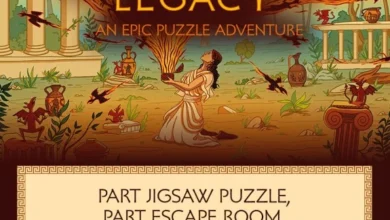
Products such as "Pandora’s Legacy" illustrate the modern desire to engage with Greek mythology in a participatory manner. These "escape room" style adventures allow players to step into the roles of the Olympians and heroes, solving puzzles that mirror the trials faced by Odysseus. This shift from passive consumption to active engagement reflects a broader trend in education and entertainment, where the "classics" are no longer viewed as static artifacts but as living frameworks for problem-solving and moral inquiry.
Conclusion: The Unending Journey
The enduring power of "The Odyssey" lies in its ability to reflect the universal human experience: the desire for home, the struggle against overwhelming odds, and the complexity of the human character. Whether analyzed through the lens of archaeological stratigraphy at Troy, the astronomical movements of the 12th century BCE, or the psychological archetypes of the hero, the poem remains a vital tool for understanding the origins of Western thought.
As researchers continue to uncover the physical and scientific realities that may have inspired Homer, the "Odyssey" stands as a testament to the longevity of human storytelling. It serves as a reminder that while the gods and monsters of the ancient world may have faded into myth, the questions they raise about justice, loyalty, and the nature of the journey remain as relevant today as they were three thousand years ago. Through videos, games, and academic study, the voyage of Odysseus continues, ensuring that the "complicated hero" of Ithaca will never truly be left behind.
Related posts: