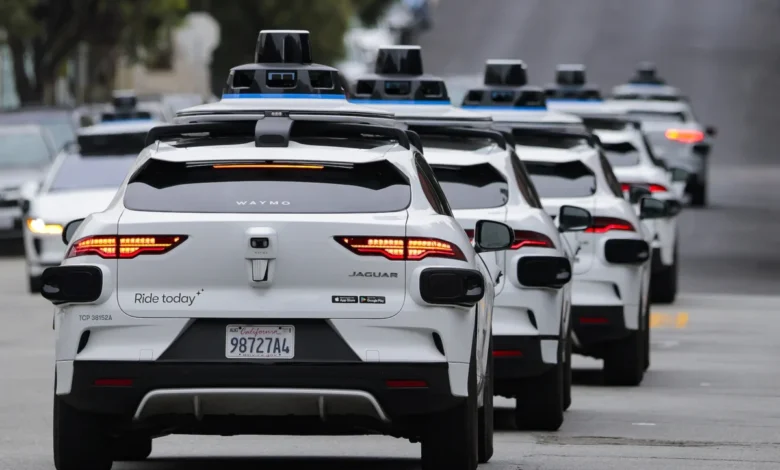
San Francisco’s Waymo robotaxi service, operated by the Alphabet-owned autonomous driving technology company, announced the full resumption of its operations on July 18, 2026, after a temporary suspension triggered by a significant power outage across various parts of the city. The disruption, which affected approximately 7,000 Pacific Gas and Electric Company (PG&E) customers, prompted Waymo to implement “temporary adjustments” to its service protocols, pausing rides and making freeway routes unavailable for roughly one hour to assess the scale and impact of the infrastructure failure. This incident marks another critical moment in the ongoing evaluation of autonomous vehicle (AV) reliability and resilience in complex urban environments, drawing renewed attention to regulatory frameworks governing their operation during unforeseen emergencies.
The Immediate Impact of the Power Outage
The power outage struck San Francisco on the afternoon of July 18, 2026, plunging several neighborhoods into darkness and disrupting essential services. PG&E, the primary utility provider for the region, reported the incident, which quickly escalated into a significant localized event impacting residential areas and commercial districts alike. While the precise cause of the outage was not immediately detailed by PG&E, such occurrences in urban centers can stem from a variety of factors, including equipment failure, underground cable faults, or external events like construction accidents or even weather-related stress on the grid. For a city as densely populated and technologically advanced as San Francisco, even a temporary loss of power can have cascading effects, impacting traffic signals, communication networks, and the general flow of daily life.
Upon detecting the widespread power disruption, Waymo promptly initiated its emergency protocols. Customers attempting to hail a robotaxi were met with in-app notifications stating that service was "temporarily paused" and, critically, that "freeway routes are unavailable." This immediate communication underscored Waymo’s commitment to rider safety and operational prudence. The decision to restrict freeway access during an outage is particularly significant; freeways often rely on advanced electronic signage, traffic monitoring systems, and well-lit conditions, all of which can be compromised by a power failure. Furthermore, the higher speeds on freeways mean that any autonomous vehicle malfunction or navigational error could have more severe consequences, making a cautious approach paramount.
Waymo’s Response and Coordination Efforts
In the immediate aftermath of the outage, Waymo’s operational teams swung into action. A spokesperson for the company initially confirmed that "We are making temporary adjustments to our service while we monitor local conditions. We know riders depend on us, and we will return to normal operations as soon as possible." This initial statement emphasized the dynamic nature of their response, highlighting the necessity for continuous monitoring of the unfolding situation. The company’s internal systems would have been processing real-time data on power grid status, traffic signal functionality, and the overall safety of the operational domain.
Subsequently, Waymo provided additional clarity, explaining that the decision to pause service for approximately one hour was made "to assess the scale of the power outage affecting a large portion of San Francisco and coordinate with local officials." This coordination is a crucial element of AV deployment in urban settings. Waymo’s operations center would have been in communication with city agencies, including emergency services, traffic management centers, and potentially PG&E, to gain a comprehensive understanding of the situation. Such coordination ensures that AVs do not inadvertently impede emergency response efforts or contribute to traffic congestion in areas where traditional infrastructure, like traffic lights, might be non-functional. The rapid assessment and subsequent decision to resume service after an hour suggests that the company’s internal protocols for handling such events are designed for swift, decisive action aimed at minimizing disruption while prioritizing safety.
Chronology of Events: July 18, 2026
The sequence of events on July 18, 2026, unfolded rapidly, showcasing both the vulnerability of modern infrastructure and the responsiveness of autonomous service providers:
- Mid-morning, July 18, 2026: A power outage begins affecting an estimated 7,000 PG&E customers across various San Francisco neighborhoods. The precise trigger is under investigation.
- Shortly after the outage onset: Waymo’s autonomous vehicle systems detect widespread power disruptions and potential impacts on crucial infrastructure like traffic signals and communication networks.
- Approximately 12:00 PM PDT: Waymo initiates its emergency protocol, notifying customers via its app that service is "temporarily paused" and "freeway routes are unavailable."
- 12:30 PM PDT (Initial Publication Time): News reports emerge detailing Waymo’s service suspension in response to the power outage. Waymo issues a statement confirming "temporary adjustments" and ongoing monitoring.
- Around 1:00 PM PDT: After approximately one hour of service pause and internal assessment, Waymo’s operational teams, having coordinated with local officials and evaluated the situation, determine that conditions allow for a safe resumption of service.
- Shortly thereafter: Waymo officially announces the resumption of its robotaxi service, albeit with a continued emphasis on monitoring local conditions.
- Throughout the afternoon: PG&E crews work to identify and repair the fault, gradually restoring power to affected customers.
This timeline highlights the quick decision-making required in managing autonomous fleets during urban crises. The one-hour pause indicates a window deemed necessary for thorough evaluation without causing undue prolonged inconvenience to riders.
Broader Context: A Pattern of Challenges and Calls for Regulation
This recent incident is not an isolated event but rather fits into a pattern of operational challenges faced by autonomous vehicle companies in San Francisco during infrastructure failures or large-scale disruptions. Waymo, in particular, has experienced several high-profile incidents that have intensified the debate around AV regulation.

One notable event occurred in December 2025, when a widespread blackout in San Francisco led to a number of Waymo vehicles stalling on city streets. During that incident, the sudden loss of power rendered traffic signals inoperable and potentially disrupted GPS and communication links, causing AVs to enter a "minimal risk condition" – often meaning stopping safely where they are. While designed as a safety feature, a large number of stalled vehicles can quickly exacerbate traffic congestion, impede emergency vehicle access, and create public safety hazards, especially in critical corridors. The December 2025 incident sparked considerable public and media concern, raising questions about the AVs’ ability to gracefully handle unforeseen infrastructure failures without becoming part of the problem. Waymo subsequently emphasized its review of protocols and commitment to learning from such events.
Another significant incident unfolded more recently, during a Fourth of July celebration (presumably 2026) involving a fireworks show near the Golden Gate Bridge. This event, characterized by massive crowds and predictable traffic surges, saw autonomous vehicles reportedly contribute to traffic paralysis. While not directly linked to a power outage, it underscored the vulnerabilities of AVs in highly dynamic, unpredictable environments with strained infrastructure. The sheer volume of human-driven and autonomous vehicles, combined with potential network congestion and the unique challenges of navigating celebratory crowds, led to a chaotic situation that further fueled calls for stricter oversight.
These repeated incidents have not gone unnoticed by local authorities. San Francisco Mayor Daniel Lurie has emerged as a vocal proponent for more robust regulation of autonomous vehicles. Following the Fourth of July traffic fiasco, Mayor Lurie publicly called for tougher state regulations, specifically urging that these frameworks "adequately address how autonomous vehicles operate during major incidents, planned or not." His concerns reflect a growing sentiment among city officials that while AV technology promises numerous benefits, its deployment must be balanced with clear, enforceable rules that ensure public safety and operational accountability, particularly when traditional infrastructure fails or is overwhelmed.
The Regulatory Landscape and Official Reactions
The regulatory environment for autonomous vehicles in California is primarily overseen by two state agencies: the California Public Utilities Commission (CPUC) and the Department of Motor Vehicles (DMV). The DMV is responsible for the safety performance of AVs, including testing and initial deployment permits, while the CPUC regulates the commercial aspects of AV passenger services, such as ride-hailing operations. Mayor Lurie’s call for "tougher state regulations" points to a desire for these agencies to mandate more stringent operational requirements, particularly concerning incident response protocols, communication with emergency services, and the ability of AVs to safely disengage or navigate during infrastructure failures.
City officials, including those from the San Francisco Municipal Transportation Agency (SFMTA) and the San Francisco Fire Department (SFFD), have repeatedly voiced concerns about AVs impeding emergency vehicles or causing traffic blockages. While AV companies argue their vehicles are programmed to yield to emergency vehicles and have mechanisms to move out of the way, real-world incidents have sometimes presented challenges. The recent power outage adds another layer to this complexity: how do AVs respond when traffic lights are dark, communication networks are spotty, and human drivers are navigating by instinct or memory? The implications extend beyond mere inconvenience, potentially affecting response times for fire, police, and medical emergencies.
The ongoing dialogue between AV companies and municipal/state regulators highlights a fundamental tension: the industry’s drive for innovation and rapid deployment versus the public sector’s mandate to ensure safety and maintain urban functionality. Mayor Lurie’s advocacy suggests that current regulations may not be sufficiently comprehensive to address the full spectrum of challenges posed by autonomous vehicle integration, especially in a city as complex and dynamic as San Francisco.
Implications for the Autonomous Vehicle Industry
The incident on July 18, 2026, and its predecessors carry significant implications for the broader autonomous vehicle industry.
First, they underscore the critical importance of resilience planning. AV companies must design their systems not just for optimal driving conditions but also for degraded environments, including loss of GPS, cellular connectivity, and widespread power outages. This involves robust fallback systems, enhanced on-board sensor redundancy, and sophisticated decision-making algorithms that can adapt to incomplete or corrupted data.
Second, public trust remains paramount. Each incident, even a temporary pause with a quick resolution, chips away at public confidence in the technology. Building and maintaining trust requires not only transparent communication but also demonstrable improvements in handling adverse scenarios. The public needs assurance that AVs will be a solution, not an additional problem, during crises.
Third, the incidents highlight the need for standardized incident response protocols across the AV industry, potentially mandated by regulators. Clear guidelines on how AVs should behave during power outages, natural disasters, or major public events would facilitate better coordination with emergency services and reduce ambiguity. This might include mandatory reporting mechanisms, designated safe-stop zones, or even protocols for remote human intervention to guide vehicles out of problematic areas.
Fourth, the role of physical and digital infrastructure becomes central. The reliance of AVs on GPS, high-definition maps, and real-time data feeds means they are inherently linked to the stability of the underlying communication and power grids. Investment in resilient urban infrastructure is not just for human-driven cars but increasingly for autonomous fleets.
Finally, the events in San Francisco serve as a case study for other cities contemplating or expanding AV deployments. Lessons learned here regarding regulatory needs, public engagement, and operational robustness in challenging urban environments will likely influence policy decisions globally.
Conclusion
The temporary suspension and subsequent resumption of Waymo’s robotaxi service in San Francisco following a power outage on July 18, 2026, encapsulate many of the ongoing debates surrounding autonomous vehicle technology. While Waymo’s swift response to pause service and coordinate with officials demonstrates a commitment to safety and operational agility, the incident also serves as a potent reminder of the inherent vulnerabilities when advanced technology intersects with aging or disrupted urban infrastructure. The repeated challenges faced by AVs during blackouts and large-scale public events, particularly in a complex city like San Francisco, have amplified calls from civic leaders such as Mayor Daniel Lurie for tougher, more comprehensive state regulations.
As autonomous vehicles continue their integration into daily urban life, the industry faces the imperative to not only innovate in driving capabilities but also to develop robust, resilient systems capable of navigating the full spectrum of real-world complexities, including unforeseen emergencies. The future success and widespread acceptance of robotaxi services will hinge not just on their convenience and efficiency, but critically, on their proven ability to operate safely and reliably, even when the lights go out. The lessons from San Francisco are shaping the dialogue on how cities and autonomous vehicle operators can collaboratively build a future where intelligent mobility enhances, rather than compromises, urban resilience and public trust.
Related posts: