The Artemis 2 mission, a monumental leap in humanity’s return to the lunar vicinity, has not only achieved its primary objectives but has also etched its name in the annals of space exploration by setting a new record for the greatest distance ever achieved between humans. During its daring circumlunar trajectory, the Orion spacecraft, carrying four astronauts, momentarily achieved an unprecedented separation from another crewed mission, pushing the boundaries of human reach further than ever before. This historic feat, meticulously calculated and verified by space enthusiasts and data analysts, underscores a significant evolution in our understanding of human presence beyond Earth.
A New Benchmark in Human Separation
On April 6, 2026, for a brief but significant period, the four astronauts aboard NASA’s Orion spacecraft and the three crew members residing on China’s Tiangong space station found themselves further apart than any humans in history. This remarkable achievement, identified and meticulously documented by Jonathan McDowell, an astrophysicist and respected tracker of space missions, surpassed the previous record held for over half a century.
McDowell initially considered the astronauts aboard the International Space Station (ISS) as potential record-holders for distance from the Artemis 2 crew. However, further analysis revealed that the Tiangong space station, positioned in its own distinct orbit, presented a greater spatial separation. At its peak distance on April 6th, as the Orion spacecraft completed its lunar flyby and traversed the far side of the Moon, it achieved a maximum separation of 260,754 miles (419,643 kilometers) from Tiangong. In comparison, the maximum distance between Orion and the ISS during the same period was calculated at 260,715.5 miles (419,581 km). While the difference is marginal, the Tiangong-ISS distinction is crucial for establishing the absolute record.
The Genesis of a Record-Breaking Calculation
The impetus for calculating these extraordinary distances stemmed from NASA’s announcement of Artemis 2 breaking its own record for the furthest distance from Earth achieved by a crewed mission. This announcement sparked curiosity among space aficionados, including McDowell, about the potential for even greater separations between different human outposts in space.
"When NASA announced the distance-from-Earth record, I immediately wondered if the ISS distance was even further," McDowell shared via email, explaining the origin of his inquiry. He initially hesitated to undertake the complex calculations, but the persistent interest from various individuals on social media and through direct communication prompted him to delve into the data. His meticulous work, involving the precise orbital mechanics of both the Orion spacecraft and the Tiangong space station, provides a crucial data point for understanding the evolving landscape of human activity in space. McDowell also expressed his hope that NASA’s Johnson Space Center, the nerve center for mission control for Artemis 2 and other crewed NASA flights, might find his calculations useful for verification.
A Legacy of Deep Space Endeavors: The Apollo 13 Precedent
The previous record for the greatest distance between humans was set during one of the most dramatic and inspiring missions in space history: NASA’s Apollo 13. In April 1970, an explosion aboard the spacecraft en route to the Moon forced the crew to abandon their lunar landing and embark on a perilous journey back to Earth. The astronauts, James Lovell, Jack Swigert, and Fred Haise, executed an extraordinary feat of engineering and resilience, utilizing the gravitational pull of the Moon to slingshot themselves back towards home.
During their harrowing ordeal, the Apollo 13 astronauts reached a maximum distance of approximately 248,655 miles (400,171 kilometers) from Earth. At that time, there were no other crewed space stations orbiting our planet, meaning the greatest potential separation was between a lunar mission and Earth itself. The Artemis 2 mission, by venturing beyond the Moon and maintaining communication with a continuously crewed space station, has effectively extended this human distance record by several hundred miles, signifying a new era of expanded human presence in the cosmos.
The Shifting Paradigm: From Earth-Centric to Civilization-Centric Distances
When asked about the broader historical significance of the Artemis 2 distance record, McDowell offered a thoughtful perspective that transcends mere numbers. He believes the record marks a fundamental shift in how we conceptualize human reach and presence in space.
"I think the significance is that it’s the beginning of a shift from ‘How far from Earth are our most distant people’ to ‘How spread out is human civilization?’" he elaborated. This sentiment suggests a future where human endeavors are not solely measured by their proximity to our home planet but by the vastness of the celestial territories we inhabit and explore. The implications of this shift are profound, hinting at a future where human settlements and activities might span interplanetary distances, from the inner solar system to the outer reaches.
McDowell’s vision extends to a future where such distances could be commonplace: "There may come a day when it’s Mercury to the moons of Saturn." This ambitious outlook underscores the accelerating pace of space exploration and the potential for humanity to become a truly multi-planetary species. The Artemis 2 mission, in setting this new record, serves as a tangible marker of this evolutionary trajectory, a testament to our enduring drive to explore the unknown and expand our horizons.
The Artemis Program: A Stepping Stone to Lunar and Beyond
The Artemis program, spearheaded by NASA with international collaboration, aims to re-establish a human presence on the Moon and lay the groundwork for future missions to Mars. Artemis 2, as a crewed test flight, was designed to validate the Orion spacecraft’s life support systems, communication capabilities, and navigation systems during a lunar flyby. The mission’s success in achieving unprecedented distances is a testament to the advanced engineering and rigorous testing undertaken by NASA and its partners.
The Orion spacecraft itself represents a significant technological leap. Designed for deep space missions, it can accommodate a crew of up to four astronauts and is equipped with advanced life support and propulsion systems. Its trajectory around the Moon during Artemis 2 allowed for critical data collection on radiation levels, spacecraft performance, and crew well-being in the deep space environment, information vital for planning longer-duration missions.
The inclusion of international partners, such as the collaboration with China’s Tiangong space station in this distance record, highlights a growing trend towards global cooperation in space exploration. While political landscapes can be complex, the shared endeavor of pushing the boundaries of human knowledge and presence in space often transcends national borders. The ability to track and communicate with multiple crewed missions across vast distances underscores the interconnectedness of our celestial endeavors.
Implications for Future Space Exploration
The record set by Artemis 2 has several significant implications for the future of space exploration:
- Technological Advancement: The mission’s success reinforces the reliability of deep space technologies, including advanced navigation, communication, and life support systems. This provides a solid foundation for future, more ambitious missions.
- Human Health in Deep Space: Understanding the physiological and psychological effects of extended periods at greater distances from Earth is crucial. Artemis 2’s data will inform strategies for mitigating risks associated with long-duration space travel, such as radiation exposure and the effects of microgravity.
- Interplanetary Infrastructure: As human presence expands, the need for a robust interplanetary infrastructure will become increasingly apparent. This could include orbital refueling stations, lunar bases, and communication networks that span vast distances.
- The Expansion of Human Civilization: The philosophical shift identified by McDowell points towards a future where humanity’s footprint extends far beyond Earth. Records like this serve as milestones, demonstrating our growing capacity to inhabit and explore regions of the solar system previously confined to science fiction.
- International Cooperation: The concurrent presence of multiple nations in space, even if operating independently, underscores the interconnected nature of our spacefaring future. Future missions may see even greater levels of collaboration, pooling resources and expertise to achieve common goals.
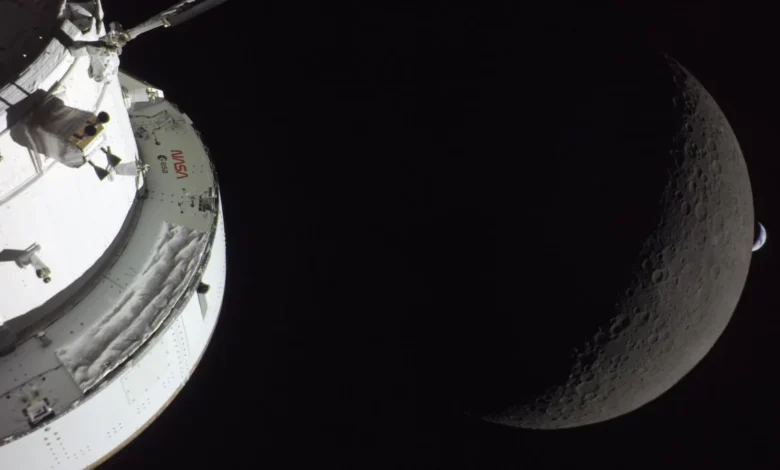
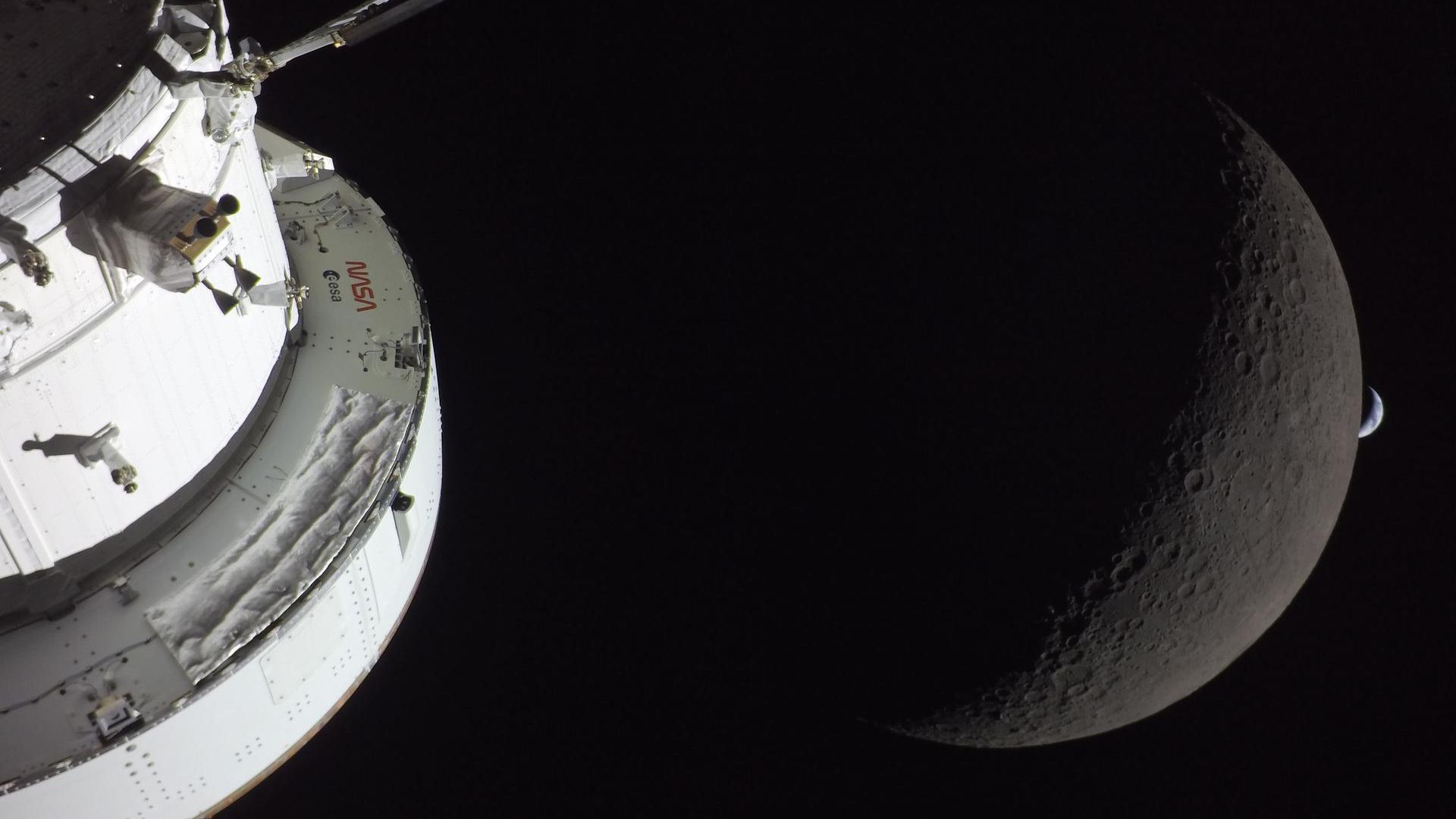
The Artemis 2 mission’s record-breaking distance is more than just a number; it is a symbol of humanity’s relentless pursuit of exploration and our ever-expanding presence in the cosmos. As we continue to venture further from our home planet, each new achievement, whether in distance, duration, or scientific discovery, brings us closer to understanding our place in the universe and realizing the boundless potential of human ingenuity. The image captured by the Orion spacecraft, showing the Moon and a distant Earth, serves as a poignant reminder of our origins and our ambitious journey into the vast unknown.
Related posts: