As global markets transition into a more data-centric era, email personalization has evolved from a secondary tactic into a primary driver of measurable revenue impact. According to the 2026 State of Marketing report released by HubSpot, an overwhelming 93.2% of marketers now assert that personalized or segmented experiences are the leading factors in generating high-quality leads and increasing purchase frequency. The report further highlights that nearly 50% of marketing organizations are actively integrating artificial intelligence to scale these efforts, signaling a definitive departure from the manual, labor-intensive segmentation strategies of the previous decade. This shift represents a fundamental transformation in how brands communicate with their audiences, moving away from static "batch-and-blast" methods toward dynamic, one-to-one digital experiences.
The Evolution of Email Personalization: A Chronology of Engagement
The trajectory of email marketing has undergone several distinct phases, each defined by the technological limitations and consumer expectations of the time. In the early 2000s, personalization was largely restricted to simple "merge tags," such as inserting a recipient’s first name into a subject line. While revolutionary at the time, these static tags eventually lost their efficacy as consumers became accustomed to the tactic.
By the mid-2010s, the industry moved toward behavioral triggers and broad segmentation based on demographic data. Marketers began to group users by industry or job title, yet the content within those segments often remained generic. The current era, beginning in the early 2020s and accelerating toward 2026, is defined by the convergence of unified CRM data and AI-driven automation. Today, personalization is no longer just about who the recipient is, but rather where they are in their unique customer journey and what specific actions they are likely to take next.
Understanding the Mechanics of AI-Driven Personalization
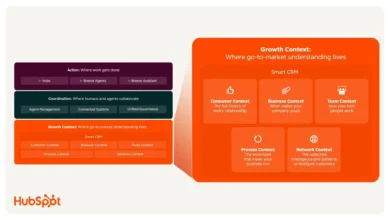
Modern AI personalization is powered by two distinct yet complementary branches of artificial intelligence: Generative AI and Predictive AI. When these systems operate within a unified platform, such as a Smart CRM, they create a "system of record" that allows for hyper-personalized outreach at a scale previously thought impossible.
Generative AI is primarily responsible for the creative output. It drafts subject lines, body copy, and calls to action (CTAs) based on specific prompts and the rich context provided by CRM data. This allows marketing teams to produce hundreds of segment-specific variations of a single campaign without manually rewriting each version. For instance, a software company can send the same product update email with five different value propositions tailored to five different industries simultaneously.
Predictive AI, conversely, serves as the strategic brain. It evaluates historical behavioral patterns to determine the optimal targeting and timing for each message. By analyzing when a specific contact is most likely to engage with their inbox, predictive systems can stagger delivery times for a single campaign across 24 hours, ensuring each recipient receives the email at their peak activity period. This combination of "what to say" and "when to say it" has become the gold standard for high-performing marketing departments.
The Strategic Pillars of Implementation
For AI-driven personalization to be effective, it must be built upon a foundation of structured, high-quality data. Industry analysts suggest that the "garbage in, garbage out" rule applies more strictly to AI than any other marketing technology. Without clean CRM records—including accurate lifecycle stages, company attributes, and engagement histories—AI-generated messaging can inadvertently amplify errors, leading to irrelevant or even alienating customer experiences.
The implementation process typically follows a three-step framework designed to align data with delivery:
- Dynamic CRM Segmentation: Rather than static lists, modern marketers use active segments that update automatically based on real-time signals. For example, if a prospect visits a pricing page three times in 48 hours, they are automatically moved into a "High Intent" segment, triggering a specific AI-generated outreach.
- Contextual Content Modules: Once segments are defined, marketers apply dynamic modules. This allows entire sections of an email—such as case studies or product recommendations—to swap out based on the recipient’s industry or previous purchases.
- Automated Copy Generation: Using tools like AI Email Writers, teams can generate tone-specific copy that resonates with the identified segment. A "C-Suite" segment might receive a concise, ROI-focused message, while a "Technical User" segment receives a detailed, feature-oriented version of the same announcement.
Supporting Data and Market Performance
The financial implications of adopting AI-driven personalization are significant. Research from McKinsey & Company indicates that companies that excel at personalization generate 40% more revenue from those activities than "average" players. Furthermore, effective personalization can lift total revenue by 5% to 15% and increase the efficiency of marketing spend by 10% to 30%.
Internal data from HubSpot supports these broader market trends, showing that segmented emails generate 30% more opens and 50% more click-throughs than unsegmented campaigns. These metrics are not merely vanity numbers; they correlate directly with lower customer acquisition costs (CAC) and higher customer lifetime value (CLV). As third-party cookies continue to be phased out by major browsers, the reliance on first-party data housed within a CRM has become the only sustainable way to maintain these performance levels.
The Ethical Landscape: Balancing Personalization and Privacy
As AI tools become more sophisticated, the risk of "creepy" personalization—where a brand appears to know too much about a consumer’s private life—has become a significant concern for Chief Marketing Officers (CMOs). Responsible AI use requires a delicate balance between relevance and intrusion.
Industry experts emphasize that personalization should always be based on "observable behavior" and "professional context" rather than inferred personal details. For example, referencing a recent whitepaper download is considered helpful and relevant. Conversely, referencing a user’s physical location or unrelated browsing history can trigger privacy concerns.
Furthermore, global regulations such as the General Data Protection Regulation (GDPR) in Europe and the California Consumer Privacy Act (CCPA) in the United States have set strict boundaries on data usage. Marketers must ensure that their AI tools are compliant with these frameworks, providing clear opt-out mechanisms and maintaining transparent data-processing logs. Failure to do so not only risks heavy fines but also permanently damages brand trust.

Native Integration vs. Standalone Tools: A Comparative Analysis
A critical decision for modern marketing departments is whether to use "native" AI—tools built directly into their CRM—or standalone AI applications. Standalone tools often offer specialized features for drafting or subject line optimization, but they frequently create "data silos." When AI operates outside the CRM, marketers are forced to export and import lists manually, which often leads to a loss of real-time context and measurement friction.
Native AI, such as that found in HubSpot’s Marketing Hub, allows for a seamless flow of data. Because the AI has direct access to the "Smart CRM," it can adjust its output based on the most recent customer interaction, such as a support ticket or a sales call that happened just minutes prior. This level of integration ensures that the marketing message is always aligned with the current state of the customer relationship, reducing the likelihood of sending an upsell email to a customer who currently has an open technical issue.
Measuring Success in the AI Era
To justify the investment in AI technologies, organizations are moving toward a multi-layered measurement framework. While traditional metrics like open rates and click-through rates (CTR) remain important for assessing immediate engagement, they are increasingly viewed as "top-of-funnel" indicators.
The real value of AI personalization is measured at the bottom of the funnel. Key Performance Indicators (KPIs) now include:
- Lead-to-Customer Conversion Rate: How effectively personalized content moves a lead through the lifecycle stages.
- Incremental Revenue Lift: The difference in revenue generated by AI-personalized segments versus standard control groups.
- Domain Reputation and Deliverability: Monitoring whether AI-generated content affects spam filter triggers or unsubscribe rates.
By building a weekly or monthly "AI Scorecard," marketing teams can monitor these metrics to ensure that automation is driving growth without compromising the long-term health of their email lists.
Conclusion: Strategy Must Lead Technology
While the capabilities of AI are transformative, the consensus among industry leaders is that technology must remain secondary to strategy. AI-driven email personalization is most effective when it is used to augment human judgment, not replace it. The strongest marketing teams are those that use AI to handle the heavy lifting of data analysis and content variation, freeing up human marketers to focus on high-level positioning, creative storytelling, and relationship building.
As we look toward 2026, the competitive divide will likely be defined by how well organizations can integrate their data, their AI tools, and their human expertise into a single, cohesive engine. In this new landscape, personalization is no longer an optional "extra"—it is the fundamental requirement for any brand seeking to remain relevant in a crowded and noisy digital marketplace.