The Rise of Celebrity Clones and the Science of Sonic Seasoning: A Deep Dive into Speculation and Sensory Science

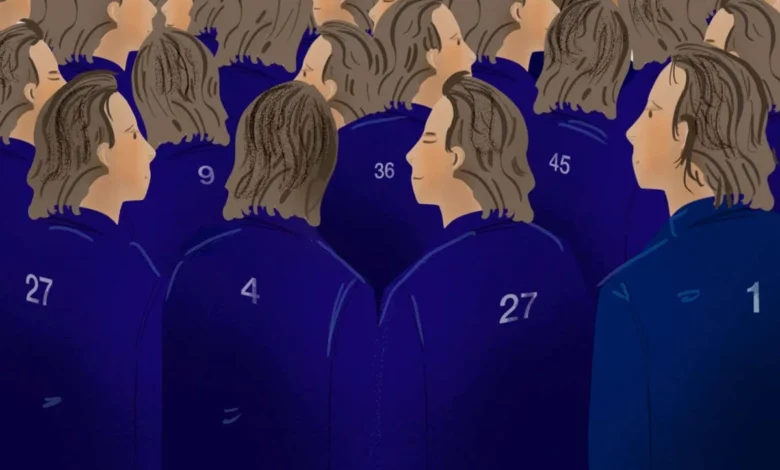
If the internet is to be believed – and history suggests a healthy dose of skepticism is warranted – a growing number of celebrities are no longer the individuals we once knew. Instead, a persistent conspiracy theory posits that these familiar faces have been surreptitiously replaced by clones. This outlandish notion, fueled by viral social media discussions and speculative online forums, recently gained traction with the alleged "cloning" of actor Jim Carrey.
Carrey’s appearance at the 51st César Awards in Paris on February 26th marked his first public outing in some time. Observers noted a perceived change in his appearance, which, rather than being attributed to the natural progression of aging or potential cosmetic enhancements, sparked a wave of conspiracy theories. The narrative quickly coalesced around the idea that the individual on stage was not the genuine Jim Carrey, but a meticulously crafted clone.
This purported celebrity body-snatching spree is not a new phenomenon within these speculative circles. Prior to the Jim Carrey incident, similar theories have circulated regarding other prominent figures. Paul McCartney, a legendary figure in music, has been the subject of a long-standing conspiracy theory claiming his death in 1966 and subsequent replacement by a look-alike. More recently, singer Avril Lavigne has been implicated, with theories suggesting her death in 2003 and replacement by a clone. The sheer volume of alleged replacements suggests an incredibly prolific and sophisticated operation, if one were to entertain the premise.
The Biological and Technological Hurdles of Human Cloning
From a scientific perspective, the logistical challenges of such a widespread cloning operation are immense, bordering on insurmountable with current technology. The fundamental hurdle lies in the successful and ethical cloning of a human being. While significant advancements have been made in cloning non-human animals, including mammals like sheep and dogs, human cloning remains a contentious and largely unachieved endeavor.
To illustrate the biological timeline, consider the hypothetical scenario of creating a clone of Jim Carrey. Assuming the existence of a clandestine cloning laboratory in Hollywood, capable of harvesting cells (perhaps from a film set, as humorously suggested), the resulting clone would emerge as an infant. The process of human maturation, from infancy to adulthood, typically spans approximately 18 to 25 years, depending on developmental stages and individual variation. For a clone to reach the physical appearance of Carrey as he is today, it would require this full developmental period. If Carrey is currently in his early 60s, a clone emerging as a baby would take decades to reach his current age and appearance. This would place the clone at an age of well over 100 years old, a period during which significant biological decline is expected, making a public appearance as a vibrant actor highly improbable.
The fictional narrative of Star Trek: Nemesis explored a similar concept, where antagonists sought to replace Captain Picard with a genetically engineered clone. To achieve a likeness that could pass scrutiny, the clone was depicted as undergoing accelerated aging. However, even within the advanced technological framework of the 24th century depicted in Star Trek, this accelerated aging process was portrayed as imperfect and problematic. This fictional portrayal underscores the inherent biological complexities and the profound scientific barriers that would need to be overcome for any present-day cloning conspiracy to be even remotely plausible. The inherent difficulties in achieving natural maturation, let alone accelerated aging that perfectly mimics a specific individual at a specific point in time, present significant technical obstacles.
The Emergence of Sonic Seasoning: Where Sound Meets Taste
Shifting from the realm of speculative fiction to tangible scientific inquiry, a fascinating development in the culinary world is the emerging practice of "sonic seasoning." This innovative approach leverages the power of carefully curated sounds to enhance the dining experience, building upon the well-established scientific principle of sensory cross-modality. This principle highlights the intricate ways our senses interconnect within the brain, fostering unexpected correspondences between seemingly disparate sensory inputs, such as sound and smell.
While some individuals experience synaesthesia, a neurological phenomenon where stimulation of one sensory pathway leads to involuntary experiences in a second sensory pathway (for instance, seeing colors when hearing sounds, or tasting words), sonic seasoning operates on a broader level. It suggests that even for those without synaesthesia, the auditory environment can profoundly influence the perception and enjoyment of food.
Identifying the Musical Match for a Metallic Taste
A recent study, brought to light by writer Chris Simms, has delved into this intriguing field, with researchers Charles Spence and Tianyi Zhang at the University of Oxford seeking to identify "a musical match for the metallic taste." This specific taste, unlike others, had previously been unaddressed and unexplored in the context of sonic enhancement.
With an almost elegant inevitability, the sound strongly associated with a metallic taste was identified as the distinct, otherworldly wail of the theremin. This iconic electronic instrument, often featured in early science fiction films, is played without physical contact. Instead, musicians manipulate antennas that control pitch and volume by moving their hands in the electromagnetic field surrounding them. The theremin’s ethereal and often unsettling sound is intrinsically linked to the uncanny, making it a natural fit for evoking a metallic sensation.
The researchers’ findings suggest that the auditory cue of the theremin can indeed trigger or amplify the perception of a metallic taste. This opens up new avenues for culinary innovation, where soundscapes can be meticulously designed to complement and elevate specific flavors.
Beyond the Theremin: Perceived Sonic Associations
The discovery of the theremin’s connection to metallic taste has prompted reflection on other popular sonic associations. While the original theme from Star Trek is often perceived to evoke a metallic taste, a closer examination reveals the absence of a theremin in its composition. This suggests that individual brains may form unique associations, or that other auditory elements within the piece contribute to this perception.
Further exploration into popular culture reveals recordings commonly believed to feature theremins that, upon closer inspection, do not. Notable examples include the soundtrack of Forbidden Planet and the Beach Boys’ iconic song "Good Vibrations." These instances highlight the subjective nature of auditory perception and the power of cultural association in shaping our sensory experiences.
The research into sonic seasoning is not merely an academic curiosity; it has tangible implications for the food and beverage industry. Restaurants and food producers can strategically employ specific sounds to enhance the perceived quality, flavor profile, and overall enjoyment of their products. This could range from pairing the crunch of a crisp with a specific high-frequency sound to enhancing the richness of a chocolate dessert with lower, resonant tones. The potential for creating immersive and multi-sensory dining experiences is vast.
The Intricate Web of Nominative Determinism: From Bears to Bears
In a different vein of intriguing connections, reader Richard Black has brought to light a particularly intricate example of nominative determinism – the concept that a person’s name or occupation is curiously fitting for their role or identity. This instance began when he encountered a recent column by Chanda Prescod-Weinstein, an astrophysicist, addressing the question, "What is a galaxy?"
Prescod-Weinstein’s article referenced a paper by astronomer Simon Smith, detailing the discovery of a star cluster named Ursa Major III. This cluster derives its name from its apparent location within the constellation Ursa Major, Latin for "the great bear."
Richard Black’s contribution highlights a delightful chain of association: "My mind (being of advanced years) immediately jumped to a song [performed] by Alan Price called ‘Simon Smith and the Amazing Dancing Bear,’ which is instantly stuck in my head now." This delightful confluence of names – Simon Smith, the great bear constellation, and the song "Simon Smith and the Amazing Dancing Bear" – exemplifies how seemingly unrelated pieces of information can converge to create memorable and often amusing connections. While this might not be a strict definition of nominative determinism, it certainly illustrates a playful intertwining of language and association.
To further underscore the prevalence of such fitting names, reader Richard Bartlett has pointed to Rick Passmoor, the head coach of Leicester City women’s football team. While "Passmoor" might not directly translate to a sporting term, the combination of a surname suggestive of forward movement and a coaching role further adds to the lighthearted exploration of nominative determinism.
These anecdotes, while seemingly disparate, collectively showcase the fascinating ways in which we process information, make connections, and find patterns in the world around us, whether through the lens of scientific inquiry or the serendipity of linguistic coincidence. The persistent allure of conspiracy theories, coupled with the verifiable science of sensory perception, offers a rich tapestry of human curiosity and the ever-evolving landscape of knowledge.