Film director Werner Herzog, renowned for his deep dives into the liminal spaces where scientific inquiry meets profound human yearning, has once again captivated audiences with his latest documentary, Ghost Elephants. Premiering at the Venice Film Festival, the film chronicles conservationist Steve Boyes’ ambitious and potentially elusive quest in the remote landscapes of Angola. More than just a scientific expedition, Ghost Elephants unfolds as a philosophical fable, probing the very essence of pursuing a dream that may forever remain just beyond reach.
The documentary’s premise is elegantly simple yet profoundly compelling. Dr. Steve Boyes, a conservationist with a decade-long fascination for the region, is driven by the belief that a herd of unusually large elephants might inhabit the vast and largely unexplored Bi plateau in Angola. His hypothesis is fueled by fragmented anecdotal evidence, whispers from the San master trackers, and the tantalizing legend of the Fnykvi specimen. This particular elephant, named after the big-game hunter Josef Fnykvi who famously shot it, is a museum icon at the Smithsonian National Museum of Natural History in Washington D.C. It stands as one of the largest land mammals ever recorded, reportedly nearly a meter taller than the average African elephant, prompting speculation about the existence of a similarly extraordinary lineage.
The Bi plateau itself, a sprawling, sparsely populated, and wooded region comparable in size to England, presents an immense and formidable challenge to any scientific endeavor. For ten years, Boyes has meticulously gathered fragments of information, relying heavily on the unparalleled tracking skills of the San people. This indigenous group, with a lineage stretching back tens of thousands of years, possesses an intimate and sophisticated understanding of the land, their ability to read subtle signs in the environment representing one of the most advanced forms of ecological knowledge still extant. The potential discovery of these "ghost elephants," if confirmed, could revolutionize our understanding of elephant genetics, the biological phenomenon of gigantism within the species, and the complex migratory patterns of these majestic animals in one of Africa’s least studied ecosystems.
Herzog, however, eschews a conventional natural history narrative. His distinctive, gravelly narration acts as a philosophical compass, guiding the audience through Boyes’ endeavor with a blend of professorial insight, gentle skepticism, and understated humor. He frames the quest not merely as a search for biological samples but as a profound exploration of the intricate relationship between scientific methodology and the boundless realm of human imagination. Herzog draws a parallel between Boyes’ pursuit and Captain Ahab’s obsessive hunt for the White Whale in Herman Melville’s classic novel. Yet, he distinguishes Boyes’ mission as generative rather than destructive, sustained by an unwavering conviction that wonders of immense scale and profound mystery still lie hidden, awaiting discovery beyond the immediate confines of human perception.
The Genesis of a Hypothesis and the Scientific Pursuit
The journey into the heart of the Bi plateau began not with a sudden revelation, but with a gradual accumulation of anecdotal evidence and a deep respect for traditional ecological knowledge. For years, whispers of unusually large elephants circulated among communities in the region. These accounts, often dismissed by mainstream science as folklore or exaggeration, caught the attention of Dr. Steve Boyes. His professional background in conservation, coupled with a lifelong fascination for the natural world, led him to investigate these intriguing reports more closely.
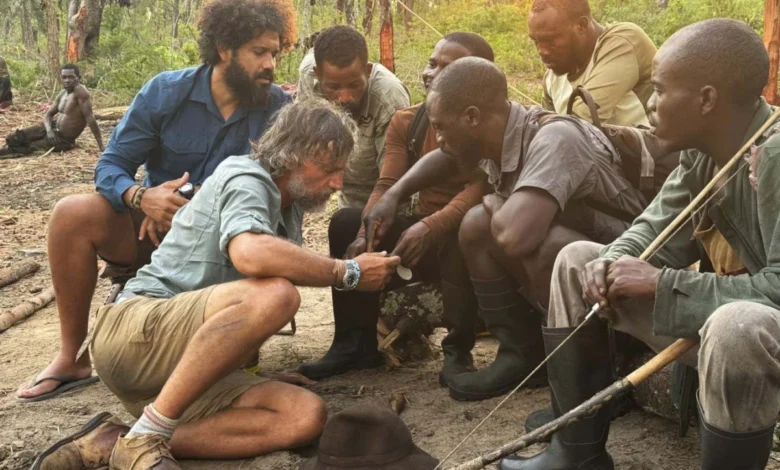
The pivotal moment, as depicted in the film, involved a deep engagement with the San trackers. These individuals, whose ancestral lands span parts of Southern Africa, including areas bordering Angola, possess an inherited wisdom passed down through countless generations. Their ability to interpret the faintest of tracks, the subtlest disturbance in vegetation, and the nuanced calls of wildlife is legendary. Boyes recognized that this "embodied knowledge," honed over millennia, represented a critical, albeit often overlooked, scientific resource. He began to integrate their insights into his hypothesis, believing that their keen observations held the key to potentially locating a lost or exceptionally rare elephant population.
The Fnykvi specimen, a tangible link to a past era of exploration and scientific collection, also played a significant role in galvanizing Boyes’ interest. The sheer size of this preserved elephant, displayed as a testament to the extraordinary individuals that once roamed the Earth, fueled the imagination. Was it an anomaly, or did it represent a distinct lineage that might still persist in isolated pockets of the continent? The Bi plateau, with its rugged terrain and limited human habitation, emerged as a prime candidate for harboring such a population, shielded from the extensive human encroachment that has impacted elephant habitats elsewhere.
Chronology of the Search
While the film Ghost Elephants focuses on a specific expedition, Dr. Boyes’ dedication to this hypothesis has spanned over a decade. The timeline of his pursuit can be understood in several phases:
- Early Years (Circa 2010s): Initial collection of anecdotal evidence and reports from local communities and San trackers. This phase involved building trust and understanding within these communities and gaining access to their invaluable knowledge.
- Formulating the Hypothesis: As more consistent reports of unusually large elephants emerged, Boyes began to coalesce these accounts into a scientifically plausible hypothesis. He started to map potential territories and identify key areas for future investigation.
- Developing Partnerships: Recognizing the need for a multidisciplinary approach, Boyes sought collaborations with environmental anthropologists, geneticists, and, crucially, local Angolan authorities and guides. The film highlights the crucial role of Angolan hunter-guides and environmental anthropologist Kerllen Costa, who worked alongside Boyes.
- Expedition Planning and Execution (Preceding and During the Film’s Events): This involved meticulous planning, securing funding, assembling equipment, and navigating the complex logistical and political landscape of Angola. The film captures a specific expedition, showcasing the fieldwork, the challenges of the terrain, and the moment-to-moment process of scientific investigation.
- Analysis and Documentation: The expedition’s findings, even if provisional, are subjected to analysis. This includes reviewing camera trap footage, examining any physical evidence, and cross-referencing observations with traditional knowledge. The film documents this process, emphasizing the gradual accumulation of evidence.
The Bi Plateau: A Landscape of Mystery and Resilience
The Bi plateau is more than just a geographical location; it is a character in itself within Ghost Elephants. This vast, remote region of Angola, characterized by its rugged topography, dense woodlands, and scattered savannahs, has historically been a sanctuary for wildlife. Its isolation, however, has also meant that it has remained largely understudied by modern science.
Ecological Significance: The plateau is believed to be a critical habitat for a diverse range of African wildlife, including elephants, lions, leopards, and various antelope species. Its unique ecosystem is thought to harbor species that may have adapted to specific environmental conditions, potentially including unique genetic traits.
Historical Context: Angola has endured decades of civil war, which significantly disrupted conservation efforts and led to the decline of many wildlife populations. The post-war era has seen a renewed focus on rebuilding and protecting these natural assets. The Bi plateau, having been relatively less impacted by direct conflict due to its inaccessibility, represents a crucial opportunity for conservation and ecological restoration.

The San People’s Role: The San communities inhabiting or traversing the peripheries of the Bi plateau are custodians of ancient knowledge. Their understanding of the land, its resources, and its inhabitants is unparalleled. Their role in the search for the ghost elephants underscores the importance of indigenous knowledge systems in modern scientific endeavors. Their traditional tracking techniques, refined over millennia, provide a unique lens through which to interpret the subtle signs of elephant presence.
The Science and the Spectacle: Herzog’s Unique Lens
Werner Herzog’s directorial approach elevates Ghost Elephants beyond a typical wildlife documentary. He masterfully interweaves the scientific rigor of Boyes’ expedition with a deeper, more existential contemplation. His narration, a hallmark of his work, acts as a philosophical counterpoint to the visual narrative, prompting viewers to consider the broader implications of the search.
Methodology of Field Science: The film provides an unfiltered glimpse into the practicalities of scientific fieldwork. Viewers witness the meticulous preparation of expedition equipment, the delicate negotiations with local leaders for access and cooperation, and the arduous fieldwork conducted in challenging terrain. The film doesn’t shy away from the inherent difficulties: the limitations of technology in remote areas, the ever-present possibility of false leads, and the sheer physical demands placed on the researchers.
Observation, Inference, and Conclusion: Ghost Elephants illustrates the core tenets of scientific inquiry in real-time. The process of forming a hypothesis, rigorously observing the environment, making inferences based on collected data, and cautiously drawing conclusions is laid bare. While the film, by its nature, does not offer definitive peer-reviewed data, it effectively captures the essence of how scientific understanding is built, brick by painstaking brick, through a process of continuous investigation and refinement.
Cinematic Narrative and Embodied Knowledge: The cinematography is striking, recalling the polished aesthetic of National Geographic documentaries but imbued with Herzog’s characteristic curiosity and distinctive visual style. Sweeping aerial shots of the Bi plateau emphasize the immense scale of the landscape, dwarfing the human endeavor. Conversely, intimate close-ups of the trackers’ hands as they meticulously decipher footprints on the ground reveal a parallel science, one rooted in sensory perception and profound embodied knowledge. Herzog treats this traditional expertise not as mere folklore but as a legitimate form of empirical observation, a scientific practice honed over countless generations.
Wider Implications: Conservation, Climate, and Human Legacy
The quest for the ghost elephants serves as a powerful prism through which to examine broader issues of conservation, environmental change, and humanity’s complex relationship with the natural world.
The Paradox of Conservation: Boyes’ mission highlights a fundamental paradox inherent in conservation science: the act of study can inherently alter the subject of study. The presence of researchers, the deployment of equipment, and the very act of seeking to document and protect can, in subtle ways, change the behavior or environment of the species being studied. This underscores the ethical considerations and the need for careful, non-intrusive methodologies.
Echoes of Conflict and Resilience: The Angolan landscape, scarred by past conflicts, is now a site where the imperatives of conservation, the aspirations for Indigenous sovereignty, and the urgent need for ecological responsibility converge. The film implicitly touches upon the legacy of war and the ongoing efforts to rebuild both the nation and its natural heritage. The resilience of both the environment and its human inhabitants in the face of adversity is a subtle but potent theme.
Climate Change and Ecosystem Integrity: While not explicitly a film about climate change, the potential existence of uniquely adapted elephant populations in remote areas speaks to the resilience of biodiversity. However, the long-term survival of such populations is intrinsically linked to the broader health of their ecosystems, which are increasingly vulnerable to the impacts of climate change. The search for the ghost elephants, in this sense, is also a search for indicators of a healthy, functioning ecosystem in a rapidly changing world.
The Enduring Allure of the Unknown: In Herzog’s masterful storytelling, the ghost elephants transcend their physical form to become potent symbols. They represent the enduring human fascination with the unknown, the yearning for mysteries that science has yet to fully unravel, and the profound beauty of the wild, untamed aspects of our planet. The film suggests that exploration is not solely about the tangible discoveries made, but equally about the cultivation of humility in the face of what remains unknown, and the persistent, vital act of asking questions at the very edges of our knowledge.
The journey of Steve Boyes and the spectral presence of the ghost elephants in Angola offer a compelling narrative that resonates far beyond the confines of zoology. It is a testament to the power of human curiosity, the enduring wisdom of indigenous cultures, and the profound mysteries that continue to beckon from the wild frontiers of our world. As Davide Abbatescianni, a film critic based in Rome, aptly observes, "The film is a scientific expedition and a fable, asking what it means to chase a dream that could remain just that." The legacy of Ghost Elephants lies not only in the potential discovery of a remarkable species but in its profound meditation on the nature of belief, the pursuit of knowledge, and the enduring human spirit of exploration.