Uber’s $10 Billion Autonomous Vehicle Bet Signals New ‘Asset-Heavy’ Era in Evolving Mobility Landscape

Welcome back to TechCrunch Mobility, your essential briefing on the future of transportation, now more than ever exploring the pivotal role of artificial intelligence. The mobility sector is currently undergoing a profound transformation, with established giants and nimble startups alike navigating a complex landscape of technological innovation, shifting consumer demands, and evolving business models. At the forefront of this evolution, Uber is once again making headlines, demonstrating a significant strategic pivot in its pursuit of autonomous vehicle (AV) dominance.
Just weeks after being noted for its pervasive presence across the burgeoning autonomous vehicle technology sector, Uber’s financial commitment has been quantified by the Financial Times. According to the publication’s meticulous calculations, drawing from public records and insider discussions, Uber has earmarked a staggering sum exceeding $10 billion. This colossal investment is allocated towards acquiring autonomous vehicles and securing equity stakes in the pioneering companies developing this transformative technology. The breakdown reveals approximately $2.5 billion in direct investments into AV firms, with the remaining $7.5 billion slated for the purchase of robotaxis over the next several years. This massive financial commitment underscores Uber’s unwavering ambition to shape the future of ride-hailing and logistics, even if it means revisiting a capital-intensive strategy.
Uber’s Strategic Reorientation: From Asset-Light to Asset-Heavy
Uber’s journey into the autonomous future has been anything but linear. The company, founded on an "asset-light" model that leveraged independent contractors and their personal vehicles, is now charting a course that involves substantial capital expenditure on physical assets. This latest strategic shift marks a critical juncture, contrasting sharply with its initial philosophy and even a subsequent, albeit brief, foray into asset ownership.

Uber’s engagement with autonomous technology dates back to its early "moonshot" endeavors between 2015 and 2018. During this period, the company aggressively pursued vertical integration into futuristic mobility solutions. Key initiatives included the launch of Uber Elevate, an ambitious project dedicated to developing electric air taxis, and the establishment of Uber ATG (Advanced Technologies Group), its in-house autonomous vehicle unit. The capabilities of Uber ATG were significantly bolstered by the 2016 acquisition of Otto, a self-driving truck startup. Concurrently, in 2018, Uber also acquired Jump, a micromobility startup specializing in bike-sharing. These ventures represented a significant departure from its core ride-hailing business, requiring substantial R&D investments and the accumulation of physical assets.
However, by 2020, facing intense pressure to achieve profitability and streamline operations, Uber executed a dramatic reversal, pulling what many in the industry termed the "asset-heavy rip cord." This involved divesting from most of its moonshot projects. Uber ATG was sold to Aurora, a leading autonomous driving technology company, in a deal that valued Aurora at $10 billion. The micromobility division, Jump, was offloaded to Lime, a scooter and bike-share company. Simultaneously, Uber Elevate was sold to Joby Aviation, an electric vertical takeoff and landing (eVTOL) aircraft developer. While these divestitures marked an apparent retreat from direct ownership and in-house development, Uber shrewdly retained equity stakes in all these entities, maintaining a strategic connection to their future potential.
This retention of equity has proven to be a prescient move, allowing Uber to benefit from the advancements of these companies without bearing the full financial and operational burden of their development. Now, Uber is entering a new, distinctly different "asset-heavy" era. Unlike its previous moonshot spree, which focused on in-house technological development, the current strategy emphasizes the ownership or leasing of physical assets – specifically, robotaxis – built by third-party companies. While Uber’s internal R&D efforts undoubtedly continue to support its platform and optimize its integration with AVs, the primary focus has shifted from being a developer of autonomous technology to becoming a major operator and deployer of it. This approach allows Uber to leverage the specialized expertise of AV developers while maintaining control over the user experience and service delivery, potentially leading to interesting implications for its future balance sheet and operational structure.
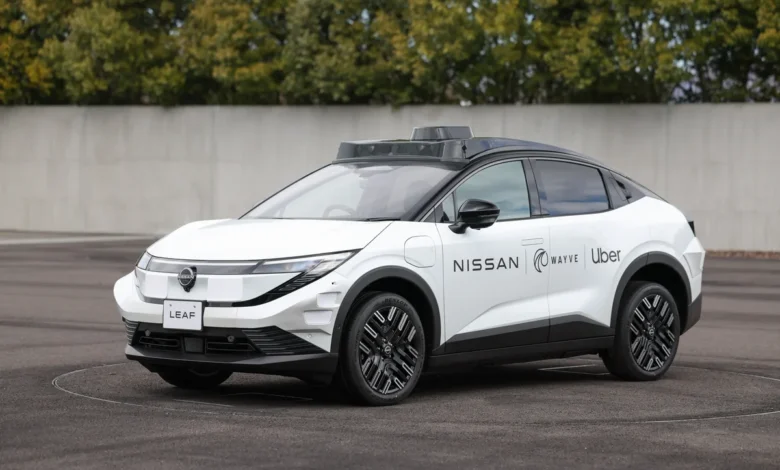
Travis Kalanick, Uber’s co-founder and former CEO, famously expressed regret that the company had "made a mistake" in abandoning its AV development program. This current strategy, while different in execution, aims to achieve the same endpoint: a fully autonomous ride-sharing product that reduces operational costs and enhances scalability. By partnering with and investing in multiple AV companies like WeRide, Lucid, Nuro, Rivian, and Wayve – spanning drones, robotaxis, and freight – Uber is hedging its bets and positioning itself to integrate the most viable technologies into its expansive global network. The $7.5 billion commitment to purchasing robotaxis signifies a long-term vision where autonomous fleets become a foundational element of its service offerings, rather than just an experimental addition.
Industry Insights and Emerging Players

Beyond Uber’s monumental moves, the broader mobility sector continues to buzz with innovation and investment, particularly in areas intersecting with physical AI. Jiten Behl, a partner at Eclipse, a venture firm that recently announced a new $1.3 billion fund, shed light on their investment philosophy. Eclipse is keen on incubating more startups, a strategy exemplified by its backing of Also, a micromobility spinout from Rivian. Behl indicated that Eclipse is actively working on several "really cool ideas," with a particular interest in startups that operate across various enterprises, suggesting a focus on scalable, foundational technologies.
Intriguing whispers from the industry suggest that a significant seed round announcement is imminent for a San Francisco-based startup. This new entrant is reportedly developing an autonomous hauler designed without a driver’s cab, a concept reminiscent of what Swedish electric and autonomous transport company Einride has pioneered. While details remain under wraps, the company’s nascent roster is reportedly replete with Silicon Valley tech luminaries, including a founder with prior experience at Uber ATG, Pronto, and Waabi – a pedigree that hints at substantial expertise in autonomous driving systems. This development signals continued investor appetite for innovative hardware and software solutions that promise to revolutionize logistics and industrial operations.
Key Deals Shaping the Mobility Landscape
The past few weeks have seen a flurry of significant deals and funding rounds that are further reshaping the contours of the mobility industry:
- Slate’s Electric Truck Ambitions: Electric vehicle startup Slate has successfully secured another $650 million in a Series C funding round, spearheaded by TWG Global. This brings Slate’s total funding to approximately $1.4 billion. TWG Global, a firm led by Guggenheim Partners CEO Mark Walter and investor Thomas Tull, is a notable new entrant to Slate’s investor base. Slate, which gained early backing from Jeff Bezos, is on track to commence production of its affordable pickup trucks by the end of 2026. This investment underscores the continued belief in the market for electric trucks, particularly those targeting a more accessible price point, an area that promises intense competition among players like Rivian, Tesla, and Ford.
- Glydways’ Autonomous Pods for Urban Transit: San Francisco-based Glydways, a startup developing personal autonomous pods designed to operate on dedicated 2-meter-wide lanes within cities, raised $170 million in a Series C funding round. The round was co-led by Suzuki Motor Corporation, ACS Group, and Khosla Ventures, with participation from existing investors Mitsui Chemicals and Gates Frontier, and new investor Obayashi Corporation. Glydways’ vision addresses urban congestion and last-mile connectivity by proposing a novel infrastructure solution that could offer efficient, scalable, and environmentally friendly transportation in dense urban environments. The significant investment from diverse global players highlights the potential for innovative public-private partnerships in urban mobility.
- GM and Ford Eye Pentagon Partnerships: In a potentially groundbreaking development, General Motors and Ford are reportedly in discussions with the Pentagon. The talks center on exploring how the automotive industry can assist the military in revamping its procurement program, aiming to identify more cost-effective and faster methods for acquiring vehicles, munitions, and other essential hardware. This collaboration could signify a deeper integration between the commercial auto sector and defense, leveraging industrial scale and technological advancements for national security applications.
- Loop’s AI for Supply Chain Resilience: Loop, another San Francisco-based startup, secured $95 million in a Series C funding round. Led by Valor Equity Partners and the Valor Atreides AI Fund, with contributions from 8VC, Founders Fund, Index Ventures, and J.P. Morgan’s Growth Equity Partners, Loop is developing supply chain AI that predicts disruptions. In a post-pandemic world still reeling from supply chain volatilities, AI-driven predictive analytics offer a critical tool for businesses to enhance resilience, optimize logistics, and mitigate risks.
- Monarch Tractor Acquired by Caterpillar: The journey of Monarch Tractor, a startup known for its electric, autonomous tractors, has concluded with its assets being acquired by Caterpillar. Monarch Tractor reportedly struggled in its pivot to a software services business, ultimately leading to its collapse. This acquisition by an industry titan like Caterpillar suggests a consolidation in the agricultural tech space, where established players are absorbing innovative but financially challenged startups to integrate advanced technologies into their offerings.
- Uber Bolsters Delivery Hero Stake: Uber is further solidifying its position in the food delivery sector by increasing its stake in Delivery Hero by 4.5%. This strategic move involves Uber acquiring approximately 270 million euros worth of shares from Prosus, the Dutch investment group and Delivery Hero’s largest shareholder. This highlights Uber’s continued interest in expanding its global food delivery footprint and potentially consolidating its influence in key markets.
Notable Developments and Industry Tidbits

The mobility sector’s dynamic nature is further evidenced by several other significant developments:
- Doug Field’s Departure from Ford: Doug Field, a highly influential executive who was instrumental in shaping Ford’s electric vehicle and technology strategies over the past five years, is reportedly leaving the automaker. Field’s departure coincides with a significant organizational restructuring at Ford, which is creating a new "product creation and industrialization" team to be led by COO Kumar Galhotra. Field, known for his stints at Apple and Tesla before joining Ford, leaves a substantial void, and his next move – potentially back to Silicon Valley or another major tech player – will be closely watched. This shift at Ford underscores the ongoing internal reconfigurations required to compete effectively in the rapidly evolving EV market.
- Lightship Expands EV RV Production: Lightship, the innovative all-electric RV startup, is significantly expanding its manufacturing footprint. The company is adding another 44,000 square feet to its Colorado-based factory, a move that will allow it to more than quadruple its manufacturing capacity. This expansion signals growing confidence in the electric RV market and Lightship’s ability to scale production to meet anticipated demand from eco-conscious travelers.
- Rivian and Redwood Materials’ Circular Economy Partnership: The long-standing partnership between electric vehicle manufacturer Rivian and battery recycling and materials startup Redwood Materials is yielding tangible results. Redwood is installing battery energy storage systems at Rivian’s factory in Illinois, utilizing 100 second-life Rivian battery packs. These packs will collectively provide 10 megawatt-hours (MWh) of dispatchable energy, designed to reduce costs and alleviate grid load during peak demand periods. This initiative exemplifies the growing importance of the circular economy in the EV sector, showcasing how retired battery packs can find new life in stationary storage applications, extending their utility and promoting sustainable energy practices.
- Tesla’s Gamified Full Self-Driving App: Tesla has rolled out a new self-driving application aimed at simplifying the subscription process for its Full Self-Driving (FSD) software. More notably, the app now incorporates gamified elements, allowing owners to track statistics on how often and how effectively they utilize the FSD software. This addition, while seemingly minor, reflects a strategic move by Tesla to encourage greater adoption and engagement with its advanced driver-assistance features, potentially leveraging psychological incentives to drive usage and gather more data.
- Waymo’s Global and Domestic Expansion: Waymo, Alphabet’s autonomous driving subsidiary, continues its methodical expansion. The company has commenced testing its autonomous vehicles on public roads in London, marking a significant step towards international deployment in one of the world’s most complex urban environments. Concurrently, Waymo has removed its waitlist in Miami and Orlando, signaling a scaling of its robotaxi services in these two burgeoning U.S. markets. This measured but persistent expansion strategy positions Waymo as a leading contender in the race to commercialize robotaxi services globally, even as competitors face regulatory and operational hurdles.
The convergence of autonomous vehicles, artificial intelligence, and robotics is creating an unprecedented era of change in mobility. As evidenced by Uber’s renewed commitment to an asset-heavy strategy and the continuous stream of innovation from startups and established players alike, the industry is not just evolving; it is being fundamentally redefined. The upcoming TechCrunch event in San Francisco from October 13-15, 2026, promises to be a crucial forum for further discussions on these pivotal trends, offering insights into the future direction of this dynamic sector.
Related posts: