Air New Zealand Unveils Revolutionary Economy Skynest Bunk Beds to Combat Ultra-Long-Haul Travel Fatigue

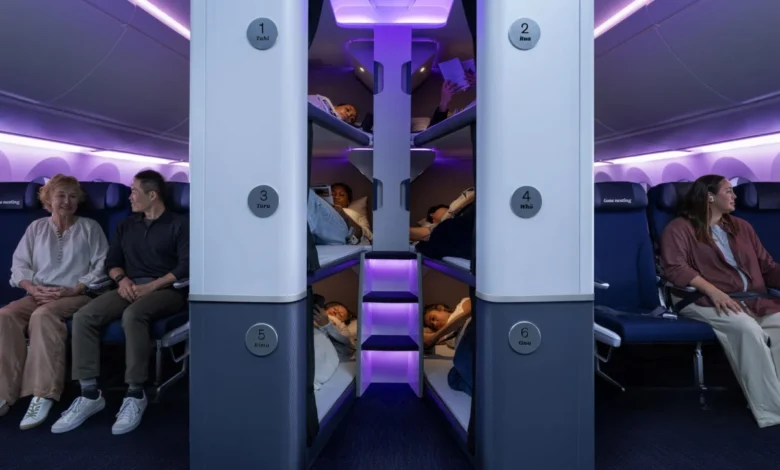
In a move set to redefine the passenger experience on the world’s longest flights, Air New Zealand has officially launched its groundbreaking Economy Skynest, a series of bunk bed-style sleeping pods designed to offer economy passengers a chance to properly rest during ultra-long-haul journeys. This innovative offering, initially available on select Boeing 787-9 Dreamliner flights connecting New York and Auckland, aims to alleviate the physical and mental toll of journeys that can stretch for nearly 18 hours. The Skynest represents a significant advancement in airline cabin design, prioritizing passenger well-being and comfort in a segment of the market traditionally associated with limited space and amenities.
The airline announced that the Economy Skynest will be accessible to passengers starting May 18, with the first flights featuring this revolutionary amenity scheduled to commence in November. This initiative addresses a long-standing challenge for travelers undertaking the arduous journey between major international hubs and destinations like New Zealand, a country renowned for its stunning landscapes but geographically distant from many global population centers. The sheer duration of these flights often leaves passengers feeling drained and jet-lagged, impacting their ability to enjoy their destination or their productivity upon arrival.
The Mechanics of the Economy Skynest
Each Economy Skynest unit comprises six horizontal bunk beds, meticulously engineered to maximize space within the aircraft cabin. These are not merely reclining seats but fully enclosed sleeping compartments, offering a private sanctuary for passengers seeking respite. The pods are equipped with a comfortable mattress, fresh bedding, a privacy curtain to shield occupants from cabin light and activity, a dedicated reading light for personal illumination, and convenient charging ports for electronic devices. To further enhance the resting experience, each pod also includes an amenity kit containing essentials such as an eye mask and earplugs, crucial for achieving sleep in a typically noisy cabin environment. Naturally, a seat belt is also integrated into each bunk, ensuring passenger safety during all phases of flight, including turbulence.
Nikhil Ravishankar, Chief Executive of Air New Zealand, emphasized the transformative potential of the Skynest. "By giving more people the chance to properly rest on ultra-long-haul flights, it helps make travel to and from New Zealand more manageable," he stated. "This is about offering a viable solution for our economy passengers to genuinely stretch out, lie flat, and get a few hours of proper rest in the air." This sentiment underscores the airline’s commitment to enhancing the travel experience across all fare classes, recognizing that comfort on the journey is as vital as the destination itself.
A Phased Rollout and Cost Considerations
While the introduction of the Economy Skynest is a significant development, its initial deployment is strategically focused. The revolutionary sleeping pods will be exclusively available on Air New Zealand’s ultra-long-haul route between John F. Kennedy International Airport (JFK) in New York City and Auckland Airport (AKL) in New Zealand. This route was chosen due to its extreme flight duration, making it the prime candidate for such an innovative comfort solution.
A key aspect of the Skynest’s availability is that passengers must still purchase a standard seat in the economy cabin. The Economy Skynest is an additional amenity that can be booked for a supplementary fee. The cost for a four-hour session in a Skynest pod is set at NZ$495 (approximately US$280 at current exchange rates). This pricing structure reflects the premium nature of the service and the significant engineering and operational investment involved.
The airline plans to offer two four-hour sessions per flight. This means that passengers can book one segment of rest during their journey. To maintain hygiene and ensure readiness for subsequent users, cabin crew will meticulously change the bedding and refresh the amenity kits between each session. Passengers are limited to booking only one session per flight, ensuring equitable access to this novel amenity.
Air New Zealand has also outlined specific guidelines for Skynest users. "Double-bunking," or sharing a pod with another passenger, is strictly prohibited, underscoring the design’s intent for individual rest. Similarly, passengers are advised against bringing their own snacks into the pods, likely to maintain cabin cleanliness and manage catering. The airline also requests that passengers refrain from wearing strong-smelling perfumes or colognes to ensure a pleasant environment for all users. However, in a nod to the realities of shared living spaces, snoring is acknowledged as an acceptable, albeit perhaps less ideal, part of the experience.
The Genesis of the Skynest: A Long Development Journey
The concept of the Economy Skynest is not a sudden innovation; it represents years of development and refinement by Air New Zealand. The airline first garnered attention for this ambitious project back in 2020, signaling its early commitment to tackling the challenges of ultra-long-haul travel. The initial concept was met with considerable excitement and anticipation from the travel industry and consumers alike.
Following extensive research, design, and testing phases, the bunk beds underwent a pilot program in early 2024. This pilot phase was crucial for gathering real-world feedback, assessing operational feasibility, and making any necessary adjustments to the design and service protocols. The successful completion of these trials paved the way for the current rollout on the airline’s new Boeing 787-9 Dreamliners, aircraft specifically chosen for their long-haul capabilities and suitability for accommodating such innovative cabin features.

Building on a Legacy of Innovation: The Economy Skycouch
The Economy Skynest is not Air New Zealand’s first foray into reimagining economy class comfort. The airline has long been known for its "Economy Skycouch," an innovative offering that transforms a row of three economy seats into a flexible, sofa-like space. The Skycouch features a series of cushions and leg rests that can be adjusted to create a flat surface, allowing passengers to stretch out, lie down, or snuggle up. This amenity has proven particularly popular with families and couples traveling together, providing them with more space and flexibility than traditional economy seating.
The Economy Skycouch, which has been a staple of Air New Zealand’s long-haul offering for some time, demonstrated the airline’s willingness to challenge conventional airline seating arrangements. The Skynest can be seen as a logical evolution of this philosophy, taking the concept of extended comfort to an even more advanced level by introducing dedicated, private sleeping spaces. The success and positive reception of the Skycouch likely provided valuable insights and momentum for the development of the Skynest.
Supporting Data and Industry Context
The launch of the Economy Skynest comes at a time when the aviation industry is increasingly focusing on passenger comfort and experience, particularly on ultra-long-haul routes. As airlines invest in more fuel-efficient and longer-range aircraft, such as the Boeing 787 Dreamliner and the Airbus A350, the duration of flights continues to push the boundaries. For instance, the New York to Auckland route is consistently ranked among the longest commercial flights in the world, with flight times averaging between 17 and 18 hours.
According to industry reports, passenger satisfaction on ultra-long-haul flights is heavily influenced by the ability to rest and sleep comfortably. A study by the International Air Transport Association (IATA) highlighted that improved sleep quality on long flights can significantly reduce passenger fatigue and jet lag, leading to a more positive overall travel experience. This aligns directly with Air New Zealand’s stated objective for the Skynest.
The cost of air travel, particularly for long-haul flights, can be substantial. While premium cabins offer lie-flat seats, these are often prohibitively expensive for many travelers. The Economy Skynest offers a more accessible alternative for economy passengers to achieve a similar level of restorative rest, bridging a gap in the market. The additional cost of NZ$495 for a four-hour session represents a fraction of the price difference between an economy ticket and a business or first-class fare, making it a potentially attractive option for those seeking to enhance their travel without a complete fare upgrade.
Broader Impact and Implications for the Aviation Industry
The introduction of the Economy Skynest by Air New Zealand could have a ripple effect across the global aviation industry. It sets a new benchmark for what can be expected in economy class on ultra-long-haul flights. Other airlines operating similar routes may feel compelled to explore comparable innovations to remain competitive and meet evolving passenger expectations.
This development also highlights a growing trend of airlines focusing on ancillary revenue streams. While the Skynest is primarily about passenger comfort, it also represents a significant revenue opportunity for Air New Zealand. The success of this model could encourage other carriers to explore creative ways to monetize cabin space and offer specialized services that enhance the passenger journey.
Furthermore, the Skynest’s design could influence future aircraft cabin configurations. As airlines and aircraft manufacturers collaborate on new interior layouts, the success of the Skynest might lead to more integrated sleeping solutions or modular cabin designs that can be adapted for different passenger needs. The focus on privacy, comfort, and functionality within a confined space offers valuable lessons for cabin designers.
The environmental implications are also worth noting. By enabling passengers to rest better, the Skynest could potentially reduce the overall stress and fatigue associated with air travel, which can sometimes lead to passengers opting for less sustainable travel methods or extending their stays due to exhaustion. A more comfortable journey might encourage more people to travel, contributing to the aviation sector’s economic activity.
Official Statements and Future Outlook
Air New Zealand’s proactive approach to passenger comfort has been a hallmark of its brand. The airline’s commitment to innovation, as demonstrated by the Economy Skycouch and now the Economy Skynest, positions it as a leader in enhancing the travel experience. The airline’s strategic decision to introduce this amenity on its most challenging routes suggests a strong belief in its efficacy and market appeal.
The success of the Economy Skynest will likely be closely monitored by industry analysts, competitors, and passengers alike. If the initial rollout proves successful, Air New Zealand may consider expanding the Skynest to other ultra-long-haul routes in its network, further solidifying its reputation as an airline that prioritizes passenger well-being on even the most demanding journeys. This bold step by Air New Zealand is not just about adding a feature; it’s about fundamentally rethinking how passengers can endure and even enjoy the vast distances of modern air travel.