Unlocking the True Cost of Luxury Real Estate in Macklemore’s Iconic Seattle Neighborhood

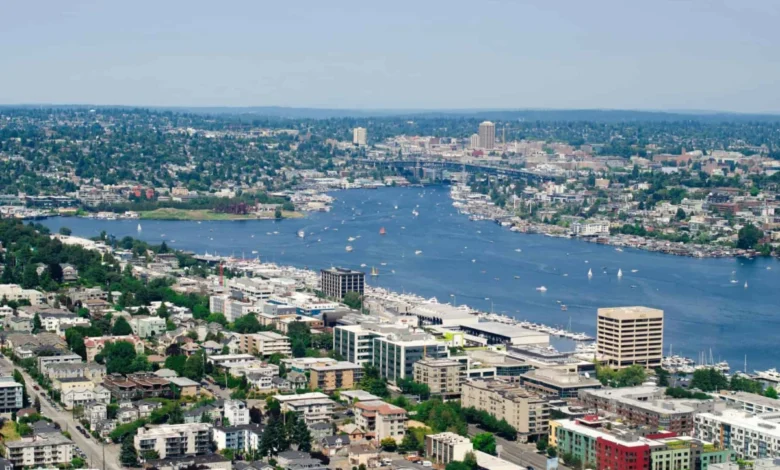
When Grammy-winning hip-hop artist Macklemore put Seattle firmly on the global music map, he cemented a cultural connection to the city that remains deeply tied to its most vibrant and historic districts. Among them, the Capitol Hill neighborhood stands out as a crown jewel of the Pacific Northwest. Famed for its tree-lined residential streets, electric arts and nightlife culture, and immediate proximity to downtown Seattle, Capitol Hill has historically attracted a mix of creatives, tech pioneers, and affluent homeowners.
Yet, for prospective homebuyers looking to emulate the lifestyle of the neighborhood’s most famous residents, the financial reality of securing a luxury estate in Capitol Hill extends far beyond the surface appeal. Examining a benchmark property valued at approximately $6 million—illustrative of elite real estate in the area—reveals a complex financial ecosystem involving jumbo mortgages, escalating property taxes, steep maintenance costs, and unique architectural considerations. Real estate experts note that while the neighborhood remains one of the most desirable urban enclaves in Washington state, buyers must prepare for a total monthly cost of ownership that can easily surpass $40,000.
Market Overview and Historical Context of Capitol Hill Real Estate
Capitol Hill’s residential architecture reflects more than a century of Seattle’s urban development. Emerging during the city’s early 20th-century economic booms, the neighborhood initially attracted wealthy industrialists who constructed sprawling Queen Anne, Craftsman, and Tudor-style estates. Over subsequent decades, zoning shifts and urban densification introduced a diverse mix of mid-century apartment complexes, brick-fronted row houses, and sleek, contemporary infill developments.
This architectural diversity has driven sustained market demand, turning Capitol Hill into one of King County’s most competitive micro-markets. According to local real estate professionals, the median price for a single-family home or standard property sits significantly lower than the luxury tier, hovering around $790,000, while accessible condominiums typically range from $500,000 to $700,000. However, these entry-level options come with their own financial caveats, such as monthly homeowners association (HOA) dues ranging from $400 to over $1,000.
For first-time buyers and families aiming to enter the broader market, industry analysts emphasize that Washington’s property tax framework and financing constraints require substantial household earnings. Market specialists calculate that comfortably purchasing a median-priced home in the area demands a household income of approximately $140,000 to $160,000, underscoring the high barrier to entry even outside the ultra-luxury segment.
Decoding the Financial Breakdown of a $6 Million Estate
For properties operating at the apex of the Capitol Hill market—comparable to a $6 million estate—the financial commitments scale dramatically. Purchasing and maintaining a property of this magnitude requires a multi-layered financial strategy addressing financing, municipal levies, and asset protection.
Mortgage Dynamics and Jumbo Loan Requirements
Securing a $6 million home in King County requires navigating the upper tiers of residential lending. Because this valuation far exceeds the 2026 King County jumbo loan threshold of $1,063,750, conventional conforming loan limits do not apply. Buyers must either deploy substantial liquid cash reserves or secure specialized jumbo mortgage financing.
Assuming a standard 20% down payment—equaling an upfront cash investment of $1.2 million—a buyer would finance the remaining $4.8 million through a 30-year fixed jumbo mortgage. At prevailing interest rates fluctuating between 6.75% and 7%, the estimated monthly principal and interest payment alone accounts for approximately $31,000 to $33,000. Alternative down payment scenarios further illustrate the required liquidity: a 10% down payment demands roughly $600,000 upfront, while a 30% contribution requires $1.8 million in cash.
Property Tax Obligations in King County
Property taxes represent a predictable yet substantial recurring expense for King County homeowners. Property assessments are managed locally, with the current regional levy rate calculated at approximately $9.91 per $1,000 of assessed value for the 2026 tax year. This yields an effective tax rate ranging from 0.8% to 0.9% of a property’s total assessed value.
When applied to a $6 million luxury residence, these figures translate to an annual property tax liability between $48,000 and $54,000. Broken down across the calendar year, homeowners must budget roughly $4,000 to $4,500 every month strictly for municipal and county tax obligations.
Homeowners Insurance and Risk Mitigation
While Seattle is generally considered a moderately priced market for property insurance compared to disaster-prone coastal or southern regions of the United States, high-value estates command specialized coverage. Insurance premiums for a $6 million property must account for the full replacement cost of the structure, custom architectural finishes, comprehensive liability protection, and potential umbrella policies.
Consequently, owners of luxury Capitol Hill homes face annual insurance premiums ranging from $15,000 to over $30,000, adding an estimated $1,250 to $2,500 per month to the baseline cost of homeownership.
Unique Maintenance Challenges of Historic Urban Housing
Beyond the standard calculations of mortgage, taxes, and insurance, owning elite real estate in an established urban neighborhood like Capitol Hill introduces unique operational challenges. Industry experts stress that the true cost of ownership is frequently underestimated by buyers who focus solely on acquisition prices.
Older housing stock, while rich in historic character and architectural pedigree, often conceals aging infrastructure. Real estate advisors note that opening walls during modernization or renovation projects frequently uncovers outdated electrical wiring, compromised plumbing systems, structural settling, and historical water intrusion issues. Bringing these legacy properties up to modern luxury standards can easily inflate renovation budgets from tens of thousands of dollars well into six figures.
Furthermore, general upkeep, specialized landscaping, high-end utility management, and skilled labor costs in the Seattle metropolitan area have escalated significantly. Industry analysts project that labor and material inflation will continue upward, reinforcing the necessity for buyers to maintain robust operational reserves for ongoing property stewardship.
The Broader Economic Impact and Renting Versus Buying Analysis
The broader economic implications of Capitol Hill’s housing market reflect a persistent supply-and-demand imbalance. Limited geographic expansion, strict zoning protections for historic areas, and continuous influx from the Pacific Northwest’s robust tech and creative sectors ensure that long-term property appreciation remains fundamentally sound.
However, this sustained appreciation forces prospective residents to carefully weigh the financial trade-offs between renting and buying. Rental inventory in Capitol Hill accommodates diverse budgets, with studio apartments starting around $1,600 per month, one-bedroom units averaging $2,000 to $2,200, and spacious two-bedroom configurations commanding $2,600 to $3,100 monthly. Luxury rentals and standalone properties scale considerably higher.
For those evaluating long-term investment versus lifestyle flexibility, market strategists note a growing regional trend. While premier urban cores like Capitol Hill offer unmatched walkability and cultural immersion, some buyers increasingly explore adjacent markets—such as Renton or Bellevue commuter corridors—to access newer construction and lower-maintenance alternatives without sacrificing regional connectivity.
Summary of Total Monthly Ownership Expenses
Synthesizing all recurring financial obligations paints a realistic portrait of what it costs to maintain an elite residence in Macklemore’s neighborhood. For a benchmark $6 million property, the cumulative monthly expenditures break down as follows:
- Mortgage Principal and Interest (20% down, ~6.85% rate): $31,000 – $33,000
- Property Taxes: $4,000 – $4,500
- Homeowners Insurance: $1,250 – $2,500+
- Ongoing Maintenance, Utilities, and Reserves: Variable, pushing cumulative totals higher.
When all factors are accounted for, the total monthly cost of ownership for a premier Capitol Hill estate realistically reaches $40,000 to $45,000 or more per month. This substantial financial commitment captures not only the physical value of a luxury asset, but also the enduring market premium attached to living within one of the most culturally significant, walkable, and dynamic urban neighborhoods in the Pacific Northwest.