Copa del Rave 2026: The Dance Music Industry’s Premier Soccer Tournament Returns to Los Angeles

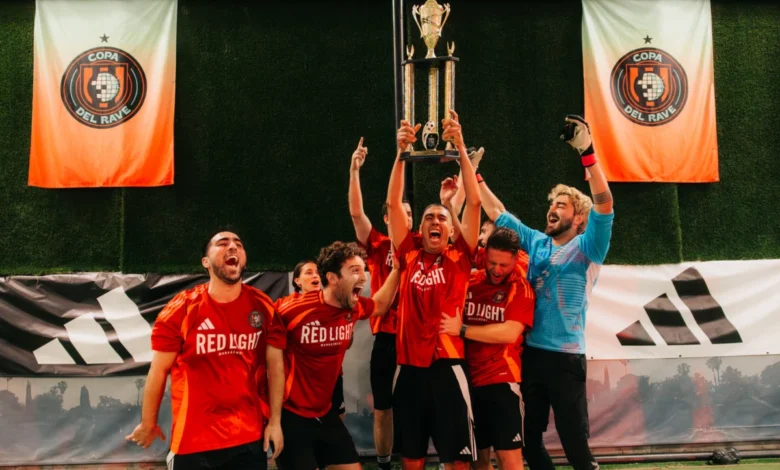
The sixth edition of the dance world soccer tournament Copa del Rave is officially scheduled to take place on October 8, 2026, at Evolve Soccer in Los Angeles. This unique intersection of electronic music culture and competitive athletics has grown from a niche gathering into a cornerstone event for the industry, drawing professionals from top-tier record labels, management agencies, and digital music platforms. As the tournament returns for its latest installment, organizers are preparing for an expanded format that includes both traditional pitch competition and a debut e-sports integration, further cementing the event’s role as a vital networking and community-building pillar within the global dance music scene.
A History of Athleticism and Philanthropy
Since its inception in 2019, Copa del Rave has functioned as a philanthropic vehicle disguised as a sporting event. Over the past seven years, the tournament has successfully raised more than $80,000 for various charitable organizations. The model is built on corporate participation: teams are composed of staff members from prominent industry entities. For the 2026 iteration, the field of eight competing teams includes representatives from Beatport, Red Light Management, Helix Records, Circa, Stratasonic, Infamous, Too Lost, and Bolo’s Vibraza Records.
The competitive structure incentivizes both performance and social responsibility. Beyond the prestige of hoisting the trophy, the winning team earns the right to designate the charitable beneficiary of that year’s fundraising proceeds. This competitive altruism has attracted a high level of engagement, with the tournament serving as a recurring milestone for the industry. The reigning champions, representing Capitol Records, set a high bar for this year’s field, proving that the technical precision required for music production often translates well to the soccer pitch.
The 2026 Tournament Expansion
The 2026 event represents a significant evolution in the tournament’s scope. In partnership with the Red Bull Wings Cup, organizers are introducing an e-sports soccer component. This inclusion reflects the broader shift in the entertainment landscape where physical and digital sports increasingly overlap. By hosting an e-sports tournament alongside the traditional field matches, Copa del Rave is adapting to the interests of a younger, digitally native audience, mirroring the way dance music festivals have begun integrating gaming culture into their programming.
The logistical expansion at Evolve Soccer Los Angeles underscores the event’s growth. The venue, which offers state-of-the-art facilities, will host the tournament starting at 4:30 p.m. on October 8. The event is open to the public, requiring only an RSVP for entry, which highlights the organizers’ commitment to maintaining a community-oriented atmosphere despite the participation of major corporate brands.
Musical Integration and Cultural Significance
A defining characteristic of Copa del Rave is its refusal to separate the sport from the music. The tournament functions as a hybrid experience, featuring a robust lineup of performances and DJ sets. The 2026 roster includes Juos, Mia Luna, Ardalan, Life On Planets, and Papa Lu. Furthermore, the halftime show, presented by Baile World, is slated to feature performances by La Goony Chonga and Cquestt, alongside undisclosed special guests.
This integration is not incidental; it is central to the event’s identity. By curating a high-quality soundtrack for the matches, the organizers ensure that the atmosphere remains consistent with the professional standards of the dance music industry. The event has historically featured a "who’s who" of electronic music talent, with past iterations hosting sets by industry heavyweights such as Diplo, The Chainsmokers, Chris Lorenzo, and DJ Minx. These performances serve as a draw for fans, effectively bridging the gap between industry networking and fan-facing entertainment.
The Post-World Cup Momentum
The timing of this year’s tournament follows a period of heightened interest in soccer within the United States, bolstered by the infrastructure and enthusiasm surrounding the 2026 FIFA World Cup. Copa del Rave’s organizers have successfully capitalized on this momentum, having hosted a series of high-profile World Cup watch parties earlier in the year.
These events, which took place at venues like Exchange and Academy, featured performances from influential artists such as Claude VonStroke and Justin Jay. The culmination of this series—a sold-out event at the L.A. State Historic Park—demonstrated the viability of large-scale, soccer-adjacent music gatherings. Alastair Duncan, co-founder of Copa del Rave, noted that the industry’s appetite for "footie" remains strong following the global tournament. "We’re really looking forward to getting everyone out on the pitch again for a good cause and some incredible music," Duncan stated. "Huge thanks to all our artists, teams and partners for all their support."
Industry Implications and Strategic Growth
The professionalization of Copa del Rave over the last six years offers an interesting case study in industry-specific community events. By providing a low-pressure environment for executives, artists, and staff to interact outside of boardrooms or festival stages, the tournament fosters relationships that can lead to creative and business collaborations. The involvement of major partners, most notably adidas, signals that the event has reached a level of maturity where it is viewed as a valuable sponsorship opportunity.
The implications for the dance music sector are twofold. First, the event demonstrates the industry’s ability to self-organize around non-musical causes, strengthening the internal network of professionals. Second, by moving into the e-sports space, Copa del Rave is future-proofing its model. As the traditional music industry continues to fragment and digitize, events that combine live sports, high-fidelity music, and interactive gaming are likely to command greater attention from both sponsors and attendees.
Analysis of the Competitive Landscape
While the primary objective is charitable, the competitive nature of the tournament is palpable. The transition from last year’s victory by Capitol Records to the current field of eight companies suggests a high level of institutional pride. The teams representing entities like Beatport and Helix Records are not merely participating for social engagement; they are investing in the infrastructure of the tournament itself.
The choice of charity as the primary "prize" for the winners ensures that the tournament remains aligned with its philanthropic mission. This structure prevents the event from becoming overly commercialized, as the ultimate victor is defined by their contribution to the community rather than a monetary prize. This alignment of values—competition, community, and charity—remains the driving force behind the tournament’s continued success and its ability to attract high-profile musical talent year after year.
Conclusion and Future Outlook
As October 8 approaches, the organizers are focused on the final logistics of the tournament, ensuring that the 2026 event surpasses its predecessors in both scale and impact. With the combination of live performances, competitive soccer, and the new e-sports category, Copa del Rave is positioned to be one of the most unique gatherings in the Los Angeles music calendar.
For those in the industry, the event serves as a reminder that community remains a vital component of the music business. Whether through the lens of a soccer ball or a DJ deck, the goal remains the same: to create a space where the professionals who power the electronic music world can connect, compete, and contribute to meaningful causes. With the continued support of partners like adidas and the growing interest from the broader public, Copa del Rave appears set to remain a staple of the dance music industry for years to come.