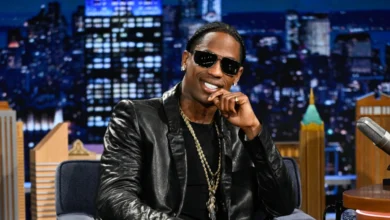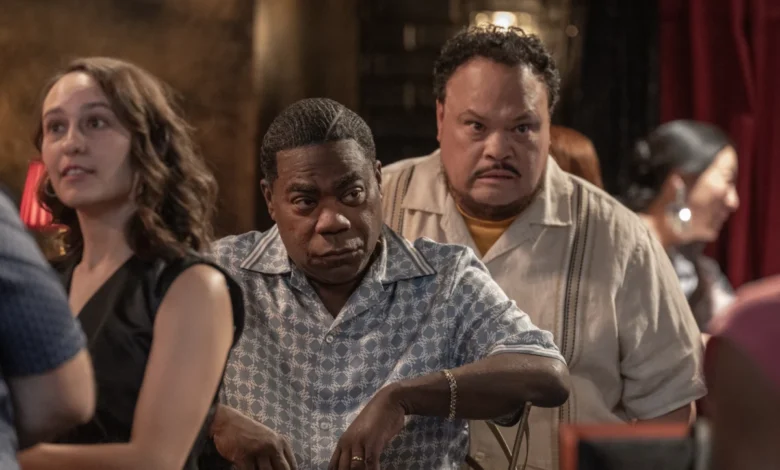
Paramount+’s multi-camera comedy series Crutch, starring Tracy Morgan, has been officially canceled after its inaugural season, Variety has learned. The series, which premiered in November 2025, failed to capture a substantial viewership during its run, contributing to the streamer’s decision to conclude the show. This development comes amidst Tracy Morgan’s burgeoning commitments to other high-profile projects, most notably his starring role in the NBC comedy The Fall and Rise of Reggie Dinkins. The latter series, which debuted in January 2026, has already secured a renewal for a second season, further solidifying Morgan’s presence on network television. The expiration of cast options for Crutch also played a significant role, with many actors having already moved on to new opportunities.
Paramount+ Shifts Focus Amidst Comedy Series Downturn
The cancellation of Crutch leaves Paramount+ without any live-action comedy series currently on its slate, nor have any been announced in the recent past. This strategic pivot suggests a broader shift in the streamer’s content acquisition and development strategy. Paramount+ appears to be prioritizing its roster of dramas, with a notable emphasis on the expansive universe being built by Taylor Sheridan. High-profile projects such as Landman and the Yellowstone spinoff Dutton Ranch are central to this focus, alongside international acquisitions like the British crime drama MobLand. This move away from multi-cam comedies aligns with a broader trend observed across the streaming landscape, where investment in high-concept dramas and franchise extensions often takes precedence.
The Premise and Production of Crutch
Crutch centered on Francois "Frank" Crutchfield, affectionately known as "Crutch," portrayed by Tracy Morgan. Crutchfield was depicted as a boisterous yet well-loved Harlem shop owner whose life was upended when his sophisticated son and free-spirited daughter unexpectedly moved back into the family home. The series explored the generational dynamics and comedic clashes that ensued within the Crutchfield household.
The show was integrated into the existing narrative framework of CBS’s original comedy series, The Neighborhood. This connection was highlighted on the premiere date of Crutch, with Tracy Morgan making a guest appearance in a crossover episode of The Neighborhood, effectively bridging the universes and introducing the character of Crutch to a wider audience.
The ensemble cast of Crutch included Jermaine Fowler, Kecia Lewis, Adrianna Mitchell, Adrian Martinez, Braxton Paul, and Finn Maloney, contributing to the comedic ensemble.
Behind the scenes, Crutch hailed from the production company A Bird and a Bear Entertainment, founded by Cedric The Entertainer, who also served as an executive producer. Eric C. Rhone was also an executive producer. The series was created by Owen Smith, who held dual roles as executive producer and showrunner. Additional executive producers included Aaron Kaplan for Kapital Entertainment, Wendi Trilling for TrillTV, Mike Mariano, and Tracy Morgan himself. The series was produced by CBS Studios and, outside of Paramount+ markets, was distributed by Paramount Global Content Distribution.
Analyzing the Cancellation: Audience Reception and Industry Trends
The discontinuation of Crutch after a single season can be attributed to a confluence of factors, with audience reception emerging as a primary concern. While specific viewership figures for Crutch have not been publicly disclosed by Paramount+, industry observers noted a lack of significant traction for the series following its November 2025 debut. In the competitive streaming environment, a show’s ability to cultivate a dedicated audience is paramount to its longevity. The multi-camera sitcom format, while a staple of broadcast television for decades, has faced challenges in translating to the streaming model, which often favors serialized dramas and genre content with broader international appeal.
Tracy Morgan’s established comedic talent and the inherent appeal of his persona were not sufficient to overcome what appears to be a disconnect with the target demographic or a failure to generate sufficient buzz. The series’ debut date in late 2025 also placed it within a crowded entertainment landscape, with numerous other high-profile releases vying for viewer attention.
Furthermore, the expiration of cast options, a standard practice in television production, often signals a lack of confidence from the network or streamer regarding the show’s future. When cast members begin to secure new roles, it can be an indicator that renewal negotiations have stalled or that production is unlikely to continue. Morgan’s leading role in The Fall and Rise of Reggie Dinkins on NBC, a show that has already demonstrated considerable success with its renewal, undeniably occupies a significant portion of his professional bandwidth. This dual commitment highlights the practical challenges of maintaining multiple series, especially when one is performing exceptionally well.
Paramount+’s Strategic Realignment in the Streaming Wars
The decision to cease production on Crutch and to pivot away from live-action comedies reflects a calculated strategy by Paramount+ to optimize its content offerings in an increasingly saturated streaming market. The streamer’s focus on high-budget dramas, particularly those within established franchises or helmed by acclaimed showrunners like Taylor Sheridan, aligns with a broader industry trend. Major streamers are increasingly investing in "tentpole" content that can attract and retain subscribers through compelling narratives and recognizable brands.
Taylor Sheridan’s prolific output for Paramount+ has proven to be a significant draw, with Yellowstone continuing to be a ratings powerhouse and its associated spinoffs, such as 1883 and 1923, garnering critical acclaim and substantial viewership. The expansion of this universe with projects like Landman and the anticipated Dutton Ranch (which may refer to a new iteration or expansion of the Yellowstone narrative) signals a commitment to leveraging this successful intellectual property.
The inclusion of international content, such as the British crime drama MobLand, further demonstrates Paramount+’s intent to diversify its appeal and tap into global audiences. This approach is common among streamers seeking to achieve economies of scale and compete on a global stage. By concentrating resources on a curated selection of high-impact dramas, Paramount+ aims to solidify its position as a premium destination for quality storytelling, rather than attempting to cater to every genre niche.
The absence of live-action comedies from the current and announced Paramount+ slate does not necessarily indicate a complete abandonment of the genre. It is possible that the streamer is re-evaluating its approach to comedy development, perhaps exploring different formats or seeking projects with a stronger potential for audience engagement and critical success. However, for the immediate future, the emphasis remains firmly on the dramatic offerings that have proven to be the cornerstones of the Paramount+ brand.
The Broader Impact on the Comedy Landscape
The cancellation of Crutch is symptomatic of a larger challenge facing multi-camera comedies in the current television and streaming ecosystem. While these shows have a long and storied history, particularly on network television, their appeal appears to be waning among younger demographics and in the context of on-demand streaming. The slower pace of serialized dramas, the prestige associated with limited series, and the rise of short-form, digitally native content have all contributed to a shifting viewer landscape.
For actors and creators, this trend can mean fewer opportunities in the traditional multi-camera sitcom format. While networks like CBS continue to produce these shows, the streaming platforms, which represent a significant portion of the industry’s investment, often favor different types of content. Tracy Morgan’s success with The Fall and Rise of Reggie Dinkins, a single-camera comedy with a more contemporary feel, may indicate a preference for evolving comedic formats.
The decision by Paramount+ to forgo live-action comedies in its current slate also has implications for the types of talent that will be sought for future projects. The emphasis on drama suggests a demand for actors and writers skilled in crafting compelling, long-form narratives. While comedic talent will always be in demand, the specific avenues for its expression may continue to shift and diversify in response to evolving audience preferences and platform strategies. The long-term impact of these trends on the comedy genre remains a subject of ongoing observation within the entertainment industry.
Related posts: