Empowering Youth Voices Through an Ecosystem of Public Speaking at Unity Concord International School

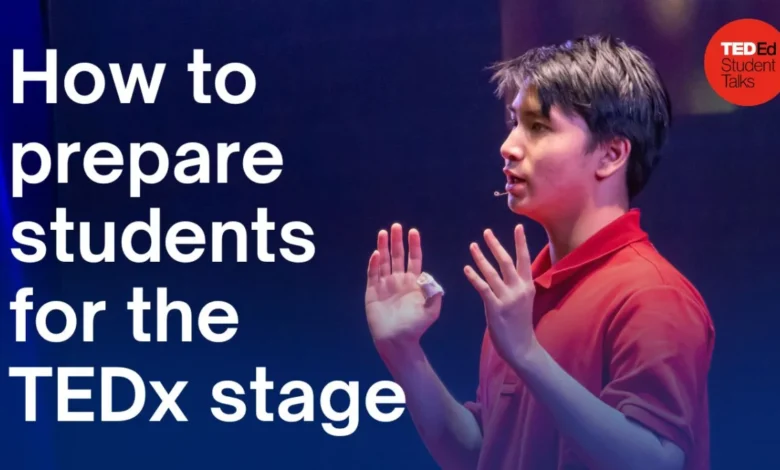
The challenge of adolescent public speaking is a well-documented hurdle in modern pedagogy. While teenagers are often characterized by a wealth of innovative ideas and a desire for social change, the transition from internal thought to public delivery remains one of the most significant psychological barriers in secondary education. At Unity Concord International School (UCIS) in Chiang Mai, Thailand, educators have addressed this challenge not through isolated workshops, but by constructing a comprehensive, self-sustaining ecosystem of support. By strategically integrating the year-round TED-Ed Student Talks program with their annual TEDxUCIS Youth event, the institution has created a developmental pipeline that transforms hesitant students into confident global communicators.
This integrated model was recently highlighted in a discussion featuring key figures from the Ambassador Education Group (AEG). Fernando Oringo, the International Co-curricular Coordinator for AEG, sat down with Abby Schrantz, the TED-Ed Student Talks Coordinator, and Madison Conger, the TEDxUCIS Youth license holder, to dissect the mechanics of their success. Their findings suggest that the "secret sauce" of student empowerment lies in the intersection of low-stakes practice and high-stakes inspiration.
The Foundation: Cultivating a Low-Stakes Environment for Early Learners
The UCIS strategy begins with the TED-Ed Student Talks group, which serves as the foundational tier of the speaking pipeline. Targeting students as young as the 5th and 6th grades, this program focuses on removing the intimidation factor associated with the "TED" brand. According to Abby Schrantz, the success of the program is rooted in a personalized recruitment strategy rather than passive digital communication.
Schrantz emphasizes the "personal touch," physically visiting homerooms to engage with students directly. This approach humanizes the program and allows prospective participants to ask questions in a safe space. More importantly, it leverages peer influence. When students hear from their own classmates about the excitement of the group, the barrier to entry drops significantly. This grassroots marketing has led the UCIS TED-Ed Student Talks group to reach full capacity, demonstrating a high demand for structured self-expression.
Inside the classroom, the curriculum moves beyond the standard facilitator guidebook. Schrantz has introduced a culture of constant innovation and peer-to-peer feedback. Students analyze talks from previous semesters, identifying strengths and weaknesses in their peers’ performances. This pedagogical shift—from teacher-led instruction to student-led critique—builds a sense of ownership over the material. By the time a student completes the TED-Ed program, they have moved beyond the fear of judgment, viewing public speaking as a collaborative process of refinement rather than a solitary test of nerves.
The Catalyst: Bridging the Gap to the Professional Stage
The transition from a classroom setting to a professional stage is often where student momentum stalls. UCIS solves this by ensuring that the two programs are not siloed. The TEDxUCIS Youth event, while featuring older or more experienced speakers, intentionally invites the younger TED-Ed Student Talks participants to be part of the audience.
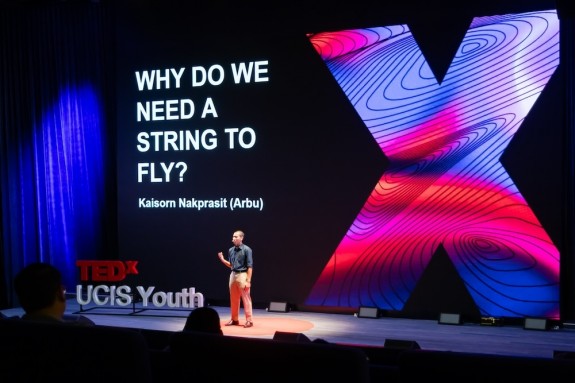
This exposure serves as a transformative "Aha!" moment for younger learners. Seeing a peer only a few years older command a professional stage with professional lighting and audio equipment makes the goal tangible. Madison Conger notes that the organizing team treats the TEDx event as more than a series of speeches; it is designed as a multisensory "celebration of ideas." By incorporating art exhibitions and sensory rooms into the event architecture, the school creates an atmosphere of intellectual prestige that students aspire to join.
The impact of this exposure is immediate. Schrantz recalls students rushing to her after the most recent TEDx event, eager to discuss specific performances. The students began asking sophisticated questions about emotional resonance, visual aids, and stage presence. This observation-based learning accelerates their development, as they begin to apply the "professional" standards they witnessed to their own developing talks.
The Organizational Pipeline: Streamlining the Path to Excellence
From an administrative perspective, the decision to link these two programs offers significant logistical advantages. Organizing a TEDx event is a massive undertaking, often complicated by the fluctuating schedules and varying skill levels of student participants. However, the TED-Ed Student Talks program acts as a pre-screening and training ground.
Madison Conger highlights that by the time students reach the age or skill level required for the main TEDx stage, they are already "vetted" by the TED-Ed process. They understand the "Idea Worth Spreading" philosophy, they are familiar with the iterative nature of scriptwriting, and they have already conquered the initial hurdles of stage fright.
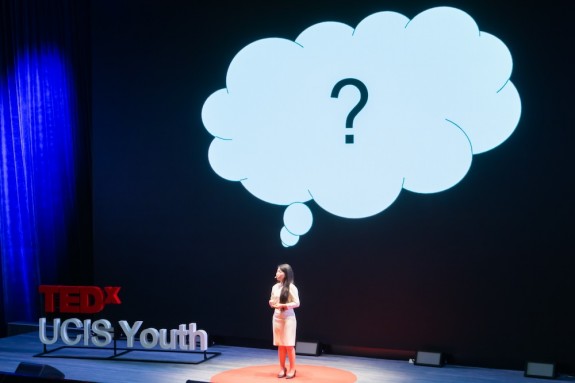
"From our perspective organizing TEDx, it makes it a lot easier that you don’t have to start from square one," Conger explains. The "roadmap" provided by this dual-program approach ensures that by the time a student stands on the red circle, they are not just a speaker, but a seasoned communicator who knows exactly how to navigate the complexities of a professional production.
Data and Educational Context: Why Public Speaking Matters
The initiative at UCIS aligns with broader global trends in education that prioritize "soft skills" alongside traditional academics. According to research by the National Association of Colleges and Employers (NACE), oral communication is consistently ranked as one of the top three skills sought by employers, yet it remains one of the most significant "skill gaps" in recent graduates.
Furthermore, studies on "Glossophobia"—the fear of public speaking—suggest that up to 75% of the population experiences some degree of anxiety regarding speaking in front of a group. By intervening at the middle-school level, UCIS is effectively desensitizing students to this fear during a critical developmental window.
In the context of Chiang Mai’s growing reputation as an international education hub, UCIS’s focus on cross-cultural communication is particularly relevant. The school serves a diverse population of students, many of whom are "Third Culture Kids" (TCKs)—children raised in a culture other than their parents’ or the culture of their country of nationality. For these students, finding a voice is not just an academic exercise; it is a vital part of identity formation.
Institutional Change and Real-World Impact
The most profound outcome of the UCIS model is the move from "speaking" to "action." The ideas generated within the TED-Ed and TEDx programs have begun to influence the school’s actual policies and culture.
One notable example involved a student speech regarding the unique psychological challenges faced by cross-cultural kids in international settings. The talk did not simply end with applause; it served as a catalyst for the school to establish a formal "Cross-Cultural Kid Community." This group now provides a support network for both parents and students, facilitating smoother transitions and better mental health outcomes for the international student body.
This demonstrates that when students are given a platform and the training to use it effectively, they become active stakeholders in their own education. The school becomes a laboratory for social innovation, where the curriculum directly informs the community’s evolution.
Analysis of Implications for Global Educators
The success of the UCIS model provides a replicable blueprint for educators worldwide. There are several key takeaways from their approach:
- Vertical Integration: Schools should not view extracurricular activities as isolated events. By linking a middle school program (TED-Ed) to a high school goal (TEDx), they create a sense of progression and long-term commitment.
- Brand Identity: Leveraging the "TED" brand provides an immediate sense of prestige and global connection. Students feel they are part of a worldwide movement, which increases their engagement and effort.
- Peer Mentorship: The most effective "teachers" in this ecosystem are often the students themselves. The peer-review sessions and the experience of watching older peers perform create a self-sustaining cycle of inspiration.
- Institutional Support: For such a program to thrive, it requires a "Coordinator" mindset. Educators like Schrantz and Conger act as facilitators and curators rather than traditional lecturers, allowing student voices to remain the central focus.
Conclusion: Building a Lasting Legacy of Confidence
As Unity Concord International School continues to refine its public speaking ecosystem, the brand of TED has become inextricably linked with the school’s identity. The program has moved beyond a simple public speaking club to become a cornerstone of the school’s mission to develop global citizens.
The journey from a 5th-grade classroom to the TEDx stage represents more than just a mastery of rhetoric; it represents the development of empathy, critical thinking, and the courage to advocate for change. As Madison Conger reflects, the platform allows kids to share things they might not normally be able to share with a wider audience. In doing so, UCIS is not just teaching students how to speak—it is teaching them that their ideas have the power to change the world.
For educators looking to replicate this success, the message from Chiang Mai is clear: start small, build a pipeline, and never underestimate the power of a personal invitation to step up to the microphone. The next generation of global change-makers is already in the classroom; they are simply waiting for the right ecosystem to help them find their voice.