The Rise of AI Citation Tracking Why Marketers are Pivoting to Answer Engine Optimization in 2024 and Beyond

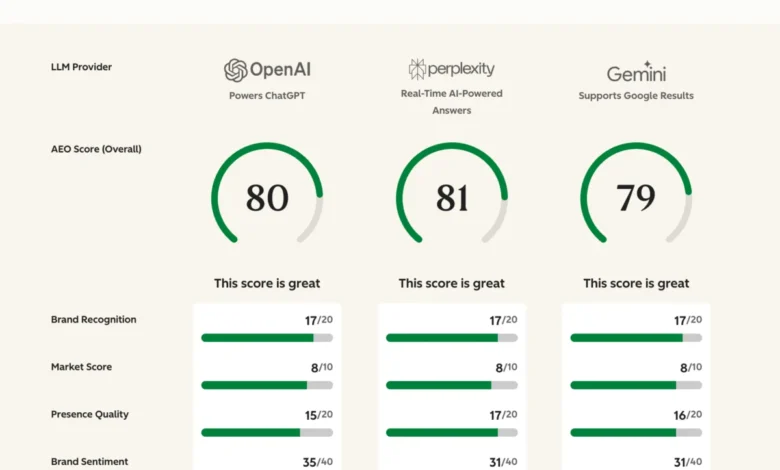
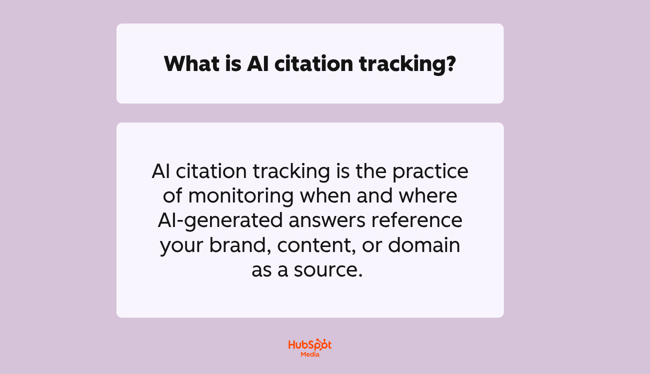
The digital marketing landscape is undergoing a fundamental shift as traditional search engine optimization (SEO) gives way to a new discipline known as Answer Engine Optimization (AEO). While traditional brand tracking dashboards have long relied on awareness metrics, social listening volume, and media hits, these legacy tools are increasingly failing to capture how brands are represented within the ecosystems of Large Language Models (LLMs). As consumers migrate from keyword-based search engines to generative AI platforms like ChatGPT, Perplexity, and Gemini, the metric of "visibility" is being redefined by AI citation tracking—a process that monitors when and how AI-generated answers cite a brand as a primary source of truth.
The emergence of AEO represents a critical pivot for marketing departments that have historically focused on Google’s "ten blue links." In the current environment, an AI’s decision to cite a specific report or product page serves as a modern endorsement, acting as both a recommendation and a source of credibility. This transition has necessitated a new toolkit of purpose-built platforms capable of querying multiple answer engines, running complex prompt variations, and calculating a brand’s competitive share of voice within synthesized AI responses.
The Evolution of Information Discovery: A Chronological Shift
The journey to AI citation tracking has been a rapid evolution, compressed into less than three decades of technological advancement. To understand the current state of AEO, one must look at the timeline of digital discovery.

In the late 1990s and early 2000s, search was directory-based and keyword-centric. Marketers focused on "meta tags" and link density. By the 2010s, Google’s algorithm shifted toward "intent" and "authority," leading to the rise of content marketing and high-quality backlinking. However, the true disruption began in November 2022 with the public release of ChatGPT. This milestone marked the transition from "Search" (where the user finds the answer) to "Answer Engines" (where the machine provides the answer).
By mid-2023, the introduction of Search Generative Experience (SGE), later rebranded as AI Overviews by Google, integrated these LLM responses directly into the traditional search results page. In 2024, the market reached a saturation point where platforms like Perplexity AI began gaining significant market share by offering "source-first" AI answers. This chronological progression has left traditional SEO tools in a state of catch-up, as they were built to track rankings on a page, not citations within a paragraph of AI-generated prose.
Defining the AI Citation in a Generative Context
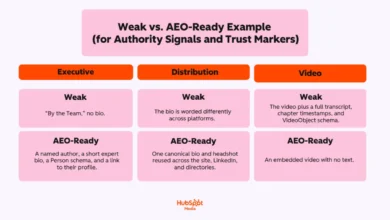
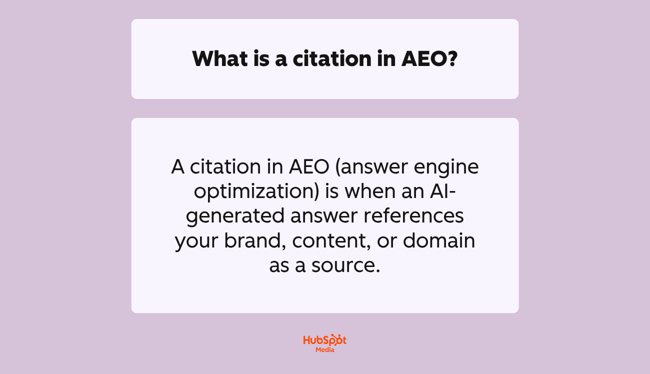
In the realm of AEO, a citation is defined as any instance where an AI-generated response references a brand, a specific piece of content, or a domain as the basis for its information. Unlike traditional SEO citations, which often refer to Name, Address, and Phone number (NAP) listings in local directories, AEO citations are dynamic and context-dependent.
Industry experts categorize these citations into three distinct forms. The first is the direct URL citation, where the AI provides a clickable link to the source material. The second is the brand mention, where the AI names the company as an authority without necessarily providing a link. The third, and most elusive, is the indirect reference, where the AI utilizes a brand’s proprietary data or unique framework—such as a specific "2026 Marketing Report"—without an explicit hyperlink.
For marketing teams, the distinction is vital. Relying solely on direct URL tracking results in an undercounting of brand authority. If an LLM uses a company’s data to form an answer but does not link back to the site, the brand still gains "mindshare" and authority in the eyes of the user, even if the traditional "click-through rate" remains zero.
Supporting Data and the Strategic Imperative for Marketers
Recent industry data underscores the urgency of this shift. According to Gartner, search engine volume is predicted to drop by 25% by 2026 as consumers migrate toward AI assistants. Furthermore, internal data from HubSpot suggests that brands cited in AI answers see a significantly higher trust-association than those appearing in traditional sponsored results.
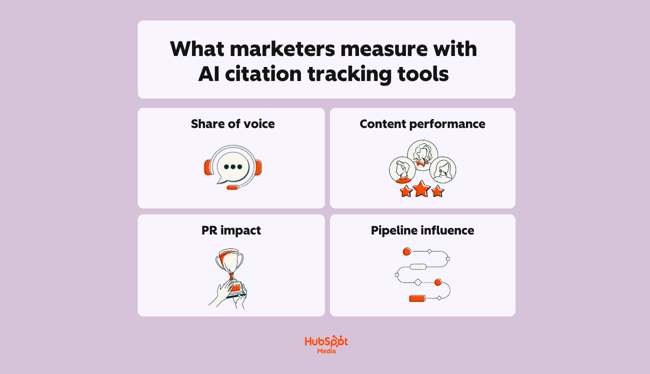
The impact of these citations extends across four primary marketing functions:
- SEO and Content Strategy: Teams are now using AEO tracking to identify "citation gaps"—queries where competitors are being cited but they are not. This data informs content restructuring to make information more "extractable" for AI crawlers.
- Public Relations: PR professionals are shifting from tracking "media hits" to "LLM sentiment." AI citation tracking allows them to see if their brand is being portrayed as a market leader or a cautionary tale in AI summaries.
- Marketing Operations: Leadership teams are connecting citation data to CRM records to determine if "Answer Engine visibility" correlates with high-intent lead generation.
- Thought Leadership: For B2B organizations, being cited as a source for industry statistics is becoming the primary metric for measuring the success of whitepapers and original research.
Comparative Analysis of the AI Citation Tool Market
As the demand for AEO grows, a specialized market of software providers has emerged. These tools vary in their approach, ranging from pure-play analytics to integrated content operations.
Integrated Marketing Ecosystems
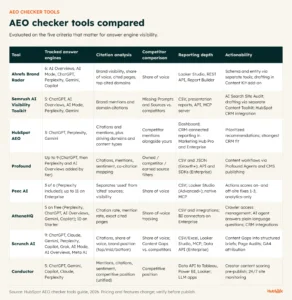
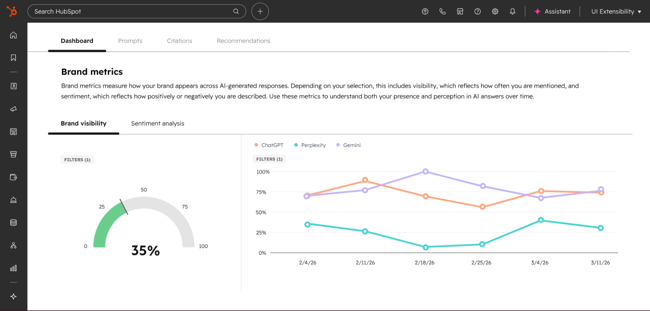
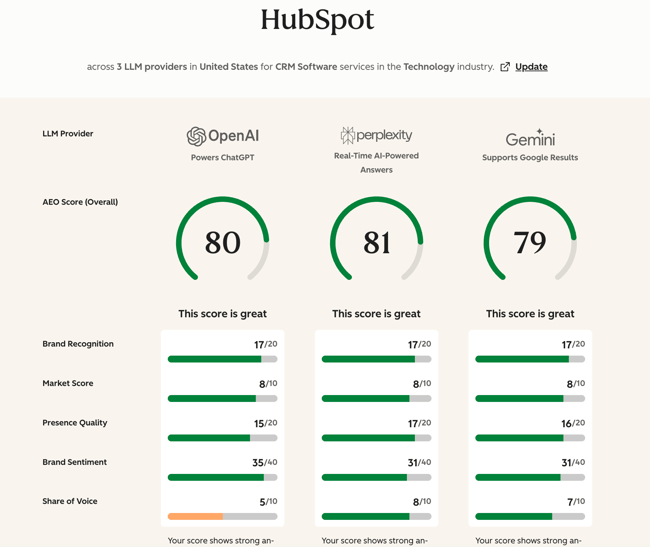
HubSpot has positioned itself as a frontrunner by integrating AEO features directly into its Marketing Hub Pro and Enterprise tiers. By connecting citation tracking to a central CRM, HubSpot allows enterprise teams to move from "insight to action" within a single workflow. Their "AEO Grader" tool has become a popular entry point for brands seeking a free baseline of their visibility across ChatGPT, Perplexity, and Gemini.
Pure-Play Analytics and Monitoring
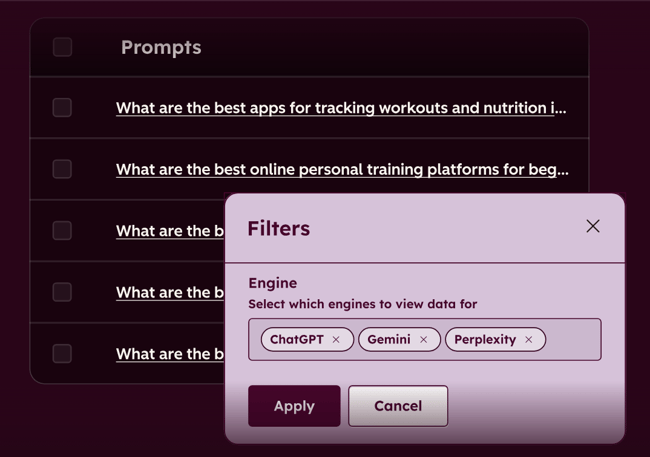
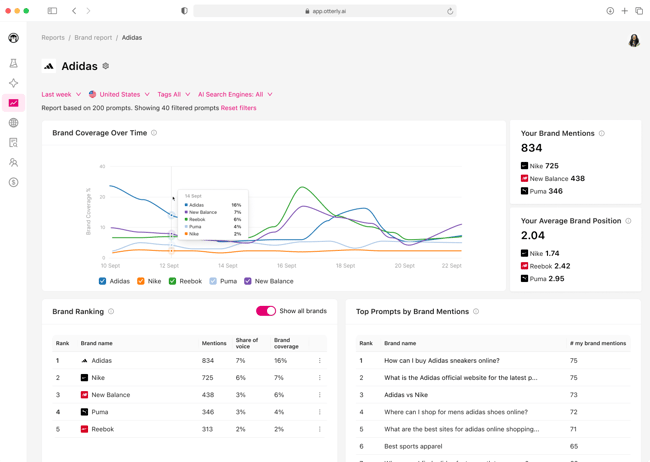
Platforms like Peec.ai and Otterly.ai focus almost exclusively on the "read" side of the equation. Peec.ai offers clean, focused analytics with integrations for Looker Studio, making it a favorite for data analysts who need to build custom reports. Otterly.ai provides an accessible subscription model for smaller agencies that need to monitor brand mentions and website citations across the major "Big Four" LLMs: ChatGPT, Google AI Overviews, Perplexity, and Microsoft Copilot.
Content Operations and Optimization
AirOps and Profound represent a "read/write" approach. AirOps is built as an end-to-end content operations platform, using citation data to trigger content production workflows that close visibility gaps. Profound caters to the enterprise level, offering compliance-grade security (SOC 2 Type II) and processing millions of citations daily to provide deep competitive intelligence.
Attribution-Focused Tools
Scrunch AI distinguishes itself through integration with Google Analytics 4 (GA4). By tracking AI crawler bot traffic, Scrunch helps marketers solve the "attribution problem," showing how many site visits are actually originating from AI-driven discovery rather than traditional organic search.
Framework for Evaluating AEO Platforms
For organizations looking to integrate AEO tracking into their tech stack, industry analysts suggest a four-dimensional scorecard.
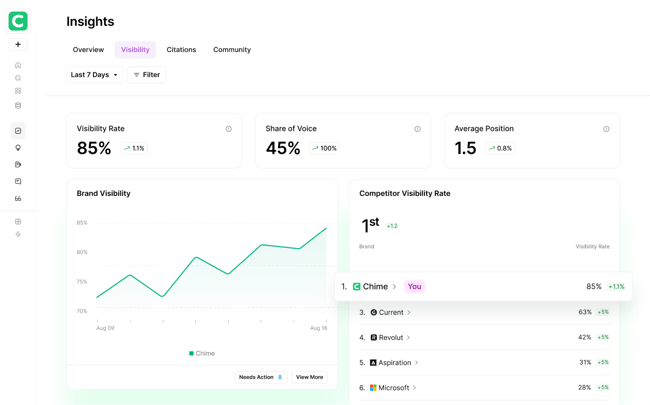
The first dimension is Coverage. A tool must track citations across the specific models a target audience uses. Because ChatGPT, Perplexity, and Gemini use different indexes and weighting signals, monitoring only one model provides an incomplete picture.
The second dimension is Integration. Data that exists in a vacuum is rarely actionable. The most effective tools are those that feed citation alerts directly into Slack, CRM systems, or content management platforms.
The third dimension is Cost. Pricing in the AEO space is often volatile, based on "credits per prompt." Organizations must calculate the "cost per tracked query" to avoid exponential bill increases as their keyword lists grow.
The fourth dimension is Team Fit. A complex tool requiring deep data science knowledge may be a poor fit for a nimble PR team, while a simple dashboard may lack the granularity required by a global SEO department.
Broader Implications: The "Zero-Click" Reality and Hallucinations
The rise of AEO citation tracking brings significant implications for the future of the open web. We are entering a "zero-click" era where the goal of marketing is no longer just to drive traffic to a website, but to ensure that the brand is the "informational ghostwriter" for the AI’s response. If a user receives a comprehensive answer from an AI that cites a brand as the authority, the brand has achieved its goal of influence, even if the user never visits their domain.
However, the technology is not without its risks. AI "hallucinations"—where an LLM misattributes a claim or references a nonexistent source—pose a new challenge for brand safety. Marketers must now implement verification workflows to ensure that when they are cited, the information is accurate. Failure to monitor these citations can lead to a "reputation drift," where an AI consistently associates a brand with incorrect data, which then becomes part of the AI’s permanent training feedback loop.
Conclusion: Adapting to the Post-Search Era
The transition from SEO to AEO is not a temporary trend but a structural change in how human knowledge is indexed and retrieved. As AI engines become the primary interface for decision-makers, the ability to track, analyze, and influence AI citations will become a core competency for every successful marketing organization. Brands that continue to rely solely on traditional search metrics risk becoming invisible in the very place where their customers are now asking for recommendations. In the AEO era, the most valuable currency is no longer the click—it is the citation.
Related posts: