The James Webb Space Telescope (JWST) has provided unprecedented insights into the crucial role of dust in the early universe, a phenomenon previously obscured by the vast distances and faintness of infant galaxies. While JWST possesses the power to observe many of these primordial galaxies, direct, detailed study remains a significant challenge. To circumvent this limitation, an international team of astronomers focused their attention on a nearby dwarf galaxy, Sextans A, a celestial neighbor that mirrors many of the characteristics of the universe’s first stellar nurseries. This research offers a vital window into the processes that seeded the cosmos with heavy elements, essential for the formation of stars, planets, and ultimately, life as we know it.
The early universe, a mere few hundred million years after the Big Bang, was a starkly different place chemically. It was primarily composed of the lightest elements: hydrogen and helium, with only trace amounts of heavier elements, which astronomers colloquially refer to as "metals." The very first stars, known as Population III (Pop III) stars, were born from this primordial soup. These stars, theorized to be massive and short-lived, were the universe’s initial chemical factories. Through nuclear fusion within their cores, they forged heavier elements from hydrogen and helium. Upon their explosive deaths as supernovae, these stars scattered these newly created metals into the surrounding interstellar medium – the vast cosmic clouds of gas and dust. This enrichment of the interstellar medium was a pivotal step, providing the raw materials for subsequent generations of stars and galaxies.
However, directly observing these ancient galaxies and the Pop III stars that formed them is exceedingly difficult, even for JWST. The immense distances mean that light from these objects has traveled for billions of years, making them appear incredibly faint and redshifted. This is where the ingenious approach of studying a closer analog comes into play. Sextans A, located a mere 4.6 million light-years away, presents a unique opportunity. Despite its relative proximity, Sextans A is remarkably metal-poor, containing only an estimated 1% to 7% of the heavy elements found in our own Sun. This low metallicity makes it an exceptional proxy for understanding the chemical conditions and stellar evolution that characterized the early universe.
"Directly studying the galaxies that populated the early universe is still very difficult, which is why observing a nearby galaxy like Sextans A, which presents similar chemical conditions, offers us a precious opportunity to understand how the first generations of stars evolved and what role they played in transforming the interstellar medium," stated team leader Claudio Gavetti of the National Institute for Astrophysics (INAF) in a press release. This strategy allows researchers to examine processes in detail in a nearby environment that are representative of conditions in the distant, ancient cosmos.
The team leveraged the unparalleled capabilities of JWST, specifically its Near-InfraRed Camera (NIRCam) and Mid-Infrared Instrument (MIRI). These instruments enabled them to capture high-resolution observations of Sextans A, allowing for a detailed mapping of its stellar population during a specific, crucial evolutionary phase: the asymptotic red giant branch (AGB). This phase is significant because it is during this period that stars, particularly those larger than our Sun, become prolific producers of dust.
The Stellar Lifecycle and Dust Production
The journey of a star from its birth to its eventual demise is a complex and fascinating process that directly influences the chemical composition of the universe. In the early universe, the first stars, the theorized Pop III stars, were born from pristine hydrogen and helium. These stars, believed to be extremely massive, burned through their nuclear fuel at an accelerated rate. Their lives were characterized by intense nuclear fusion, forging heavier elements like carbon, oxygen, and iron. When these stars reached the end of their lives, they exploded in cataclysmic supernova events. These explosions were not only spectacular but also crucial for cosmic evolution. The supernovae dispersed the heavy elements synthesized within the stars into the vast interstellar medium. This act of cosmic recycling seeded the gas and dust clouds with the building blocks for future generations of stars and planetary systems.
The next generation of stars, known as Population II (Pop II) stars, formed from this enriched interstellar medium. Consequently, they contained a higher abundance of metals than their Pop III predecessors. This cycle of stellar birth, nucleosynthesis, and death continued, progressively enriching the universe with heavier elements over cosmic time. Our own Sun, classified as a Population I (Pop I) star, is a testament to this ongoing enrichment process, possessing a significantly higher metallicity than Pop II stars.
However, the universe is not uniformly enriched. Dwarf galaxies, often smaller and less massive than larger galaxies like our Milky Way, tend to have lower star formation rates and less efficient mechanisms for retaining enriched material. This can result in them being significantly more metal-poor than their larger galactic counterparts. Sextans A, situated on the fringes of the Local Group, the cluster of galaxies that includes the Milky Way, exemplifies this. Its low metallicity makes it an invaluable natural laboratory for studying the conditions of the early universe.
The AGB phase is a critical period for dust formation. When stars larger than the Sun exhaust the helium in their cores, they develop an inert carbon core. Nuclear fusion, however, continues in shells surrounding this core, alternating between helium and hydrogen burning. This process causes the star to expand dramatically, increasing its brightness by up to a thousandfold and becoming a red giant. Crucially, during this phase, the outer layers of the star cool and expand, creating conditions conducive to the formation of dust grains. These dust grains, composed of elements like carbon and silicates, are then expelled into space through stellar winds, contributing significantly to the cosmic dust budget.
JWST’s Unprecedented View of Sextans A
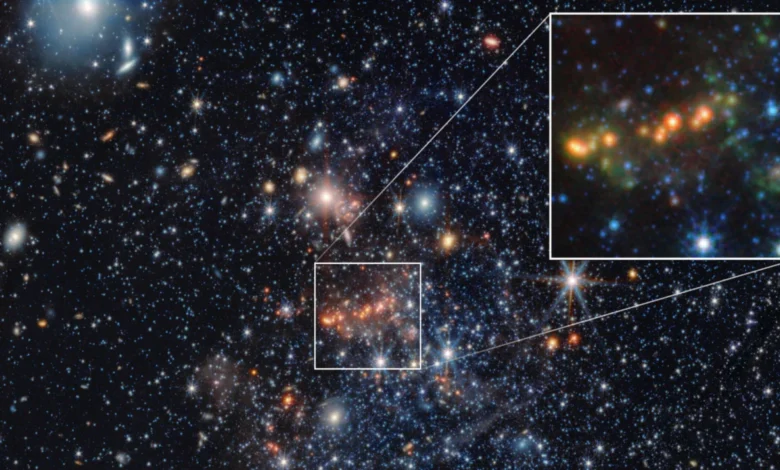
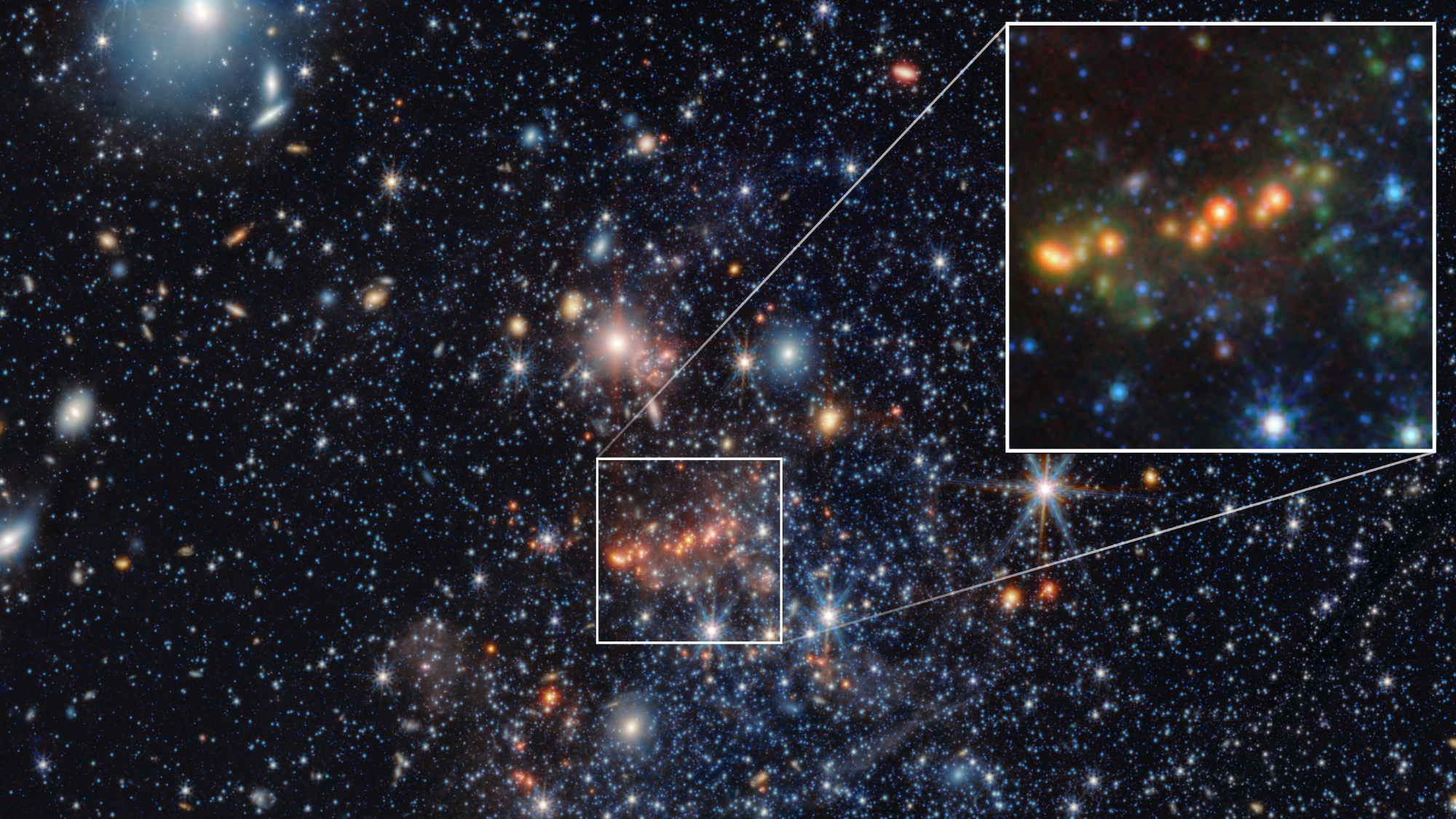
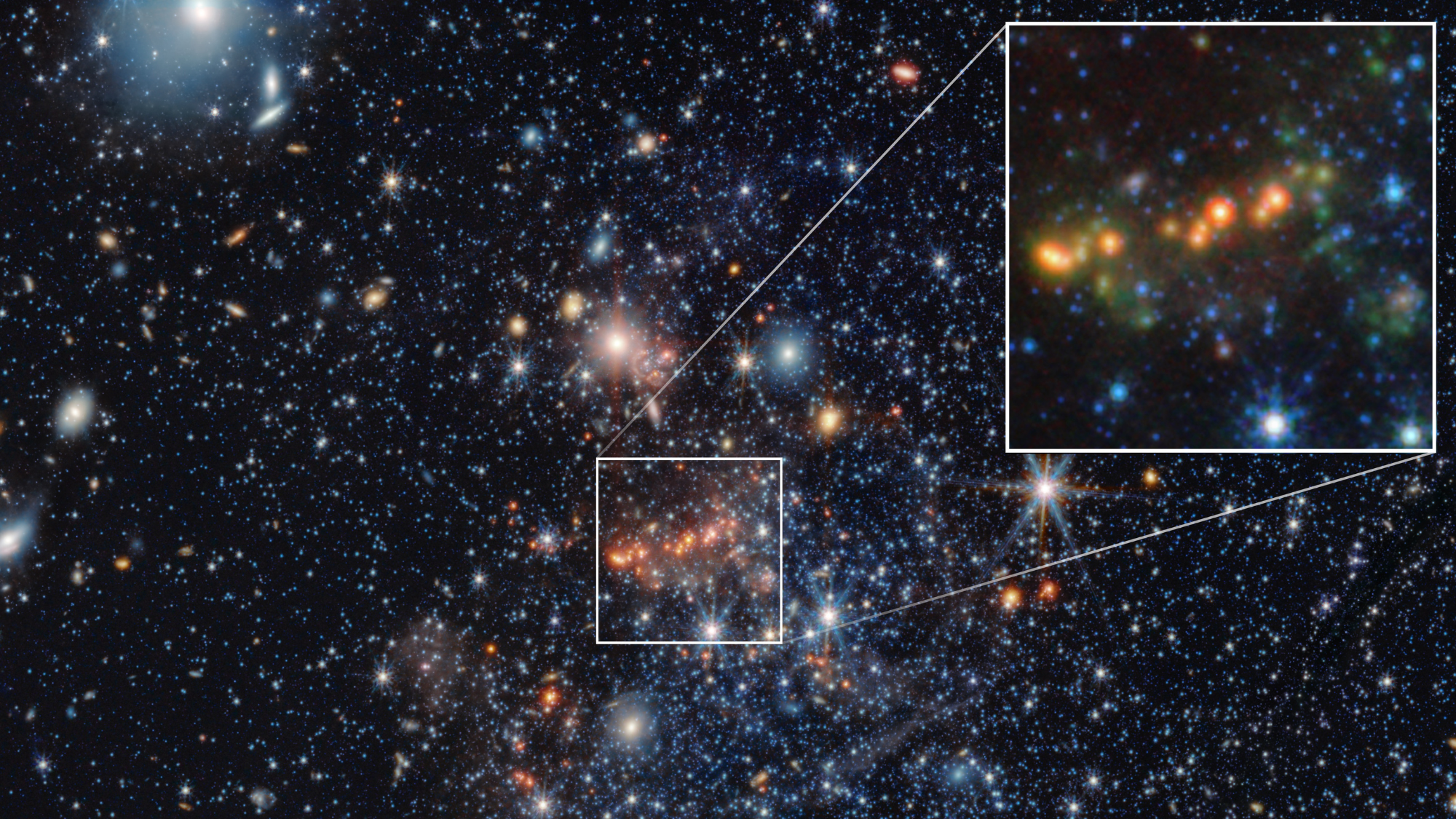
The detailed observations of Sextans A by JWST’s NIRCam and MIRI allowed the research team to identify and analyze stars in the AGB phase. The instruments’ sensitivity and resolution enabled them to distinguish between stars that were surrounded by envelopes of dust and those that were not. The findings were striking: approximately 90% of the AGB stars observed in Sextans A lacked significant dust envelopes. This suggests that in a metal-poor environment, the conditions for forming substantial dust shells around these stars might be less favorable, or that the dust is quickly dispersed.
However, a significant minority – around 20 stars – were found to be embedded within thick dust shells. These stars represent the "dust factories" the researchers were seeking. Further analysis revealed that these dust-producing stars likely formed between 2 billion and 3 billion years ago and had an initial mass approximately 1.5 times that of our Sun. This specific mass range is crucial, as it corresponds to stars that would have evolved through the AGB phase and possessed sufficient heavy elements to form dust.
This discovery has profound implications for our understanding of early galaxy evolution. It provides direct observational evidence of which types of stars were most efficient at producing the dust that enriched the interstellar medium in the early universe. This dust is not merely an inert component of space; it plays a vital role in various astrophysical processes. Dust grains absorb ultraviolet and visible light and re-emit it in the infrared, affecting the overall energy balance of galaxies. They also serve as crucial sites for the formation of molecules, including those essential for the birth of new stars. Without dust, the formation of the subsequent generations of stars, including those that would eventually form planets, would have been significantly hampered.
A New Era of Cosmic Archaeology
The scientific team emphasized that research of this caliber would have been impossible prior to the launch of the James Webb Space Telescope. "The JWST allows us to observe in unprecedented detail environments that until a few years ago were beyond our reach," said team member Flavia Dell’Agli of INAF. "The value of these data lies not only in the images, but in the ability to compare them with theoretical models and verify how correctly they describe the evolution of stars."
This sentiment underscores the transformative power of JWST. Its ability to observe in the infrared spectrum is particularly crucial for studying dusty and distant objects. The telescope’s advanced optics and sensitive detectors allow astronomers to peer through cosmic dust clouds that would otherwise obscure visible light, revealing the hidden structures and processes within galaxies. The comparison of these observational data with theoretical models is a cornerstone of modern astrophysics, allowing scientists to refine their understanding of stellar evolution, galaxy formation, and the history of the universe.
The research, published on July 20th in The Astrophysical Journal, represents a significant step forward in cosmic archaeology. By studying a nearby galaxy that mimics the conditions of the ancient universe, astronomers are piecing together the grand narrative of how the cosmos evolved from a simple, element-poor state to the complex, star-filled universe we observe today. The findings from Sextans A provide concrete data points for models of early galactic evolution, helping to explain the presence of dust in the first galaxies, which was essential for the formation of all subsequent structures, including our own solar system. This work not only deepens our understanding of the past but also informs future astronomical research, guiding the way for further investigations into the universe’s earliest epochs.