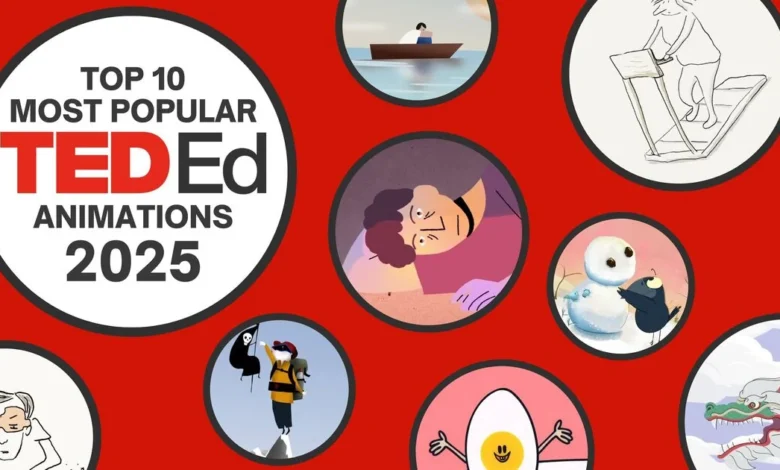
The year 2025 marked a significant milestone for TED-Ed, the educational arm of the TED organization, as its YouTube audience collectively engaged with nearly 16 million hours of animated content. This viewership represents a staggering 1,800 years of cumulative learning time, underscoring the growing public demand for accessible, high-quality, and scientifically rigorous short-form educational media. As the digital landscape continues to evolve, the popularity of these videos serves as a barometer for global curiosity, highlighting a distinct shift in audience interest toward health, behavioral psychology, and the intersection of philosophy and modern technology.
A Year of Global Engagement: By the Numbers
The 16 million hours of watch time recorded in 2025 highlights the efficacy of the "TED-Ed style"—a blend of expert-led narration and bespoke animation designed to synthesize complex academic subjects into digestible five-to-ten-minute narratives. This viewership is not merely a quantitative achievement; it reflects a qualitative trend in digital consumption where audiences are increasingly seeking content that provides answers to fundamental human questions.
The top-performing videos of 2025 covered a diverse array of topics, ranging from the physiological impacts of sedentary lifestyles and social isolation to the philosophical implications of immortality and the geomythological origins of dragon legends. The data indicates that viewers were particularly drawn to content that challenged conventional wisdom—such as the efficacy of the 10,000-step daily goal or the nutritional implications of cholesterol—and topics that offered personal utility, such as strategies for skill acquisition.
Chronological Review of Top Content
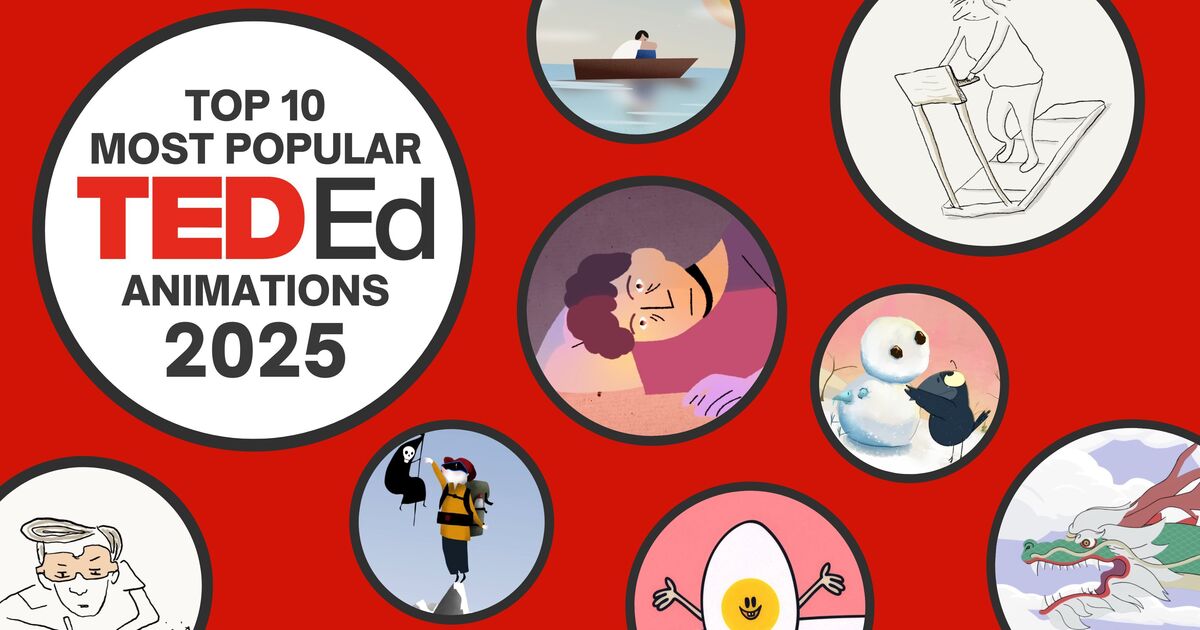
The top ten videos of 2025 are presented here to illustrate the breadth of the platform’s curriculum:
-
The 10,000-Step Myth: Shannon Odell’s analysis of daily step counts challenged the long-held fitness mantra. By examining the history of walking as a global endeavor, the video debunked the notion that 10,000 steps is a scientifically mandated threshold, instead emphasizing the cardiovascular benefits of even modest increases in daily activity.
-
The Psychology of Isolation: Terry Kupers explored the neurobiological and psychological consequences of forced social isolation. This investigation provided a critical look at how human cognition and emotional health degrade in the absence of social contact, a subject that has gained increased academic attention following global pandemic-era lockdowns.
-
Geomythology and Dragons: Timothy J. Burbery bridged the gap between folklore and geology. By examining dragon legends—from the Chinese Loong to the Scottish Beithir—the video explored the theory that these myths were not merely creative fiction but ancestral attempts to categorize and explain violent, localized weather events.
-
The Immortality Dilemma: Sarah Stroud and Michael Vazquez utilized a philosophical thought experiment to engage viewers in the ethics of life extension. The video asked a foundational question: if one could halt the aging process permanently, would it be desirable? This sparked widespread discourse on the value of finite human experiences.
-
The Science of Aphantasia: Adam Zeman provided an accessible entry point into the neurological condition known as aphantasia, where individuals are unable to visualize mental imagery. This video brought visibility to a condition often misunderstood by the general public, illustrating the spectrum of human perception.
-
Cholesterol Reconsidered: Hei Man Chan’s exploration of cardiovascular health traced the history of dietary recommendations, specifically the 1968 American Heart Association’s warnings regarding egg consumption. The video analyzed the complex nature of cholesterol and its nuanced role in modern health.
-
The "10,000 Hour" Rule Revisited: David Epstein challenged the popular narrative that mastery is strictly a product of 10,000 hours of deliberate practice. By suggesting that breadth of experience and diverse approaches are often more effective for long-term success, the video provided a counter-narrative to traditional career and learning advice.
-
Philanthropy and Poverty Alleviation: This analysis of unconditional cash transfers in the village of Ahenyo examined the efficacy of direct aid. The video served as a case study for humanitarian organizations, questioning whether "no strings attached" capital is a sustainable solution to generational poverty.
-
Corvid Intelligence: Katharina Brecht’s investigation into the cognitive abilities of crows utilized Aesop’s fables as a starting point to discuss real-world avian problem-solving. This highlighted the sophistication of non-human intelligence and the evolutionary advantages of tool use.
-
Desalination and Water Scarcity: Manish Kumar addressed the global water crisis by investigating the feasibility of large-scale seawater desalination. The video balanced the necessity of providing fresh water to an estimated 87 "water-scarce" nations by 2050 against the ecological costs of current desalinization technologies.
Broader Implications and Institutional Impact
The sustained success of the TED-Ed platform underscores a broader movement toward "micro-learning." In an era characterized by short attention spans, the ability of these animations to maintain engagement for several minutes suggests that viewers are not opposed to deep dives, provided the content is presented with high production value and clear, narrative-driven storytelling.
Industry analysts note that platforms like TED-Ed are increasingly filling the gaps left by traditional formal education. By providing content that is peer-reviewed and vetted by subject matter experts, these platforms act as a secondary source of truth for students and lifelong learners alike. The 2025 data specifically suggests a "curiosity gap" in the public sphere—a hunger for content that explains the "why" and "how" behind everyday phenomena.
From an organizational perspective, the consistency of these annual top-ten lists indicates a predictable pattern in audience behavior. Each year, videos that touch upon health, ethics, and biology consistently outperform those in purely abstract theoretical fields. This suggests that the most successful educational content is that which can be directly mapped to the viewer’s personal life, physical health, or social environment.
The Future of Digital Education
Looking toward 2026, the success of these programs has prompted discussions regarding the integration of artificial intelligence and interactive elements into future educational media. As the volume of information available to the public continues to expand, the value proposition of curators like TED-Ed becomes increasingly clear: they do not just provide information; they provide context and synthesis.
The 2025 performance data serves as a clear indicator that the appetite for intellectual enrichment remains high. As the organization transitions into the next calendar year, the emphasis remains on transparency, accessibility, and the democratization of expert knowledge. For the millions of viewers who spent their time engaging with these animations, the data suggests that they are not merely passive consumers, but active participants in a global project of self-education and intellectual growth.
As the archive of TED-Ed continues to grow, it serves as a digital library of human knowledge for the 21st century. Whether exploring the depths of the ocean through the lens of desalination or the depths of the human mind through aphantasia, the platform continues to demonstrate that when complex ideas are communicated effectively, they are capable of capturing the attention of millions across borders, languages, and cultures. The lessons learned in 2025 will undoubtedly shape the curriculum and production strategies for years to come, ensuring that the intersection of technology and education continues to thrive in an increasingly complex world.