MGM Resorts International has officially concluded its merger and acquisition discussions with IAC/InterActiveCorp, the digital media conglomerate controlled by billionaire Barry Diller and serving as MGM’s single largest shareholder. The termination of these high-level talks comes as the hospitality and entertainment giant announced a revised governance framework, establishing a fresh voting agreement that dictates how IAC and its leadership will handle their substantial stake in the casino-resort operator.
According to a regulatory filing submitted on Wednesday, the newly amended agreement establishes specific parameters regarding board votes and equity management. Rather than pursuing a complete corporate combination—a prospect that had frequently fueled market speculation across Wall Street and the gaming sector—both organizations have opted to solidify a long-term strategic alliance. Under the terms of the updated accord, IAC and its chairman, Barry Diller, have committed to voting all of their collectively held MGM Resorts shares in strict alignment with the recommendations of the MGM board of directors.
This development marks a significant turning point in a complex corporate relationship that spans several years, characterized by substantial equity investments, digital integration efforts, and periodic rumors regarding a full-scale acquisition. By shelving merger aspirations in favor of a formalized voting pact, both entities have opted for operational stability, removing immediate restructuring uncertainties while preserving a powerful partnership at the intersection of traditional hospitality and digital commerce.
The Evolution of a High-Stakes Partnership
The roots of the relationship between MGM Resorts and IAC trace back to the turbulent economic landscape of mid-2020. Amid the unprecedented disruptions inflicted on the global travel and leisure sector by the COVID-19 pandemic, IAC made a bold and decisive move by acquiring a nearly 12% ownership stake in MGM Resorts. Investing approximately $1 billion for roughly 59 million shares, IAC positioned itself as a contrarian investor betting heavily on the eventual recovery and digital modernization of the brick-and-mortar casino business.
Barry Diller, renowned for his storied career leading media empires such as Paramount Pictures, Fox, and IAC itself, envisioned a collaborative path forward. The initial investment was not merely financial; it was strategically designed to help MGM accelerate its digital transformation, particularly in the burgeoning online sports betting and iGaming markets. This shared vision quickly materialized through BetMGM, the joint venture established between MGM Resorts and Entain Plc, where Diller and IAC sought to lend their consumer internet expertise to the gaming operator’s digital expansion.
As the partnership deepened over the subsequent years, IAC incrementally adjusted its equity footprint. Through open-market purchases and strategic transactions, IAC solidified its status as MGM’s dominant shareholder. Naturally, this heavy concentration of ownership periodically stoked market speculation concerning a potential full acquisition. Industry analysts frequently debated whether IAC would eventually absorb MGM entirely, merging a traditional hospitality titan with a diversified digital media and internet powerhouse.
However, corporate leadership on both sides repeatedly emphasized that while cooperation remained strong, a formal merger presented complex regulatory, structural, and valuation hurdles. The latest regulatory filing confirms that these merger considerations have now been permanently put to rest, replaced by a governance structure that guarantees shareholder alignment without the structural upheaval of a corporate consolidation.
Decoding the New Voting Agreement
The centerpiece of Wednesday’s announcement is the refined voting agreement, which fundamentally alters the dynamic between MGM’s executive leadership and its largest external stakeholder. While IAC retains its massive equity position, the new pact explicitly binds Diller and his corporate entity to the directives of the MGM board of directors on matters submitted to a shareholder vote.
For MGM Resorts, securing this voting bloc represents a major governance victory. In corporate finance, having a single shareholder control a double-digit percentage of equity can introduce volatility or potential friction if diverging visions emerge between management and the major investor. By contractually obligating IAC to vote in lockstep with board recommendations, MGM leadership effectively neutralizes any potential activist friction or proxy friction. This ensures streamlined decision-making for ongoing strategic initiatives, capital allocation strategies, and routine corporate governance matters.
From IAC’s perspective, the agreement provides clarity and protects its substantial financial investment while relieving it of the fiduciary burdens and operational complexities that would accompany a full corporate takeover. Diller, who has long navigated the delicate balance between active corporate stewardship and passive investment, appears satisfied to maintain a lucrative, influential partnership without absorbing the immense operational footprint and regulatory scrutiny inherent in operating a global land-based casino and resort empire.
Market Reaction and Financial Context
Wall Street analysts and institutional investors closely monitored the disclosure, viewing the definitive end of merger talks as a stabilizing force for MGM’s stock. In the immediate aftermath of the Wednesday filing, market participants digested the news as the removal of a persistent overhang. Speculation regarding major M&A transactions often introduces short-term volatility, as traders attempt to price in acquisition premiums or restructuring dilutions. With the path forward clearly defined as a standalone operational strategy, investors can now evaluate MGM based strictly on its fundamental business metrics, tourism recovery trends, and digital growth.
MGM Resorts has navigated a robust operational recovery following the pandemic-era downturn. Bolstered by strong convention demand in Las Vegas, a recovering international tourism market, and the expansion of its regional gaming properties, the company has consistently posted resilient financial results. Furthermore, the performance of BetMGM has provided a powerful catalyst, capturing a leading market share in key North American sports betting and online casino jurisdictions.
Concurrently, IAC continues to manage a sprawling portfolio of digital brands, ranging from Dotdash Meredith—one of the largest digital and print publishers in the United States—to emerging tech platforms and digital services. Maintaining MGM as a major financial asset without the capital-intensive demands of a full merger allows IAC to preserve capital flexibility for its own technological and media initiatives.
Official Responses and Stakeholder Perspectives
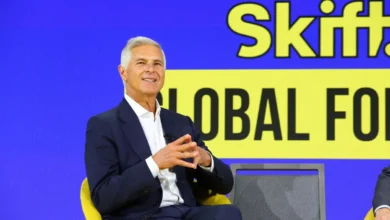
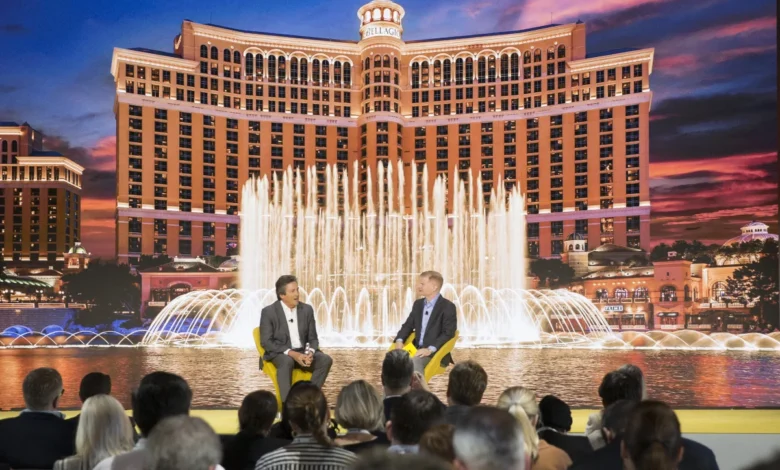
While neither Barry Diller nor MGM CEO Bill Hornbuckle issued sweeping public manifestos accompanying the regulatory filing, their recent public commentary sheds light on the philosophy guiding the partnership. Speaking at prominent industry events, including the Skift Global Forum in New York, Hornbuckle has consistently emphasized the value of strategic technology partnerships in modernizing the guest experience. He has praised IAC’s early conviction in MGM during the depths of the 2020 crisis, acknowledging that Diller’s capital injection provided both financial fortification and strategic counsel during a critical juncture.
Industry insiders note that the decision to formalize a voting agreement rather than pursue a merger reflects a pragmatic realization by both leadership teams. Merging a digital conglomerate with a heavily regulated, physical-asset-heavy hospitality enterprise entails navigating labyrinthine state-by-state gaming commission approvals in the United States, alongside international regulatory oversight. By bypassing these regulatory hurdles, both entities avoid years of costly administrative processes while preserving the collaborative benefits that originally brought them together.
Broader Implications for the Hospitality and Gaming Sector
The formal conclusion of merger talks between MGM Resorts and IAC carries broader implications for the ongoing convergence between traditional hospitality, gaming, and digital media. Over the past half-decade, the boundaries separating physical leisure destinations from digital consumer ecosystems have increasingly blurred. Casino operators have aggressively expanded into mobile applications, digital loyalty programs, and online entertainment platforms, seeking to capture younger, tech-savvy demographics.
The MGM-IAC relationship serves as a pioneering model for how legacy hospitality giants can successfully partner with digital titans without resorting to messy corporate buyouts. By combining MGM’s world-class physical infrastructure—ranging from iconic Las Vegas Strip mega-resorts to international properties in Macau and Japan—with IAC’s digital prowess, the partnership has demonstrated that strategic alignment can thrive independently of formal corporate consolidation.
As the leisure and entertainment landscape continues to evolve in response to shifting consumer habits and technological advancements, the stabilized alliance between MGM and IAC ensures that both organizations remain well-positioned within their respective domains. With merger speculation definitively put to rest and a clear governance framework now in place, MGM Resorts can focus entirely on executing its long-term operational vision, expanding its global footprint, and delivering sustained value to its shareholders.