The landscape of modern matrimony in New York City has undergone a kaleidoscopic shift with the arrival of Sure Thing, a boutique wedding chapel that brings the high-octane, neon-drenched aesthetic of Las Vegas to the Lower East Side. Located at 122 Allen Street, the 400-square-foot venue serves as a deliberate antithesis to the city’s traditional, often prohibitively expensive, and formal wedding industry. By combining mid-century kitsch with a fast-casual approach to nuptials, the chapel is tapping into a growing demographic of couples seeking authenticity over tradition, and accessibility over exclusivity.
The Evolution of the Quickie Wedding
The phenomenon of the "Vegas-style" wedding traces its roots back to the 1940s. As the United States navigated the societal shifts of World War II, Nevada emerged as a beacon for those seeking rapid legal resolutions—initially for divorces, which were difficult to obtain in other states, and subsequently for marriages. The industry matured alongside the rise of the Las Vegas Strip, where chapels transitioned from humble religious-adjacent storefronts into iconic symbols of American spontaneity.
Historically, these venues functioned as high-efficiency "wedding factories," prioritizing speed and legal simplicity. Over the decades, this model evolved, incorporating drive-thru services and celebrity-endorsed themes that leaned into the inherent campiness of the experience. Today, the industry is no longer just about convenience; it is a cultural statement. Modern establishments like Sure Thing represent the third wave of this movement: one that favors curated "maximalist" design and social-media-friendly environments over the stark, utilitarian aesthetic of the past.
Design as a Destination
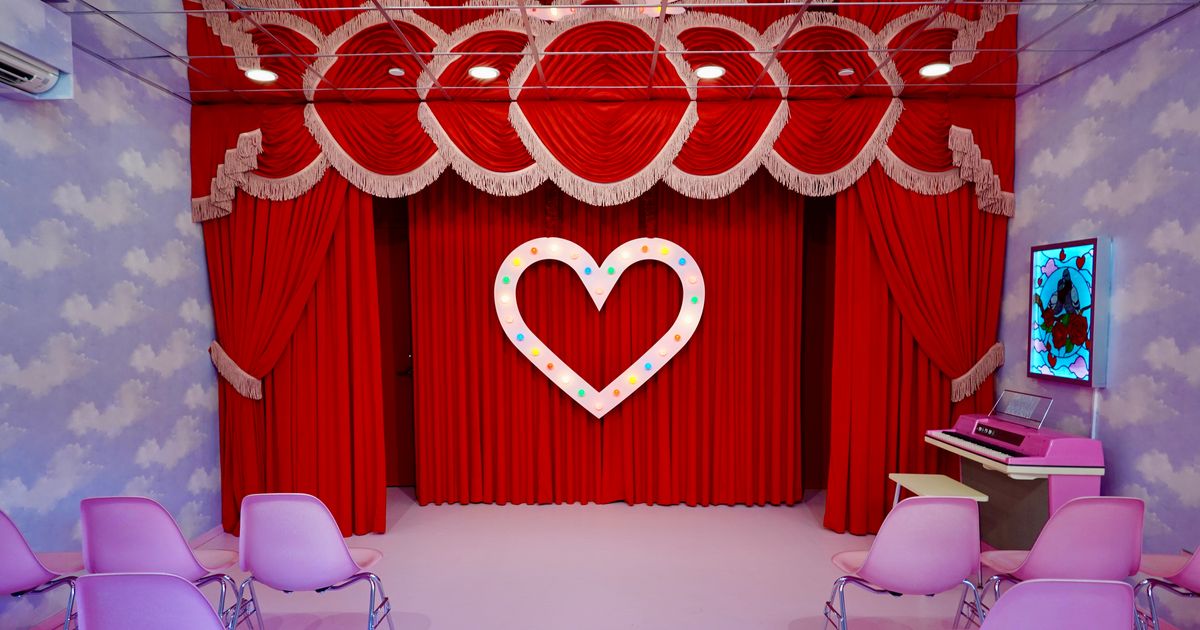
The design philosophy behind the Allen Street space is a calculated departure from the "millennial gray" minimalism that has dominated retail and event spaces for the last decade. Founders Victoria Hogan and Amy Lee have curated an environment that feels less like a sterile courthouse and more like a maximalist film set.
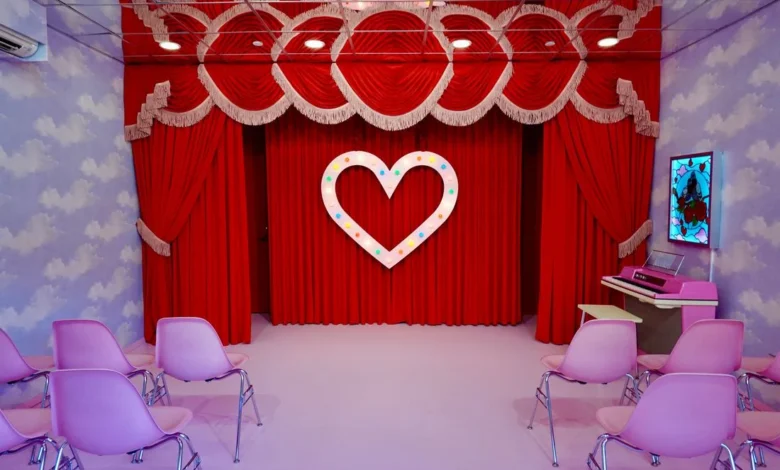
The interior features flamingo-pink façades, red velvet drapery, and wallpaper inspired by mid-century motifs. Every design element, from the neon-pink Wurlitzer organ to the "Amelie-inspired" bathroom, is engineered to facilitate high-quality photography. By obsessively managing the lighting and removing any "big-box store" fixtures—such as standard electrical plates or generic doorknobs—the founders have created a cohesive, immersive experience. This attention to detail is not merely decorative; it is a functional requirement for a clientele that views the wedding ceremony as a content-creation event as much as a legal milestone.
The Business of Spontaneity
The path to this New York expansion began in 2019, when Hogan and Lee launched their first chapel in Las Vegas. The business model proved remarkably resilient; in 2025 alone, their Vegas locations hosted approximately 2,500 weddings. The expansion into New York City signifies a strategic move to capture the "elopement" market in a city where the average wedding cost often reaches well into the tens of thousands of dollars.
For many couples, the prohibitive cost of a traditional Manhattan wedding—which can include venue fees, catering, and massive guest lists—serves as a barrier to marriage. Sure Thing offers a streamlined alternative. For a base price of $666, couples can secure the space for 30 minutes with a guest list of up to 18 people. For those desiring more time, the price doubles, allowing for extended photography sessions and the inclusion of specialized musical talent. This pricing structure effectively democratizes the wedding experience, providing a "special" feeling without the fiscal strain of a conventional event.
Demographic Shifts and Changing Traditions
The popularity of the Sure Thing model is deeply linked to shifting social attitudes toward marriage. Many of the couples utilizing these services are not looking for religious validation; they are looking for a personal, private, and celebratory environment. Hogan notes that a significant portion of their clientele includes queer couples who may have faced exclusion or judgment in traditional, faith-based settings.
Furthermore, the "traveling couple" demographic is significant. For international visitors, such as Londoners Josh Bodley and Tegan Barr, the chapel offers a stress-free way to marry in a city they love without the logistical nightmare of planning a traditional, large-scale event. When faced with a £9,000 quote for a pub-based wedding in the UK, many are finding that flying to New York, paying for a curated chapel experience, and enjoying a honeymoon in the U.S. is not only more enjoyable but often more cost-effective.
Officiants and the "Anti-Traditional" Aesthetic
The chapel has gained notoriety for its unconventional roster of officiants. By moving away from standard civil or religious leaders, the venue embraces characters like "Hellvis," a goth-inspired Elvis impersonator, and "Tillie," a fashion-forward, genderless clown. These figures are not just performers; they are facilitators of a specific brand of irony and joy. This approach aligns with the "camp" sensibility described by Susan Sontag, where the artificiality of the performance is part of the appeal. By hiring performers to preside over the vows, the chapel ensures that the ceremony remains distinct from the gravity of a legal proceeding, turning the "signed piece of paper" into a moment of collective theater.
Economic and Urban Implications
The presence of a wedding chapel on Allen Street also highlights the changing nature of Lower East Side retail. As the neighborhood continues to evolve, businesses that offer "experiences" rather than just goods are increasingly prevalent. The synergy between the chapel and the adjacent "Autophoto"—a gallery of vintage photobooths—creates a micro-hub of retro-inspired social activity.
From an urban planning perspective, the success of this model suggests a decline in the demand for large, dedicated event halls in favor of smaller, flexible, and aesthetically distinctive spaces. The "factory-line" efficiency that characterized 1940s Vegas chapels has been successfully re-contextualized for the 2020s, emphasizing high-turnover usage that keeps the space active throughout the day.
Analysis: The Future of the "Micro-Wedding"
The emergence of Sure Thing in New York is a barometer for the broader wedding industry. Data from recent years indicates that while the total number of marriages in the U.S. has fluctuated, the interest in "micro-weddings" and "elopements" has seen a steady upward trend. This is driven by several factors:
- Financial Prudence: High inflation and economic uncertainty have made large-scale events less attractive to younger generations.
- Digital Integration: The rise of social media platforms like Instagram and TikTok has made the "aesthetic" of the wedding as important as the ceremony itself, favoring venues that are "photo-ready."
- Institutional Skepticism: A growing number of couples are opting out of traditional religious institutions, seeking secular spaces that align with their personal values and identities.
The success of the Sure Thing model demonstrates that there is a significant, underserved market for ceremonies that are legally binding yet creatively liberated. By embracing the "gaudy and over-the-top," Hogan and Lee have successfully commodified the romantic, fleeting nature of the elopement.
Looking Ahead
While the chapel is currently the only one of its kind in New York, its initial reception—with 20 bookings before the space was even fully documented—suggests that the concept has legs. If the trend holds, New York may see a proliferation of similar "pop-up" style venues that eschew traditional wedding architecture in favor of personalized, design-led experiences.
For the city’s residents, the addition of a venue that allows for a 30-minute, $666, glitter-sweeping, neon-lit wedding is a testament to New York’s enduring capacity to reinvent even the most ancient institutions. Whether the couple is local or flying in from abroad, the message is clear: the era of the mandatory three-course dinner and the six-month planning cycle is being challenged by a demand for speed, style, and the thrill of a sure thing.