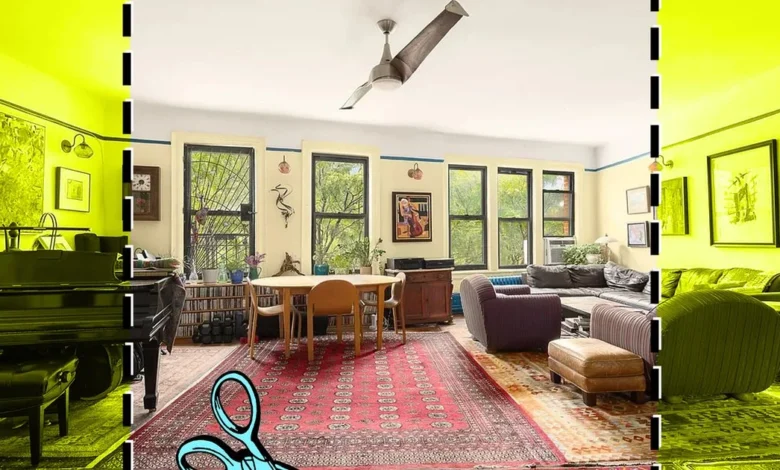
The Prospect Park South Opportunity: 1110 Caton Avenue
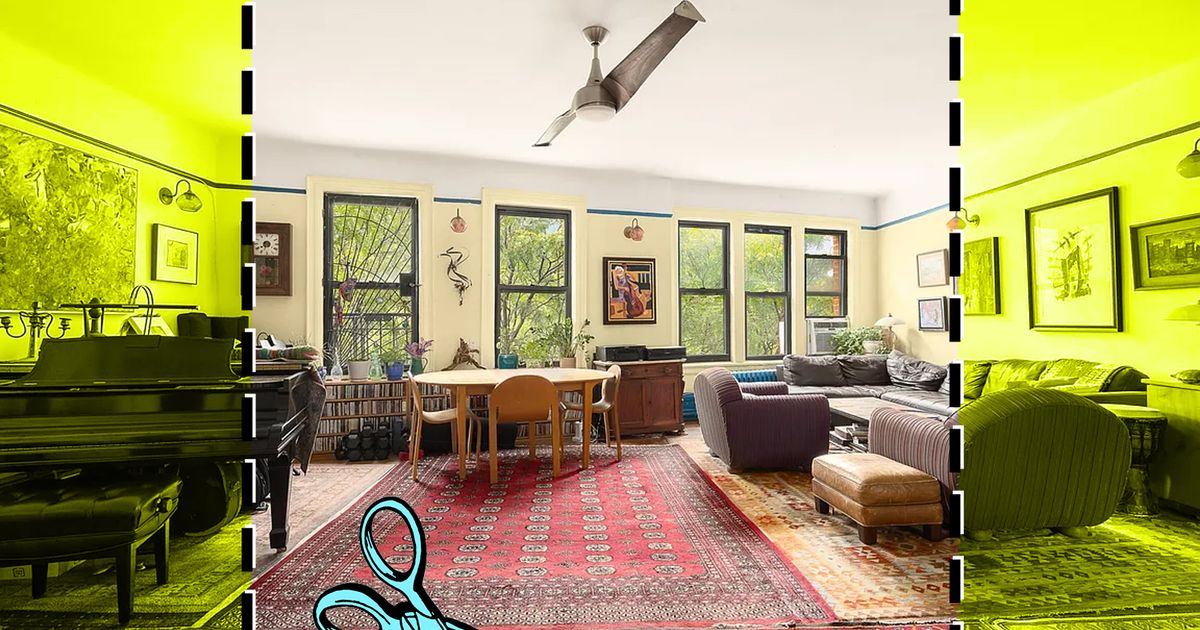
At the center of this week’s market analysis is a penthouse unit at 1110 Caton Avenue, listed for $850,000. The property represents a specific subset of the Brooklyn market that capitalizes on its direct adjacency to Prospect Park. The unit features nearly 26 feet of park frontage, punctuated by five north-facing windows that maximize natural light—a significant selling point for buyers prioritizing work-from-home capabilities.
From a functional perspective, the unit addresses a growing demand for "flex-space" in post-pandemic residential design. With the ability to accommodate a home office alongside traditional living and dining areas, the layout is designed to attract professionals who have moved away from fully office-centric work models. However, the property also serves as a case study in trade-offs. While the living area is expansive, the bedroom configurations suggest a compromise: limited closet space and views that lack the prestige of the park-facing frontage. The maintenance fees, currently pegged at $1,459 per month, reflect the standard operational costs for a building offering basic amenities, such as a bike room, but excluding the high-end fitness or lounge facilities seen in newer luxury developments.
The Upper West Side Paradox: Pomander Walk
In contrast to the modern, functional focus of the Brooklyn unit, the listing at 272 West 95th Street, known as Pomander Walk, offers a distinct historical value proposition. This gated co-op, established in the 1920s, functions as a micro-village, providing a rare architectural experience within the dense urban fabric of the Upper West Side.
The listing involves two separate one-bedroom units that present a unique, if challenging, opportunity for combination into a duplex. This type of project requires not only significant capital investment but also board approval and a tolerance for the logistical hurdles of gut renovation. Market analysts note that properties in Pomander Walk often trade at a premium due to their scarcity, yet this specific listing is priced with the understanding that the square footage is relatively modest. With living rooms constrained to 10-by-12 feet and the looming cost of renovation, this property appeals to a niche demographic of buyers interested in historical preservation rather than immediate, turnkey functionality. The monthly maintenance of $2,792 further positions this as a premium, albeit "hidden," investment.
Emerging Trends in Outer Borough Value: Sunset Park
Sunset Park continues to emerge as a strategic location for buyers priced out of the more established North Brooklyn corridors. The Finnish Co-ops, a historic and culturally significant housing stock, serve as a focal point for this trend. At 843 43rd Street, a two-bedroom unit highlights the benefits of self-managed co-operative structures.
The primary draw here is the exceptionally low monthly maintenance of $1,094. In an era of rising interest rates and inflation, low overhead costs are increasingly driving buyer interest toward self-managed buildings. These units often feature "zhuzhed" renovations—updates that respect the building’s original 20th-century aesthetic while integrating modern conveniences like butcher-block countertops. The structural integrity of these buildings, combined with the proximity to the expansive Sunset Park, provides a stable, long-term value proposition for middle-income buyers.
Market Context and Economic Implications
The current market landscape is characterized by a "wait-and-see" approach from both buyers and sellers. Data from the third quarter of 2026 indicates that while inventory remains tight, the velocity of sales has moderated compared to the peaks of previous years. The concentration of listings under the $1 million mark is shifting toward neighborhoods with better transit accessibility, such as those served by the B and Q lines in Brooklyn or the D line in Sunset Park.
Fact-based analysis of these listings suggests that buyers are increasingly prioritizing three factors:
- Utility: Can the space function as a dual-purpose residence and workspace?
- Operational Costs: What are the recurring monthly maintenance fees, and are they sustainable?
- Proximity to Public Assets: How close is the property to significant public infrastructure, such as parks, which act as a surrogate for private square footage?
The Role of Amenities and Infrastructure
The disparity between the amenities offered at 1110 Caton Avenue and the historical charm of Pomander Walk illustrates the spectrum of the New York City buyer’s journey. New construction or renovated units in Brooklyn often provide in-unit laundry and dedicated bike rooms, which serve as essential amenities for the modern resident. Conversely, older, historic properties often require the resident to trade these conveniences for location, character, and, in some cases, a more communal living environment.

The self-managed nature of the Finnish Co-ops in Sunset Park serves as a reminder of the historical evolution of New York City housing. By bypassing the management fees of larger, corporate-run buildings, these co-ops offer a pathway to ownership that is otherwise difficult to achieve in the current high-cost environment. However, this model requires a higher level of owner involvement, a factor that prospective buyers must weigh carefully.
Broader Impact on the Real Estate Landscape
The continued demand for apartments under $1 million suggests that the market for "attainable" housing is not only robust but also increasingly competitive. Real estate agents and analysts observe that properties that are well-priced and show clear potential for modification—whether through a combination of units or simple aesthetic upgrades—continue to move off the market at a steady pace.
Furthermore, the focus on proximity to major parks like Prospect Park and Central Park remains a constant in the New York City real estate narrative. Even as hybrid work models persist, the premium placed on having a "backyard" in the form of public green space has not diminished. This trend is likely to continue influencing property valuations in the coming years, as urban density remains a core driver of the city’s economy.
Summary of Future Outlook
As we move into the final quarter of 2026, the market is expected to remain bifurcated. On one hand, there is a clear demand for modern, efficient, and well-located apartments in Brooklyn that offer a balance of comfort and workability. On the other hand, the demand for unique, historical properties in Manhattan persists, despite the logistical and financial challenges they present.
For the average buyer looking to break into the market under the $1 million threshold, the current advice remains consistent: focus on the fundamentals of the building, the feasibility of the space, and the long-term stability of the building’s finances. Whether it is the airy, French-door-adorned rooms of a Finnish Co-op or the sun-drenched penthouse in Prospect Park South, the key to navigating the New York City market is identifying properties where the potential for value outweighs the inherent complexities of the city’s unique housing stock.