New Analysis Reveals Strong Correlation Between Direct Answer Content and AI Citation Success


A comprehensive new study by digital marketing agency TJ Digital has shed light on the elusive mechanics behind how AI-driven search tools—specifically ChatGPT, Google AI Mode, and Google AI Overviews—select their sources. By analyzing over 193,000 AI-generated responses, the research provides the most granular look to date at the relationship between page architecture and citation frequency. The data suggests that pages providing immediate, direct answers to user queries are significantly more likely to be cited by generative engines than those that bury the lead or rely on traditional SEO tactics.
The findings, compiled by TJ Robertson, arrive at a pivotal moment in the evolution of search engine optimization (SEO). As generative AI models continue to transform the user experience, moving away from a "ten blue links" model toward direct, synthesized answers, website owners are scrambling to understand how to remain visible in an era where the AI acts as the primary gatekeeper of information.
The Methodology of a Massive Data Harvest
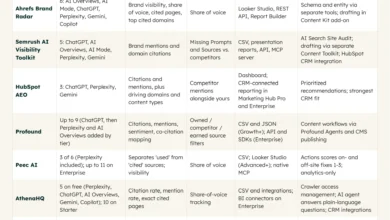
The scale of the TJ Digital analysis is substantial, encompassing 193,507 individual AI responses generated between August 27 and October 21, 2026. The researchers focused on 4,167 unique, non-branded questions across 78 client companies, spanning nine distinct business models. To ensure consistency in data collection, the firm utilized Peec AI, a specialized software application that automates the deployment of prompts to various AI engines, capturing both the resulting text and the cited source material simultaneously.
The study employed a series of eight weekly "snapshots" to capture shifts in AI behavior. Beyond the broad collection of responses, the researchers conducted a deep-dive analysis on 21,874 pages that were successfully cited by AI, contrasting them against 4,507 "passed-over" pages. These comparative pages were specifically selected because they appeared in the top ten of traditional Google search results for the same queries but were consistently bypassed by the AI models during the citation process.
To ensure the comparison was rigorous, the agency utilized Ahrefs keyword data to categorize the relevance of these passed-over pages. Of the 371 keywords analyzed, 174 were deemed highly relevant to the specific questions posed, while 197 were categorized as broader or tangentially related.
The Primacy of the Direct Answer
The most striking revelation of the study is the correlation between the positioning of an answer and the likelihood of a citation. In a blind-rating test, where human reviewers evaluated page pairs without knowing which had been cited by the AI, the difference in performance was stark. Cited pages were four times more likely (20% vs. 5%) to begin with a direct, concise answer to the user’s query compared to those that failed to earn a citation.
Even when comparing cited pages against those that appeared in the same search context but were not cited, a distinct gap remained. Cited pages maintained a 23% rate of providing an "up-front" answer, whereas non-cited pages—despite appearing in the same search results—dropped to 14%.
Beyond mere placement, the quality of the content played a role. Human raters assigned a "completeness" score to the pages, using a 1–5 scale. Cited pages achieved an average score of 2.3, while passed-over pages lagged at 1.7. Perhaps most tellingly, nearly half of the passed-over pages failed to provide any clear answer to the user’s question within the viewable area, whereas only 23% of cited pages suffered from the same lack of clarity.
Contextualizing Page Traits and Odds
The TJ Digital analysis went further than content placement, attempting to quantify the "odds" of citation based on specific on-page characteristics. By controlling for factors such as Domain Rating (DR) and page type, the researchers identified several variables that correlate with increased AI visibility.
The inclusion of a year in the page title was among the most influential factors, showing more than double the odds of being cited. Similarly, content published or updated within the last 12 months provided an 88% boost in citation probability. Structural elements also appeared to play a role, with tables providing a 69% increase in odds, and the inclusion of prices or explicit mentions of "first-hand experience" increasing the likelihood of citation by 28% and 45%, respectively.
Interestingly, the study challenged some conventional wisdom regarding technical SEO. While some industry experts have long touted schema markup as a requirement for AI visibility, the TJ Digital report noted only a 13% association with higher citation odds. This aligns with previous research from Ahrefs, which found that while cited pages are more likely to contain JSON-LD schema, the manual addition of such markup to non-cited pages did not yield a statistically significant improvement in citation frequency.
Conversely, certain elements appeared to have a negative correlation with AI selection. Pages containing an author byline showed 28% lower odds of being cited, while pages featuring a call-to-action (CTA) button or link saw a 12% decrease in citation likelihood. Robertson noted that these results are difficult to interpret and cautioned against removing such elements, as they remain critical for conversion and user trust—factors that AI models may not yet fully account for in their decision-making logic.
The Broader Implications for SEO and Content Strategy
The findings present a significant challenge to traditional content marketing strategies. For years, SEO practitioners have been taught to lead with engaging hooks, narrative storytelling, or persuasive copy designed to keep users on a page for as long as possible. However, the data from TJ Digital suggests that AI models prioritize efficiency and utility above all else.
"The AI is looking for a signal that the page provides an immediate solution to the user’s problem," says an analyst familiar with the study’s scope. "When the AI extracts information to build a summary, it is optimizing for speed and relevance. If the answer isn’t in the first paragraph, the AI is likely to move on to a source that provides that answer more concisely."
However, industry experts are warning against interpreting these findings as a "silver bullet." The study is observational, meaning it identifies patterns rather than establishing direct causality. There is no evidence yet that simply moving an answer to the top of a page will force an AI to start citing a specific domain.
"Correlation is not causation," notes search marketing consultant Elena Vance. "We have seen similar studies in the past where site owners attempted to ‘game’ these metrics, only to find that AI behavior is far more nuanced. These models are constantly being retrained. What works today in an AI Overview may be superseded by a new model update tomorrow."
Future Research and Testing
The current landscape of Generative Engine Optimization (GEO) is still in its infancy. For website owners, the most immediate takeaway from the TJ Digital report is the need for a rigorous, data-driven approach to content auditing.
The researchers recommend that brands monitor their own performance by tracking the specific questions they hope to rank for, and then auditing whether their target pages provide a concise, direct answer within the initial viewport. Because the study found that even cited pages are not always perfect—with nearly a quarter failing to answer the user’s question clearly—there is significant room for improvement in the current web ecosystem.
The next frontier for this research will be controlled experimentation. As Robertson pointed out, to truly understand if a direct answer causes a citation, researchers must move toward A/B testing: taking a group of pages, modifying them to include direct, front-loaded answers, and comparing their citation rates against a control group that remains unchanged.
Until such controlled studies are completed, the SEO community is left with a hypothesis: that in an AI-dominated search environment, the most "authoritative" page is no longer the one with the most backlinks, but the one that solves the user’s problem with the least amount of friction. As the digital landscape continues to tilt toward generative answers, the premium on clarity, conciseness, and structural utility will likely only increase.