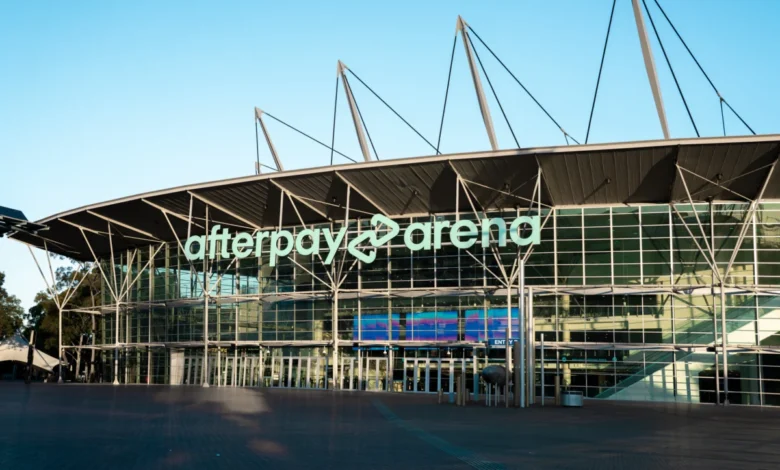
Sydney’s premier entertainment venue, formerly known as Qudos Bank Arena, officially rebranded and reopened as Afterpay Arena on Thursday, July 23, following extensive physical renovations and the formalization of a five-year naming rights partnership with the buy-now-pay-later giant. This transformative launch signifies a new era for the iconic Australian venue, aiming to enhance the fan experience through cutting-edge technology and flexible payment options.
The inauguration ceremony, held within the arena’s bowl, was attended by key figures from Afterpay, including co-founder Anthony Eisen and VP APAC Mike Ryan, alongside Peter Loxton, COO for Asia Pacific and Middle East at Legends Global, and Federal Shadow Assistant Minister for the Digital Economy, Simon Kennedy. Their presence underscored the significance of this collaboration, positioning Afterpay Arena as a leader in integrating financial convenience with live entertainment.
A New Era of Fan Experience: Payment Flexibility Takes Center Stage
The most significant aspect of the Afterpay Arena’s transformation lies in its pioneering approach to fan engagement through payment flexibility. For the first time, a major Australian entertainment destination is offering seamless payment options across the entire fan journey. Attendees can now purchase tickets and divide the cost into four interest-free installments via Afterpay’s Pay in 4 service. This initiative directly addresses a reported barrier to live event attendance, aiming to make concerts, sporting events, and other performances more accessible to a wider audience.
Beyond ticketing, the integration extends to on-site spending. Fans can utilize tap-to-pay functionality for food, beverages, and merchandise, powered by an extensive network of 150 Square Registers and 65 Square Handheld devices. This marks the first full Square commerce integration of its kind at a venue of this magnitude in Australia, streamlining transactions and reducing wait times.
Afterpay’s own research highlights the potential impact of such flexibility. The company cites findings indicating that 94% of cost-affected event-goers have missed live events due to upfront payment barriers. Furthermore, 74% of consumers stated they would increase their spending at venues offering payment choice. This data suggests that the Afterpay Arena’s strategy is not only innovative but also strategically aligned with consumer preferences and market trends.
Physical Transformation: A Vision of Modern Entertainment
The rebranding and partnership are complemented by a substantial physical overhaul of the venue. The renovations encompass a revitalized foyer, two redesigned hospitality spaces, improved venue-wide wayfinding, and the installation of what is described as one of the world’s largest transparent holographic LED displays. These upgrades are designed to elevate the overall aesthetic and functional experience for attendees, creating a more immersive and modern environment.
Anthony Eisen, co-founder of Afterpay, articulated the vision behind the partnership, stating, "Afterpay now has a permanent home in the place where fans come for the moments that matter most to them. We’ve built everything here around keeping fans in the moment – from the way they buy their ticket to the last song of the night." This statement emphasizes a commitment to a fan-centric approach, where financial convenience is intertwined with the overall enjoyment of an event.
Peter Loxton, from Legends Global, framed the deal as more than a mere naming rights acquisition. He commented, "This partnership isn’t just a name on a building. It’s about integrating a brand that understands and enables the fan experience. That’s exactly the kind of engaged partner we want beside us for the next five years." This perspective suggests a deeper collaboration aimed at leveraging Afterpay’s expertise in customer engagement and financial technology to enhance the venue’s offerings.
A Stellar Lineup to Mark the Occasion
To celebrate its grand reopening and showcase the transformed venue, Afterpay Arena has curated an impressive roster of upcoming performances. Among the first artists scheduled to grace the stage are globally recognized acts such as Tame Impala, J. Cole, Khalid, Laufey, Robyn, Olivia Dean, Zara Larsson, and Hilary Duff. This diverse lineup reflects the venue’s ambition to attract a wide array of musical genres and cater to varied audience tastes.

The inclusion of these prominent artists underscores Afterpay Arena’s continued prominence in the live entertainment landscape. The venue consistently draws approximately 1.1 million attendees annually and has previously been recognized by Billboard, earning a spot on its Top 5 Live Music Venues list for 2025.
Strategic Partnerships and Industry Trends
The naming rights deal, running through 2031, is a significant development in the broader trend of buy-now-pay-later (BNPL) providers expanding their presence in the live entertainment sector. As promoters and venues increasingly seek ways to drive attendance and boost per-head spending, payment flexibility is emerging as a key strategic lever.
Operated by Ticketek Entertainment Group and managed by Legends Global, Afterpay Arena’s strategic alignment with Afterpay positions it at the forefront of this evolving industry. The partnership leverages Afterpay’s established customer base and its expertise in facilitating seamless digital transactions. This move is indicative of a growing understanding within the entertainment industry that financial accessibility can be a significant factor in consumer decision-making.
A Look Back: The Evolution of a Landmark Venue
The venue, previously known as Qudos Bank Arena, has a rich history of hosting major international artists and sporting events. Its transformation into Afterpay Arena represents a significant chapter in its ongoing evolution. The initial announcement of the naming rights partnership in May set the stage for the extensive renovations and integration of new technologies that have now culminated in this launch.
The timeline leading up to the launch has been characterized by months of meticulous planning and execution. This included not only the physical upgrades but also the complex integration of the Square commerce system, which required significant technological infrastructure development. The successful implementation of these changes highlights the collaborative efforts of the venue’s management, Afterpay, and their technology partners.
Broader Implications for the Entertainment Market
The launch of Afterpay Arena has several implications for the wider Australian entertainment market. Firstly, it sets a new benchmark for fan experience, particularly concerning payment convenience. Competitor venues may feel compelled to explore similar integrations and payment solutions to remain competitive.
Secondly, the partnership underscores the growing influence of financial technology companies in shaping consumer behavior within the entertainment sector. As BNPL services become more mainstream, their integration into experiential purchases like concert tickets is likely to become more common.
Finally, the investment in technology and venue upgrades signals a commitment to maintaining the arena’s status as a world-class entertainment destination. The focus on innovation, from holographic displays to seamless payment systems, suggests a forward-thinking approach to meeting the demands of a modern audience.
The successful rebranding and relaunch of the venue as Afterpay Arena mark a pivotal moment, promising an enhanced and more accessible live entertainment experience for millions of fans in the years to come. The convergence of cutting-edge payment technology with a physically upgraded venue sets a precedent for how the entertainment industry can adapt to evolving consumer expectations and economic realities.
Related posts: