Market Performance Remains Muted as Investors Navigate Geopolitical Shifts and Artificial Intelligence Uncertainty

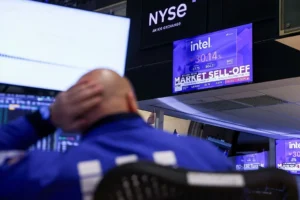
The domestic equity market concluded a complex trading session on Monday with a divergence across major benchmarks, as an early-morning rally fueled by cooling geopolitical tensions ultimately faded by the closing bell. While the Dow Jones Industrial Average managed to secure a modest 0.4% gain to close at 51,983, the broader S&P 500 retreated 0.5% to 7,541, and the technology-heavy Nasdaq Composite slid 1.1% to 25,164. The session underscored a persistent theme in current market sentiment: while the long-term bullish narrative remains largely intact, the near-term path is increasingly obstructed by conflicting signals regarding global stability, interest rate trajectories, and the sustainability of the ongoing artificial intelligence capital expenditure cycle.
Geopolitical Shifts and Energy Market Volatility
Market participants spent much of the session digesting a significant shift in the Middle Eastern security landscape. According to reports from Axios, President Donald Trump has communicated a willingness to explore diplomatic channels with Israel’s Prime Minister Benjamin Netanyahu to address the prolonged regional stalemate. Simultaneously, state-affiliated media in Iran reported that Supreme Leader Mojtaba Khamenei has granted authorization for the Iranian government to pursue formal peace negotiations.
This sudden cooling of tensions had an immediate and profound impact on energy markets. The front-month West Texas Intermediate (WTI) crude oil futures contract saw a sharp 8% decline, settling at $95.84 per barrel. Energy prices have acted as a primary volatility trigger throughout the year; the sudden retreat in oil provided a brief tailwind for equities earlier in the day by easing inflationary concerns. However, the relief was insufficient to sustain the rally, as investors pivoted their attention toward the upcoming domestic economic agenda, specifically the midterm elections scheduled for Tuesday and the critical October jobs report due on Friday.
Bond markets mirrored the cautious sentiment. Treasury yields were mixed, reflecting an ongoing struggle to price the Federal Reserve’s future policy path. The 2-year Treasury yield rose 1.3 basis points to 4.594%, while the 10-year and 30-year yields fell by 2.5 and 2.9 basis points, respectively, to 4.904% and 5.28%. This movement indicates a market that is simultaneously pricing in short-term policy sensitivity and long-term economic deceleration.
The AI Trade Under Scrutiny
The "AI trade"—a dominant force in market valuation for the past eighteen months—faced renewed skepticism on Monday. Investors appear increasingly concerned about the lag between massive capital expenditures and tangible, bottom-line returns. Chris Larkin, Managing Director at E*TRADE from Morgan Stanley, highlighted that the market’s primary struggle remains the inability to maintain momentum without being derailed by concerns over AI spending, persistent inflation, and recurring geopolitical shocks.
The leadership battle for the title of the world’s most valuable company continued between Apple and Nvidia. Apple, which scheduled its fiscal fourth-quarter earnings release for after the market close, saw its shares decline by 1.8%, while Nvidia dropped 1.3%. The semiconductor sector, which has been the engine of the current market rally, showed broader signs of fatigue, with several major players facing downward pressure.
The "Magnificent 7" group of stocks, which has largely carried the S&P 500 for the duration of the year, saw internal divergence. Amazon and Tesla bucked the trend, rising 2.2% and 1%, respectively. However, other hyperscalers were less fortunate. Microsoft fell 2.8%, Meta Platforms declined 1.3%, and Alphabet retreated 0.3%. These declines were driven by persistent analyst inquiries regarding the "return on investment" for the billions of dollars being poured into data centers and generative AI infrastructure.
Corporate Activity: The Marvell-Lumentum Merger
Amid the broader market uncertainty, the technology sector saw a major consolidation event. Marvell Technology announced its intent to acquire Lumentum Holdings in a strategic tie-up designed to bolster their position in the rapidly evolving AI connectivity market. The deal, which will see Lumentum shareholders receive 4.5 Marvell shares for every Lumentum share held, values the target company at approximately $1,132 per share—a 24% premium over the October 28 closing price.
Marvell management described the merger as a way to combine "complementary electrical and optical capabilities" to address the complex requirements of next-generation AI infrastructure. The company expects the transaction to deliver over $1 billion in annual run-rate cost synergies and to be accretive to earnings within the first year following the close. Despite the strategic logic, the market reacted with immediate skepticism; shares of Marvell plummeted 12.7%, while Lumentum shares dropped 18.6%. This reaction highlights the current sensitivity of investors to dilution and the risks associated with large-scale integration in a volatile economic environment.
Anthropic’s Financial Disclosure and IPO Outlook
Perhaps the most anticipated event in the technology space is the upcoming initial public offering (IPO) of AI research firm Anthropic. In a regulatory filing with the Securities and Exchange Commission on Monday, the company revealed a staggering $16.96 billion in third-quarter revenue, representing a year-over-year growth rate of approximately 1,127%.
However, the disclosure also served as a sobering reminder of the costs associated with scaling AI operations. Anthropic reported a net loss of $23.29 billion for the period. While the revenue growth is undeniably massive, the quarter-over-quarter growth rate has decelerated significantly—dropping to 47% in Q3 compared to 144% in Q2 and 132% in Q1. The filing has ignited a fierce debate among analysts and potential investors regarding whether the company’s valuation can be justified by its path to profitability. The IPO, which is expected to be one of the largest in history, is now slated for completion before the Thanksgiving holiday, serving as a bellwether for the public market’s appetite for high-growth, high-burn AI enterprises.
Broader Economic Implications and Market Resilience
While the S&P 500 and Nasdaq ended in the red, there were pockets of strength in the broader market. Idexx Laboratories surged 21.9% after reporting better-than-expected third-quarter results and raising its full-year outlook. Sherwin-Williams also stood out as the top performer within the Dow Jones, gaining 6%. These gains were supported by broader strength in the materials, industrials, and consumer discretionary sectors, suggesting that the "rotation" from high-growth tech into cyclicals may be gaining traction as investors seek shelter from the volatility of the AI-heavy indexes.
The current market environment is characterized by a "bend but don’t break" mentality. According to historical analysis of midterm election years, market volatility often peaks in the weeks leading up to the vote as investors await clarity on potential legislative changes to tax policy, trade regulation, and defense spending. With the midterm elections arriving Tuesday, the market is effectively holding its breath.
Furthermore, the Friday jobs report is expected to be a critical indicator of whether the U.S. economy is heading toward a "soft landing" or a more pronounced slowdown. The Federal Reserve’s ability to navigate these competing pressures—maintaining employment levels while curbing the remaining vestiges of inflation—will define the market trajectory for the remainder of the year.
Summary of Market Drivers
- Diplomacy and Energy: The potential for a de-escalation in the Middle East has provided a significant tailwind for crude oil price reductions, which, while beneficial for long-term inflation, created immediate volatility as energy stocks repriced.
- Technological Capex Concerns: The decline in large-cap tech stocks, specifically the hyperscalers, reflects a growing investor mandate for companies to demonstrate clear pathways to monetizing their massive AI investments.
- Corporate Consolidation: The Marvell-Lumentum deal underscores the ongoing race to build out the "physical layer" of the AI revolution, even as shareholders express concern over the costs of these acquisitions.
- IPO Market Sentiment: The sheer scale of Anthropic’s financial profile and its impending IPO will likely serve as the ultimate test of investor confidence in the "AI revolution" as a viable, long-term asset class.
As the week progresses, the combination of election results and macroeconomic data will likely provide the catalyst needed to break the current state of indecision. For now, the market remains in a defensive posture, balancing the promise of long-term AI-driven productivity against the immediate realities of geopolitical risk, shifting interest rates, and a cautious approach to corporate valuations. Whether the "bullish narrative" mentioned by Chris Larkin holds firm will depend entirely on how these macro variables materialize over the coming 72 hours.