Vietjet Air Signs Deal for Chinese-Built Comac C909 Aircraft, Signaling Shifting Global Aviation Dynamics

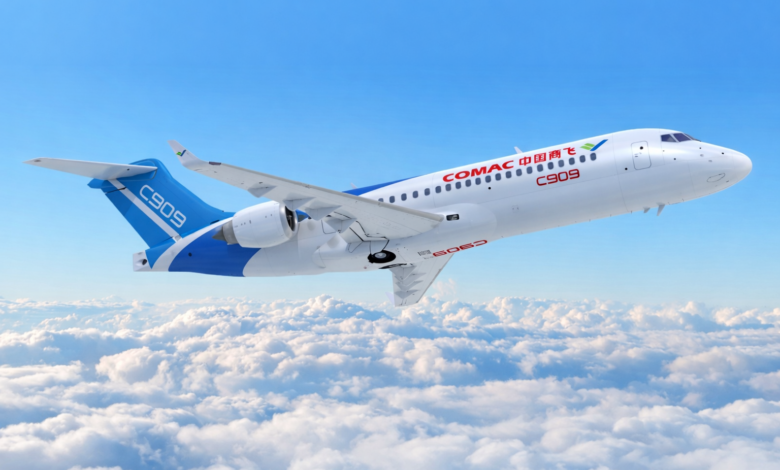
Vietnam’s largest airline, Vietjet Air, has finalized an agreement to lease 10 Comac C909 aircraft, a development that, while modest in immediate scale, carries significant implications for the global aviation industry. This landmark deal marks a crucial step for China’s ambition to establish a significant presence in the international commercial aircraft market, challenging the long-standing duopoly of Boeing and Airbus. The agreement, primarily focused on routes connecting Vietnam and China, builds upon an existing partnership that has seen two C909s already in operation with a Chinese carrier, Chengdu Airlines.
The Comac C909, developed by the state-owned Commercial Aircraft Corporation of China (Comac), is a regional jet designed to compete in a segment of the market that has historically been less dominated by the established Western manufacturers. Previously known as the ARJ21, the C909 typically seats between 78 and 97 passengers, positioning it as a competitor to aircraft like the Bombardier CRJ series and the Embraer E-Jets. While the initial order for 10 aircraft might seem small in the context of Vietjet’s existing fleet of over 130 aircraft and hundreds more on order from Airbus and Boeing, the strategic importance of this customer cannot be overstated. Vietjet’s decision to integrate Comac aircraft into its operations signals a growing acceptance and confidence in Chinese-made airliners, potentially paving the way for wider adoption by other airlines in the region and beyond.
Background and Context: China’s Aviation Ambitions
Comac was established in 2008 with a clear mandate: to break the Boeing-Airbus stranglehold on the global commercial aircraft market and to foster China’s indigenous aerospace capabilities. The development of the C909 (and its larger sibling, the C919, which is designed for the single-aisle market) has been a protracted and heavily state-supported endeavor, representing a significant national strategic priority for China. For decades, China has been a massive market for foreign-built aircraft, and the government has long sought to develop its own domestic aviation manufacturing industry, not only for economic reasons but also for technological advancement and national prestige.
The C909 program, therefore, is more than just a commercial venture; it is a key component of China’s broader industrial policy, aiming to move up the value chain and become a significant player in high-technology manufacturing. The successful certification and operation of Comac aircraft in international markets are critical milestones in achieving this ambition.
Chronology of Comac’s Market Entry and Vietjet’s Involvement
The journey of the C909 (ARJ21) to this point has been a gradual one. Following years of development and testing, the aircraft received its type certification from the Civil Aviation Administration of China (CAAC) in December 2014. Its first commercial flight occurred in June 2016 with Chengdu Airlines. Since then, the C909 has been primarily operated by Chinese airlines on domestic routes.
The partnership between Vietjet and Comac has been developing over a longer period. While the precise date of the initial agreement that led to the operation of two C909s with Chengdu Airlines is not publicly detailed in the provided excerpt, it is clear that this existing operational experience has been a foundational step. The lease agreement for an additional 10 aircraft signifies an escalation of this relationship, moving from a limited trial to a more substantial integration into Vietjet’s fleet planning. The formal announcement of the 10-aircraft lease agreement represents the latest chapter in this evolving partnership.
Supporting Data and Fleet Context
Vietjet Air operates a young and dynamic fleet, primarily composed of Airbus A320 family aircraft and Boeing 737 MAX aircraft. As of recent reports, the airline boasts a fleet of over 130 aircraft, with a substantial backlog of hundreds more on order from both Airbus and Boeing. This extensive order book underscores Vietjet’s rapid growth and its position as a major player in the low-cost carrier segment within Southeast Asia.
The C909’s capacity, typically between 78 and 97 seats, places it in direct competition with other regional aircraft. For comparison, the Airbus A319neo seats around 140 passengers in a typical configuration, while the Boeing 737-700 seats approximately 130. This suggests that the C909 will likely be deployed on routes where demand is more moderate, or where frequencies need to be increased without overwhelming passenger capacity. The stated intention to use the C909 on routes between Vietnam and China is particularly strategic, given the high volume of traffic between these two neighboring countries.
Official Statements and Reactions (Inferred)
While specific verbatim quotes are not available in the provided snippet, the actions of Vietjet and Comac speak volumes.
-
Vietjet Air: The airline’s decision to lease 10 C909s, in addition to its existing orders with Western manufacturers, indicates a strategic diversification of its aircraft suppliers. This move likely stems from a combination of factors, including competitive pricing, specific route suitability, and a desire to support the growing aviation ties between Vietnam and China. Vietjet’s management would likely frame this as a move to enhance its operational flexibility and to cater to the specific demands of certain market segments, particularly those with strong links to China. They would also emphasize the successful integration of the initial two C909s as evidence of the aircraft’s growing reliability and suitability for their network.
-
Comac: For Comac, this agreement with a prominent Southeast Asian carrier is a significant endorsement. It validates their product in a real-world operational environment outside of China and signals a potential breakthrough into international markets. Comac executives would likely express their gratitude to Vietjet for their confidence and commitment, highlighting the aircraft’s technological advancements and its role in fostering regional connectivity. This deal serves as a crucial stepping stone in Comac’s long-term goal of becoming a globally competitive aircraft manufacturer.
-
Boeing and Airbus: While not directly commenting on this specific deal, the established aircraft manufacturers, Boeing and Airbus, will undoubtedly be monitoring such developments closely. The entry of a new, state-backed competitor into the market, even in a niche segment initially, represents a potential long-term challenge to their dominance. They would likely emphasize the superior track record, extensive support networks, and proven efficiency of their existing product lines. However, they cannot afford to ignore the strategic implications of China’s growing aviation manufacturing prowess.
Broader Impact and Implications for the Global Aviation Industry
The Vietjet-Comac deal is more than just a transaction; it is a harbinger of potential shifts in the global aviation landscape.
Diversification of Supply Chain
For airlines, relying on a single or duopoly of suppliers carries inherent risks. This deal represents a move by Vietjet towards supply chain diversification. As Comac matures and potentially expands its product offerings (like the C919 for the narrow-body market), other airlines may follow Vietjet’s lead, seeking competitive alternatives and potentially better terms from a more competitive market. This could lead to more favorable pricing and innovative offerings across the board.
Geopolitical and Economic Considerations
The aviation industry is inherently intertwined with geopolitics and national economic strategies. China’s investment in Comac is a clear demonstration of its ambition to reduce reliance on Western technology and to create high-value jobs and exports. The success of Comac aircraft in international markets would be a significant economic and geopolitical victory for China, enhancing its influence in global trade and technology.
Market Segmentation and Competition
The C909’s focus on the regional jet market is a strategic entry point. This segment is crucial for connecting smaller cities and for serving thinner routes. As Comac refines its products and builds operational experience, it could gradually move into larger aircraft segments, directly challenging Boeing and Airbus in their core markets. The entry of a new competitor, even if initially small, can disrupt market dynamics, forcing established players to innovate and compete more aggressively.
Regulatory Hurdles and Future Growth
A significant factor for Comac’s future international success will be its ability to secure certifications from aviation authorities beyond China, such as the US Federal Aviation Administration (FAA) and the European Union Aviation Safety Agency (EASA). The process of obtaining these certifications is rigorous and often lengthy, involving extensive validation of safety standards and manufacturing processes. Vietjet’s adoption of the C909 may help Comac gather valuable operational data that could aid in future certification efforts.
The Vietjet deal is a tangible step in Comac’s long-term strategy. While the immediate impact on Boeing and Airbus might be minimal, the signal it sends about the growing capabilities and ambitions of China’s aerospace industry is profound. It marks a moment where the global aviation industry, long dominated by two giants, might be on the cusp of a more competitive and multi-polar future. The success of the C909 in Vietjet’s hands will be closely watched by airlines, manufacturers, and governments worldwide.