Ben Shapiro Reviews Christopher Nolan’s The Odyssey, Calls It a Masterpiece Amidst Conservative Outrage

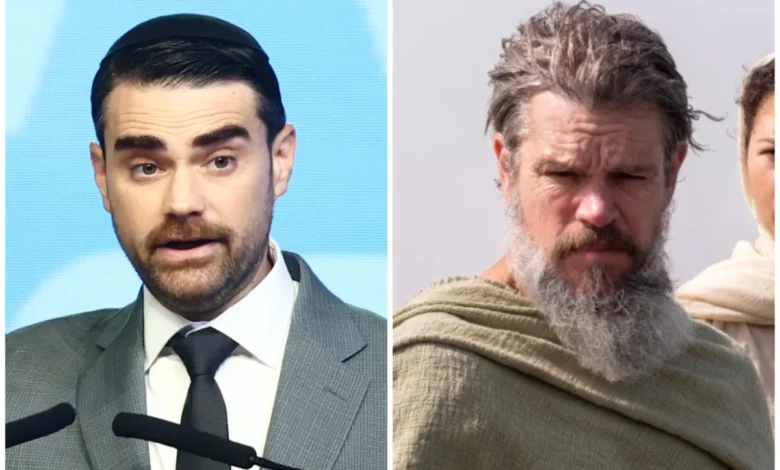
Conservative commentator Ben Shapiro has weighed in on the burgeoning debate surrounding Christopher Nolan’s latest cinematic endeavor, an adaptation of the ancient Greek epic, The Odyssey. In an 18-minute review posted to his YouTube channel on Saturday, Shapiro declared the film a "masterpiece," a sentiment that directly challenges the vocal conservative backlash concerning its casting choices and perceived historical inaccuracies.
Shapiro’s effusive praise for Nolan positions the director as an unparalleled force in contemporary filmmaking. "Nolan is unparalleled," Shapiro stated in his review. "He’s the best director working today, without a doubt. He just creates iconic movie after iconic movie." This assertion, coming from a prominent conservative voice, lends a complex layer to the ongoing discourse, as it acknowledges artistic merit while simultaneously confronting criticisms from within his ideological sphere.
The review highlighted specific performances, with Shapiro dedicating significant attention to Matt Damon’s portrayal of Odysseus. "I think he’s great in nearly everything," Shapiro remarked. "He sort of disappears into the part in a way that he doesn’t in a lot of other movies. He’s great as Odysseus." Damon, a veteran actor known for his versatile roles, appears to have captured the essence of the titular hero for Shapiro, contributing to his overall positive assessment of the film’s execution.
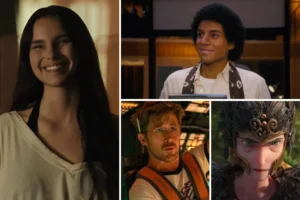
The supporting cast also garnered strong commendations from Shapiro. Robert Pattinson, who portrays Antinous, was described as an "excellent antagonist," with Shapiro noting his character’s "sleazy and gross" demeanor. Tom Holland’s casting as Telemachus was deemed "excellent" and "well cast," while Anne Hathaway’s performance as Penelope earned praise for being "great." These endorsements suggest a strong ensemble effort that Shapiro found compelling.
Addressing Casting Controversies
A significant portion of Shapiro’s review directly confronted the conservative criticism leveled against the casting of Lupita Nyong’o as Helen of Troy. The controversy, amplified by figures like Elon Musk, has centered on the perceived mismatch between Nyong’o’s appearance and traditional depictions of Helen, as well as questions of historical accuracy in casting.
Shapiro directly addressed these concerns, stating, "So, I know a lot of people were like, ‘Oh my god, Lupita Nyong’o is supposed to look like Diane Kruger.’ I don’t know. Diane Krueger doesn’t look very Greek. She’s German." He continued, asserting Nyong’o’s undeniable beauty and then offering a defense rooted in the film’s narrative itself. "Lupita Nyong’o is a beautiful woman. But here’s the thing, actually, in the script, Nolan goes out of his way to explain that the war wasn’t really launched over Helen being gorgeous." This indicates that Nolan’s adaptation may have offered a thematic or narrative justification for the casting, shifting the focus from purely aesthetic considerations to deeper motivations within the story.
However, Shapiro did express reservations about one particular casting decision: Elliot Page as Sinon. He labeled Page’s role as an "absolute puzzler" and articulated his critique by referencing Page’s physical attributes and voice. "He is about 5’2 and 105 pounds soaking wet and has the voice of a woman. It doesn’t work," Shapiro stated, suggesting that this specific casting choice detracted from his overall appreciation of the film. This critique appears to be grounded in a perceived disconnect between the character’s traditional portrayal and the actor’s physical presentation, a point of contention for some viewers.
Nolan’s Stance on Backlash
Christopher Nolan himself has publicly addressed the online backlash, notably from right-wing voices, including comments from Elon Musk. In a recent interview with The Telegraph, Nolan conveyed a sense of detachment from such criticism, suggesting it is an inevitable consequence of producing blockbuster films.
"Remember, I spent 10 years of my life dealing with Batman," Nolan explained. "When I came on ‘Begins,’ writers and artists had been working on this beloved character for almost 65 years, and a lot of freighted thoughts were out there about what he represents. And what I learnt over my time on that trilogy is you can’t worry about any of that at all. What you have to do is honor the original text by interpreting it in the strongest way you personally can."
This statement from Nolan underscores a director’s philosophy of creative interpretation over appeasing external expectations or adhering to rigid historical or traditional casting molds. His approach, as articulated, prioritizes a personal and powerful vision of the source material, even when that vision sparks controversy. The reference to his decade-long engagement with the Batman franchise suggests a seasoned resilience to public scrutiny and a commitment to artistic integrity.
Context and Broader Implications
The controversy surrounding Nolan’s The Odyssey reflects a broader cultural conversation about representation, artistic license, and the interpretation of classic narratives in the modern era. The Odyssey, an foundational text of Western literature, tells the story of Odysseus’s arduous ten-year journey home after the Trojan War. Its themes of homecoming, identity, perseverance, and the intervention of divine forces have resonated for millennia.
Adaptations of such seminal works invariably invite scrutiny. The modern trend towards more diverse casting in Hollywood, while celebrated by many as progress towards greater inclusivity and a reflection of contemporary society, has also become a flashpoint for debate. For some, diverse casting is seen as a vital and necessary evolution, bringing fresh perspectives and broader representation to stories. For others, particularly those who hold traditional interpretations dear, it can be viewed as a departure from historical or artistic authenticity.
The specific debate around Helen of Troy is particularly poignant. Historically, Helen has been described as the most beautiful woman in the world, her abduction by Paris the catalyst for the Trojan War. The casting of a Black actress, such as Lupita Nyong’o, challenges the long-held visual archetype associated with the character. Nolan’s defense, as relayed by Shapiro, suggests the film may be exploring the war’s origins through a lens that de-emphasizes purely physical beauty, potentially focusing on political machinations, divine influence, or other narrative drivers. This approach, if implemented, could offer a more complex and perhaps more historically nuanced exploration of the war’s causes, moving beyond the simplistic "face that launched a thousand ships" trope.
Supporting Data and Historical Context
The Odyssey, attributed to the ancient Greek poet Homer, is believed to have been composed around the 8th century BCE. It is one of the two major ancient Greek epic poems, the other being the Iliad. The epic details Odysseus’s struggles against the wrath of the sea god Poseidon, his encounters with mythical creatures like the Cyclops Polyphemus and the sorceress Circe, and his eventual return to Ithaca to reclaim his throne and family from a host of suitors.
Historical accounts and artistic depictions of figures from The Odyssey vary widely. Ancient Greek art, from pottery to sculpture, offers visual interpretations of characters and scenes. However, these depictions are themselves products of their time and artistic conventions, and there is no definitive "historical" appearance for figures like Odysseus, Helen, or their contemporaries that would be recognized by modern standards of photographic accuracy. The concept of "historical accuracy" in adapting ancient myths is therefore complex, often relying on interpretations of archaeological findings, textual descriptions, and prevailing cultural understandings.
The Trojan War itself, while a cornerstone of Greek mythology, is a subject of ongoing debate among historians and archaeologists. While archaeological evidence from sites like Troy suggests a historical basis for conflict in the region during the Bronze Age, the epic narrative as presented by Homer is widely considered a literary and mythological account rather than a direct historical record. This distinction is crucial when considering the validity of criticisms based on historical accuracy in cinematic adaptations.
Analysis of Implications
Ben Shapiro’s review, by praising Nolan’s The Odyssey while acknowledging and even subtly defending controversial casting, offers a potential bridge between ideologically opposed viewpoints. His endorsement of the film’s artistic merit, despite his conservative leanings, suggests that strong filmmaking can transcend certain political or cultural objections for some viewers. This could indicate a growing willingness among some segments of the conservative audience to engage with and appreciate art that challenges traditional norms, provided the quality of execution is sufficiently high.
Conversely, the continued vocal opposition from some right-wing circles highlights a persistent tension between artistic innovation and a desire for perceived traditionalism or authenticity. The debate over The Odyssey‘s casting is not an isolated incident but part of a larger cultural dialogue about the role of identity politics in the arts. The extent to which films like this will influence broader audience reception and the future direction of Hollywood casting remains to be seen.
Nolan’s consistent stance on creative freedom and his experience with similar controversies during the Batman trilogy suggest that this kind of public discourse is unlikely to deter him from his artistic vision. His approach—focusing on a strong, personal interpretation of the source material—is a testament to a directorial philosophy that prioritizes artistic intent over crowd-pleasing or catering to specific ideological demands.
The enduring power of The Odyssey as a narrative lies in its universal themes. Its exploration of the human condition—struggle, resilience, the longing for home, and the complexities of relationships—transcends time and cultural specificities. How these themes are reinterpreted through the lens of modern filmmaking and diverse casting will continue to be a subject of fascination and debate, shaping our understanding of both the ancient epic and contemporary cinema. The success of Nolan’s The Odyssey, both critically and commercially, will ultimately be judged by its ability to resonate with audiences on a profound level, irrespective of the controversies it has ignited.