ells Intellectual Property to Private AI Lab Controlled by CEO Brian Chesky in $7.1 Million Related-Party Transaction
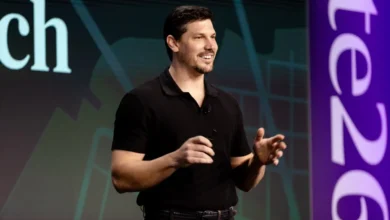
Short-term rental giant Airbnb has disclosed a controversial intellectual property transaction involving a private artificial intelligence laboratory founded, owned, and controlled by Chief Executive Officer Brian Chesky. According to regulatory filings submitted to the United States Securities and Exchange Commission (SEC), the November agreement transferred valuable corporate intellectual property to the external entity in exchange for $7.1 million in cash, which covered both the purchase price of the assets and associated expense reimbursements.
The disclosure, hidden within the company’s latest quarterly financial report, also revealed that Airbnb’s Chief Technology Officer, Ahmad Al-Dahle, holds a direct financial stake in the newly formed artificial intelligence laboratory. Both top executives maintain active working roles within the separate private enterprise while continuing to lead their respective divisions at the publicly traded multinational hospitality company.
The revelation has immediately drawn scrutiny from corporate governance experts, institutional investors, and legal analysts who monitor conflicts of interest within Silicon Valley and major public corporations. While related-party transactions are legally permissible under strict regulatory guidelines, the direct transfer of core technological assets from a public company to an entity controlled by its sitting chief executive represents a unique intersection of private ambition and fiduciary responsibility.
Anatomy of the Transaction and Financial Disclosures
According to Airbnb’s quarterly SEC filing, the transaction materialized in November, officially transferring the undisclosed intellectual property assets to the private laboratory. The $7.1 million cash infusion received by Airbnb accounted for the outright purchase of the technology alongside reimbursements for out-of-pocket expenses incurred during the development and transfer phases.
Intellectual property valuation in the technology sector is notoriously complex, particularly when assets are developed using the infrastructure, human capital, and financial runway of an established parent corporation. The filing did not comprehensively detail the specific nature of the transferred IP, leaving market observers to question whether the algorithms, codebases, or frameworks involved were originally intended to bolster Airbnb’s proprietary machine learning and travel personalization tools.
In corporate finance, related-party transactions occur when a business deals with a person or entity that has a preexisting relationship with the company, such as principal owners, board members, or executive officers. Because such deals inherently carry the risk of self-dealing or compromised negotiation leverage, federal securities laws and exchange rules mandate rigorous disclosure and independent oversight to protect public shareholders.
The Governance Safeguards and Special Committee Review
Anticipating potential pushback from institutional shareholders and corporate governance watchdogs, Airbnb leadership implemented internal safeguards prior to executing the agreement. The transaction was submitted to a specially formed committee consisting entirely of independent and disinterested directors.
Under Airbnb’s established related-party transaction policy, this independent committee was tasked with reviewing the terms of the sale, evaluating the fairness of the $7.1 million valuation, and determining whether the arrangement served the best interests of the company and its public shareholders. Following their review, the committee formally approved the transfer.
In statements accompanying the SEC filing, Airbnb management asserted that the dual-hatted roles assumed by Chesky and Al-Dahle at the private AI lab would not compromise their dedication or operational responsibilities to the travel platform. The company emphasized that both executives remain fully committed to their executive duties at Airbnb, where artificial intelligence has increasingly become a focal point of long-term strategic growth.
Despite these assurances, governance advocates frequently point out that even when legally vetted and approved by independent boards, transactions where executives buy corporate assets for private ventures can blur lines of loyalty and create perceptual challenges for public markets.
The Broader Context of AI Ambitions in the Travel Sector
To understand the weight of this transaction, one must examine the broader race for artificial intelligence dominance within the global travel and hospitality industry. Over the past several years, companies like Airbnb have aggressively integrated machine learning, predictive analytics, and generative AI to revolutionize user experiences. From hyper-personalized search results and automated customer service chatbots to dynamic pricing models for hosts, artificial intelligence has transitioned from a supplementary feature to a core operational pillar.
Chief Executive Brian Chesky has been vocal about his vision for transforming Airbnb from a transactional accommodation marketplace into a comprehensive, AI-driven travel concierge. In public presentations and earnings calls, Chesky has frequently discussed the potential for generative AI to completely reshape how consumers plan trips, interact with hosts, and experience destinations.
Against this backdrop, the creation of a separate, private AI laboratory controlled by the CEO raises questions regarding why such technology was spun off or sold rather than developed entirely in-house under the public corporate umbrella. Startups and private labs founded by public company executives often enjoy greater agility and freedom from public market short-termism, but they also create structural questions regarding corporate opportunity doctrine—the legal principle that prevents directors and officers from diverting business opportunities away from the corporation for personal gain.
Timeline and Chronology of Events
The unfolding narrative of Airbnb’s AI strategy and executive involvement spans several key milestones leading up to the recent SEC disclosure:
- Early AI Integration Phase: Airbnb heavily invests in machine learning infrastructure to improve search relevance, fraud detection, and customer trust and safety across its global platform.
- Strategic Shift Under Chesky: CEO Brian Chesky outlines a long-term vision centered on generative AI, positioning the company to move beyond basic apartment and home rentals toward a fully integrated travel ecosystem.
- Formation of the Private AI Lab: Brian Chesky establishes and takes control of a private artificial intelligence laboratory, later bringing on Airbnb CTO Ahmad Al-Dahle as an equity stakeholder and active participant.
- The November Transaction: Airbnb executes an agreement to sell specific intellectual property assets to the private lab, accompanied by expense reimbursements, totaling $7.1 million in cash.
- Independent Board Review: A special committee of independent directors evaluates and approves the transaction in compliance with corporate related-party policies.
- Quarterly SEC Disclosure: The transaction is officially made public in Airbnb’s quarterly filing, prompting immediate attention from financial analysts, legal experts, and the tech press.
Reactions, Market Implications, and Governance Analysis
Financial analysts and corporate governance specialists have offered mixed initial interpretations of the filing. On one hand, $7.1 million is a relatively modest sum for a company of Airbnb’s massive market capitalization and multi-billion-dollar revenue streams. From a pure materiality standpoint, the transaction does not threaten the fundamental financial health or operational stability of the lodging platform.
On the other hand, governance purists argue that the issue extends far beyond the raw dollar amount. The core concern lies in executive focus and the ethical parameters of public company leadership. When top executives—particularly a visionary founder and CEO like Brian Chesky, alongside a critical technical officer like Ahmad Al-Dahle—personally own and operate a separate commercial entity in the exact same cutting-edge field as their primary employer, it introduces complex structural dynamics.
Questions naturally arise regarding resource allocation, talent retention, and the origin of the intellectual property itself. Did the research and development that culminated in the sold IP benefit from Airbnb’s proprietary computing power, internal datasets, or engineering talent before being housed in the private lab? While the independent board committee was designed to answer precisely these questions and validate the fairness of the $7.1 million price tag, complete transparency remains paramount for maintaining investor confidence.
Furthermore, the involvement of CTO Ahmad Al-Dahle adds another layer of operational complexity. As the chief architect of Airbnb’s technological roadmap, Al-Dahle’s divided attention between a publicly traded travel giant and a private artificial intelligence startup will be closely watched by institutional shareholders who expect uncompromised dedication to corporate scaling and innovation.
Looking Ahead: What to Expect Next from Airbnb
As the dust settles on the initial SEC disclosure, market participants will be looking for further clarification during upcoming earnings calls and shareholder meetings. Institutional investors are likely to press Airbnb’s board of directors for deeper insights into the exact nature of the transferred intellectual property and the long-term relationship between the public platform and Chesky’s private laboratory.
Moreover, as regulatory scrutiny over corporate governance, artificial intelligence monopolies, and executive compensation continues to intensify globally, transactions of this nature will face heightened examination. Whether the private AI lab ultimately serves as a collaborative incubator that benefits Airbnb’s ecosystem or becomes a point of contention for skeptical shareholders remains one of the most compelling subplots in the current technology landscape.
For now, Airbnb maintains that its governance structures functioned precisely as intended, successfully balancing the entrepreneurial initiatives of its leadership team with the rigorous oversight required of a modern public enterprise. As artificial intelligence continues to redefine the boundaries of modern business, the precedent set by this $7.1 million transaction will undoubtedly be studied by corporate boardrooms across Silicon Valley and beyond.
Related posts: