

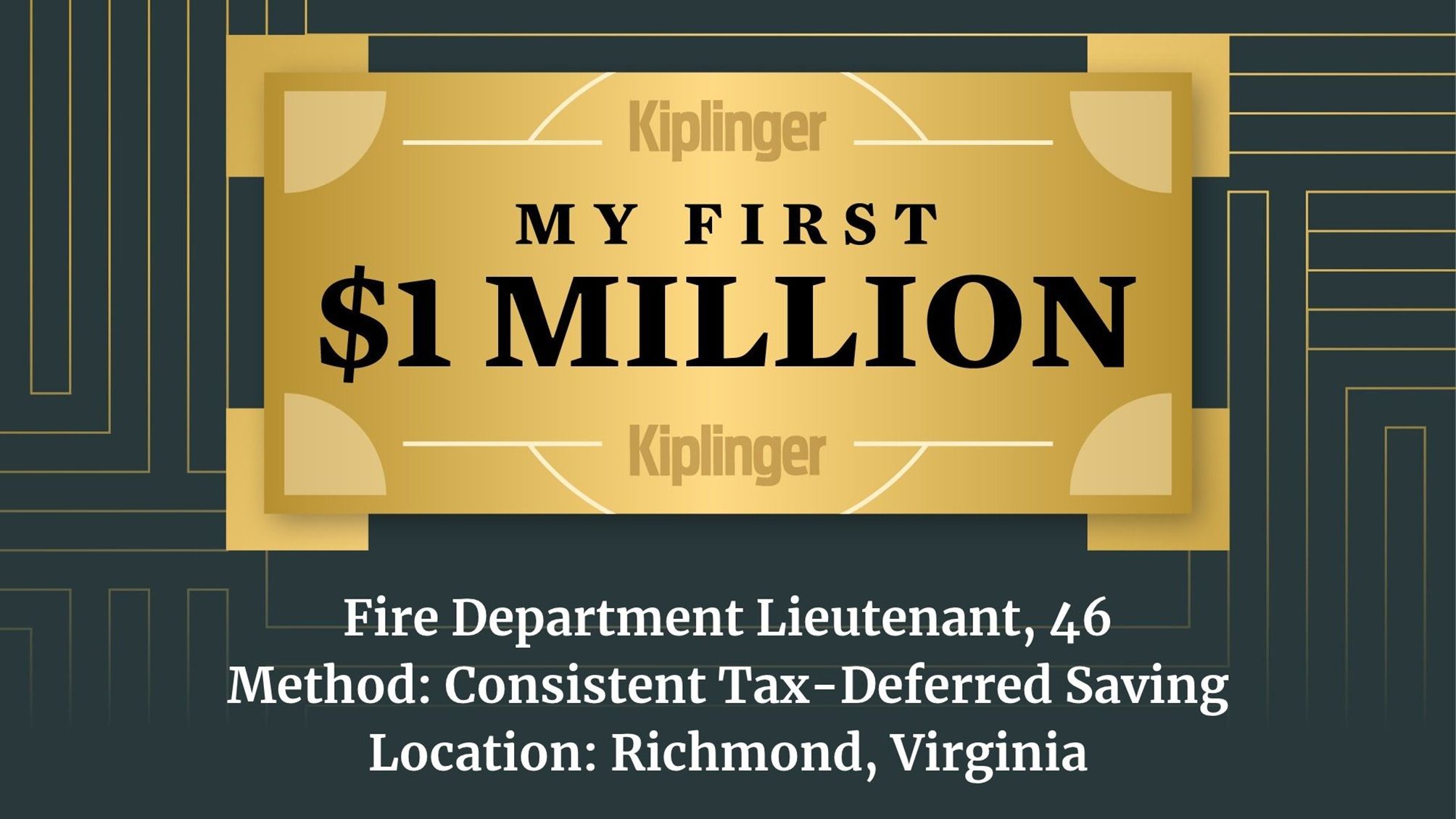
For many, the path to a seven-figure net worth is often associated with high-stakes corporate roles, Silicon Valley entrepreneurship, or inheritance. However, a 46-year-old fire department lieutenant based in Richmond, Virginia, offers a compelling counter-narrative. By leveraging the power of consistent, automated contributions to tax-advantaged retirement accounts and maintaining a dual-income lifestyle for two decades, this individual has successfully surpassed the $1 million milestone. His journey, documented as part of an ongoing series exploring wealth creation, highlights the efficacy of long-term financial planning, the compounding effect of modest but steady investments, and the critical importance of a "stay-the-course" mentality in volatile markets.
The Mechanics of Early Wealth Accumulation
The subject’s financial strategy began in 2003, early in his career as a public servant. Recognizing the benefits of employer-sponsored retirement plans, he maximized contributions to government-specific tax-deferred vehicles. This foundational move proved essential; by automating his savings through biweekly contributions, he removed the emotional burden of market timing and ensured that his wealth-building efforts remained consistent regardless of market fluctuations.
Beyond his primary career in public safety, the lieutenant expanded his financial footprint by launching a small business. To optimize the tax efficiency of this venture, he established a Simplified Employee Pension (SEP) IRA in 2021, utilizing the platform provided by Charles Schwab. Furthermore, he has maintained a Roth IRA with Vanguard for over a decade, capitalizing on the long-term tax-free growth potential offered by these accounts. In 2010, he joined a family investment club, which provides him with a 10% stake in its total value, further diversifying his asset allocation.
The Value of Compounding and Strategic Restraint
The core of his financial philosophy is rooted in the principle of compounding. By viewing his assets not as a static savings pot but as a growing engine, he has remained disciplined in his reinvestment strategy. While he has allowed himself modest lifestyle upgrades—such as the purchase of a new Ford Explorer in 2023 and a business-essential Ford F-250 truck—these decisions were calculated and made only after careful deliberation with his accountant.
His approach to wealth is characterized by a notable lack of ostentation. Upon reaching the $1 million mark, his reaction was one of quiet resolve rather than celebration. He viewed the milestone as a marker of progress rather than a destination. This psychological discipline is a recurring theme among high-net-worth individuals who build wealth over long periods; by avoiding "lifestyle creep," he has ensured that his capital remains deployed in the market, allowing the exponential growth phase of his portfolio to accelerate.
Historical Challenges and Lessons Learned

The path was not without its setbacks. During his tenure at the fire department, the subject experienced an eight-year period of wage stagnation. In the context of long-term investing, these missed salary increases had a measurable impact on his compounding trajectory. Furthermore, in 2014, the financial pressure of purchasing a second home forced him to temporarily reduce his retirement contributions. This period serves as a critical case study in the trade-offs often required to balance real estate acquisition with long-term financial security.
Looking back, the lieutenant identifies these moments of austerity as vital lessons in the importance of maintaining high savings rates. He now advises younger investors to prioritize market participation over cash accumulation in low-interest bank accounts. He suggests that while maintaining a cash cushion is necessary, allowing large sums to sit idle in savings accounts is a missed opportunity for growth, particularly when compared to the historical performance of broad-market equities.
Educational Influences and Mentorship

The subject’s financial literacy was heavily influenced by his family, particularly his grandfather, who began investing in the 1950s through a local investment club. This intergenerational transfer of knowledge—emphasizing the value of holding quality assets for decades—provided a roadmap for the lieutenant. His grandfather’s ability to build wealth while supporting a family of nine on a civil servant’s salary remains a foundational inspiration for his own fiscal management.
In addition to family tradition, he credits classic financial literature, including Thomas Stanley and William Danko’s The Millionaire Next Door and Robert Kiyosaki’s Rich Dad Poor Dad, for shaping his mindset. These texts reinforced the importance of the "investor class" mentality, which prioritizes asset ownership over debt-fueled consumption.
The Role of Financial Planning and Future Goals

A key component of his success is the absence of an external financial adviser. By utilizing the low-fee, institutional-grade retirement products provided by his employer and established brokerage houses, he has avoided the management fees that can erode portfolio returns over time. However, he acknowledges that his financial plan is a "living" document that requires constant maintenance and adaptation.
Looking forward, the lieutenant has clear objectives. He plans to retire from his position at the fire department in approximately six years and transition into a new business venture. This transition is not born of a desire for leisure; rather, he echoes his grandfather’s belief that staying active and engaged is essential for longevity and physical health. His goal is to have his new business operational before he departs the public sector, ensuring a seamless transition into a new chapter of professional life.
Broader Implications for Financial Stability

The lieutenant’s story provides a practical blueprint for middle-income earners. The key takeaways for the broader public include:
- Automation is the most effective tool for long-term saving. By removing the need to make a "choice" to save each month, individuals are less likely to succumb to impulse spending.
- Tax-advantaged accounts (457(b), 401(a), SEP IRA, Roth IRA) are powerful vehicles that, when used in tandem, provide a robust structure for wealth preservation and growth.
- The importance of the "second job" or entrepreneurial pursuit. In an era of stagnant wages, diversifying income streams has become a modern prerequisite for reaching high-net-worth status.
- The necessity of a written plan. An explicit, documented strategy allows for accountability and provides a framework for pivoting during economic downturns.
While the subject does not yet have a formal estate plan, he acknowledges it as a pending priority. His vision for his wealth extends beyond himself, with plans to establish a scholarship at his alma mater and continue supporting his local community, specifically through contributions to food banks.
Conclusion

The journey of this Richmond-based firefighter serves as a reminder that wealth creation is rarely a sprint. It is a slow, methodical process defined by consistency, the avoidance of unnecessary debt, and the unwavering commitment to feeding the market regardless of volatility. As he looks toward his next million, his focus remains on maintaining his health, growing his business, and continuing the disciplined habits that have secured his financial independence. For the average worker, his experience proves that a million-dollar portfolio is not reserved for the elite, but is a reachable target for those willing to commit to a rigorous, long-term financial strategy.