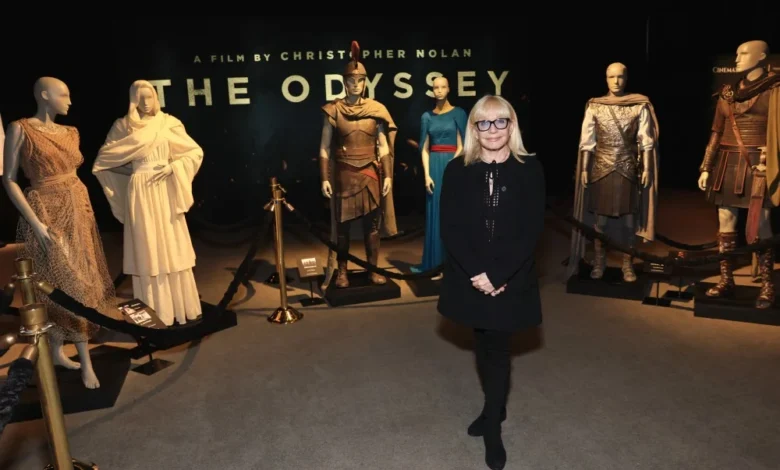
Making movies is hard, but the monumental effort required to bring Christopher Nolan’s $1.8 billion epic, The Odyssey, to the silver screen appears to be an endeavor of unprecedented logistical complexity. This reality was underscored Tuesday night at the Spielberg Theater on the Universal Studios lot, where a select audience of guild voters and industry influencers were granted an exclusive look at the 75-minute documentary chronicling the production of the year’s highest-grossing film. The premiere served as the opening salvo in a strategic, two-week awards-season blitz by Universal Pictures, which is positioning the film to challenge the record of 16 Academy Award nominations currently held by Ryan Coogler’s Sinners.

A Masterclass in Practical Filmmaking
Christopher Nolan, known for his aversion to traditional digital reliance, opened the screening with characteristic dry wit. "I have absolutely mastered the art of talking a lot and revealing absolutely nothing," he remarked, before deferring to the artisans who turned his vision into reality. The documentary, which will be truncated for a digital home release on November 17, provides a rare, transparent window into the uncompromising methodology that defines a Nolan set.
The film highlights a production culture that prioritizes organic, tangible results over post-production synthesis. A primary example is the performance of Matt Damon, who stars as the legendary Odysseus. In a revelation that underscores the technical discipline required on set, Damon confirmed he did not record a single line of Additional Dialogue Replacement (ADR). Production sound mixer Willie Burton explained that this was a result of Nolan’s strict, non-negotiable protocols. "There’s no ADR with Chris," Burton stated. "He wants the boom mic on a cable, and he wants the performance captured in the moment." This commitment forced the crew to extreme lengths, including running cables beneath ship floorboards and braving storm-sequence water spray to ensure the audio fidelity matched the visual grandeur.

From Desk Lamp Tests to Epic Spectacle
The visual language of The Odyssey was similarly born from tactile experimentation. Visual effects supervisor Andrew Jackson noted that the film’s depiction of the Cyclops, Polyphemus, was inspired by the unsettling, indifferent gaze found in Francisco Goya’s painting, Saturn Devouring His Son. The journey to realizing this creature began not in a high-tech lab, but in a mundane Universal office where Jackson tested the concept using a desk lamp and actor Bill Irwin. By digitally manipulating Irwin’s features to center a single eye, the team achieved a hauntingly effective look that avoided the "cartoony" pitfalls of previous mythological adaptations.
Logistically, the production faced constant friction with the reality of filming on location. The construction of the fall of Troy involved a 2.5-acre set built in record time, while the film’s marine sequences—shot in Scotland—saw the production’s boats literally torn apart by the elements. When marine coordinator Neil Andrea declared the repairs to a vessel "literally impossible" given the tight shooting schedule, Nolan’s refusal to accept that limitation became a defining anecdote of the production’s tenacity. The vessel was repaired and seaworthy by the following morning, a testament to the crew’s relentless work ethic.

The Anatomy of an Oscar Campaign
The premiere at the Spielberg Theater is merely the beginning of a high-stakes campaign. Universal Pictures is aggressively lobbying for recognition across all technical and creative categories. The schedule of events following the premiere is extensive: Robert Downey Jr. is set to moderate an IMAX 70mm screening at the TCL Chinese Theatre, followed by a discussion with Guillermo del Toro at the AMC Universal CityWalk. The campaign culminates on November 17—the same day the film reaches digital platforms—with a career-spanning conversation between Steven Spielberg and Nolan at the DGA Theater.
This saturation strategy is designed to keep the film top-of-mind for Academy voters during the critical window for ballot casting. By showcasing the artisanal achievements—from the 35 bronze gongs used by composer Ludwig Göransson to the 7,000 background performers painstakingly prepped by a massive hair and makeup team—Universal is highlighting the sheer scale of human labor involved in modern blockbuster filmmaking.

Artistic Constraints and Creative Tension
The documentary also serves as a study in the creative friction between a director’s singular vision and the natural inclinations of his cast and crew. The film features several anecdotes regarding rejected requests, such as Robert Pattinson’s desire for a long wig or Tom Holland’s attempt to alter his costume to appear taller. These moments, while humorous, underscore Nolan’s rigid control over the visual identity of his world.
Cinematographer Hoyte van Hoytema’s decision to eschew traditional lighting in favor of custom-built "pyrahedrons"—LED fixtures calibrated to mimic the exact color temperature and flicker of firelight—further illustrates this commitment to a unified aesthetic. Every detail, from the lack of modern tattoos on extras to the specific sound of knuckles popping during the Circe sequence, was vetted to ensure the film remained grounded in a version of the ancient world that felt authentic rather than romanticized.

Industry Implications and Legacy
The broader implication of The Odyssey is the potential shift it signals for the industry. As the line between practical effects and CGI continues to blur, Nolan’s insistence on "the old way" serves as a benchmark for what is possible with a massive budget and a dedicated, highly skilled crew. Matt Damon’s reflection near the end of the documentary provides a poignant summary of this sentiment: "My whole life was kind of leading up to this movie, and I don’t know how long we’re going to get to make movies this way."
This statement hits on a growing anxiety within Hollywood regarding the sustainability of large-scale, practical, location-heavy productions. If The Odyssey secures the industry accolades Universal is chasing, it may validate the immense financial and physical risks taken to produce it. Conversely, the documentary serves as a record of a vanishing style of filmmaking, one where the "impossible" is simply a prompt for more effort.

The success of the film at the box office, having grossed $1.8 billion, provides the economic leverage for this campaign, but the documentary ensures that the "artisan" narrative is what resonates with the voting bodies. By positioning The Odyssey as both a technical triumph and a Herculean creative labor, Universal is betting that the industry will reward the sheer audacity of the production as much as the final product on screen. As the awards season progresses, the conversations between Nolan, Spielberg, and other industry titans will likely solidify the film’s place in the pantheon of epic cinema, serving as a reminder that even in an age of digital convenience, there is still an audience and a critical hunger for the tactile, the massive, and the meticulously crafted.