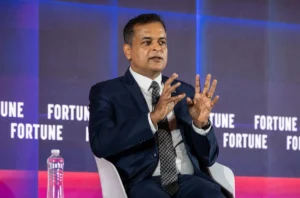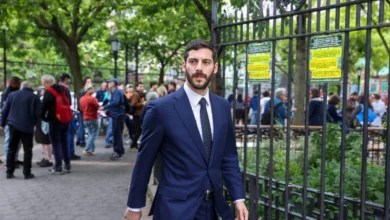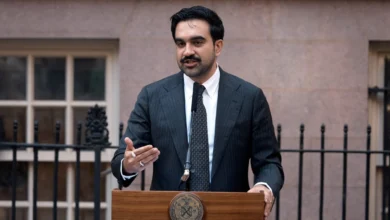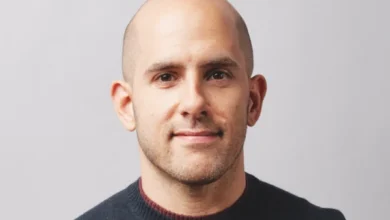
Leaked photos were supposed to end Chris Gallant’s campaign, but instead, they served as an unlikely catalyst for a fundraising surge that redefined the dynamics of the 2026 race in New York’s 1st Congressional District. When the New York Post published archived images of the Democratic challenger modeling bondage gear for a San Francisco leather retailer, the political establishment expected a swift collapse. Instead, the ensuing national attention transformed Gallant’s candidacy into a viral cause célèbre, allowing him to outraise incumbent Representative Nick LaLota during the final months of the campaign.
The electoral battleground of NY-1, covering the North Shore, the East End, and the sprawling suburban corridors of Suffolk County, became a stage for a broader debate over modern political identity, donor influence, and the transparency of campaign finance. While the seat ultimately remained in the hands of the GOP, the 2026 cycle underscored a widening disconnect between the district’s local electorate and the nationalized, high-dollar donor class that increasingly fuels congressional campaigns.
A Chronology of Controversy and Capital
The trajectory of the race shifted on September 13, 2026, when the Post released the controversial imagery. Within the following 32 days, Gallant’s campaign reported a surge of $276,055 in itemized contributions. This influx of capital was not merely a reaction to the content of the images, but a strategic pivot. By acknowledging the photos and framing them as a matter of personal identity rather than political liability, Gallant’s team effectively neutralized the moralistic angle favored by his opponents.
For the July-through-September quarter, Gallant’s total receipts reached $929,825, surpassing LaLota’s reported $609,000 for the same period. This fundraising success, however, did not translate into a victory at the ballot box. On Election Day, LaLota secured a third term, winning 51.1% to 48.9%. While the margin was tight—a difference of nearly 7,000 votes—it marked a significant tightening from the 11-point lead LaLota held in 2024. The narrowing gap occurred in a year where the national political climate favored Democrats, who eventually flipped control of Congress, suggesting that the local race remained highly idiosyncratic and deeply resistant to national trends.
The Geography of Political Funding
A comprehensive analysis of Federal Election Commission (FEC) filings through October 14, 2026, reveals that the primary engines driving both campaigns were rarely found within the district’s zip codes. Only 16% of LaLota’s individual contributions came from within NY-1, while for Gallant, the figure stood at approximately one-third.
The district serves as a unique "political ATM" for both parties. The affluent enclaves of the Hamptons and the North Fork, which host some of the most influential corporate leaders in the country, create a concentrated nexus of wealth. During the summer months, this region becomes a hub for fundraising galas, drawing Wall Street titans, Hollywood executives, and tech entrepreneurs who may live in Manhattan or California for the remainder of the year but maintain significant financial stakes in the outcome of Long Island politics.
The post-leak data provides a sharp illustration of this reality. Of the $276,055 raised by Gallant after the September 13 story, only 24% originated from within the district. Donors in Manhattan and California alone contributed $73,606—a sum exceeding the total support provided by all donors living within the boundaries of the 1st District. This pattern reinforces a growing trend in American politics where congressional seats, particularly in competitive areas near major financial centers, are increasingly funded by external interests rather than local constituents.
Candidate Profiles and Strategic Responses
Nick LaLota, a Navy veteran and former Suffolk County elections commissioner, has positioned himself as a pragmatic defender of local interests. Having succeeded Lee Zeldin in 2022, LaLota’s tenure has been characterized by sharp critiques of his opponents’ residency and political alignment. Throughout the 2026 campaign, LaLota sought to frame Gallant’s modeling past as evidence of a lack of seriousness, repeatedly highlighting the candidate’s refusal to participate in formal debates.
Chris Gallant, 37, brought a distinct profile to the race: an Army National Guard Black Hawk pilot, former air traffic controller, and union leader. His campaign utilized Slingshot Strategies, a firm known for aggressive narrative management. When questioned about the surge in donations, Gallant’s team argued that the Post’s coverage backfired, allowing the candidate to present himself as a "proud gay man" who refused to be shamed. By selling merchandise branded with "Make Politics Sexy Again," the campaign leaned into the controversy, turning a tabloid scandal into a branding exercise that resonated with a broader, nationalized base of donors.
The contrast in messaging was stark. LaLota emphasized accountability, stating, "Instead of boasting how kinky he is, he owes Long Islanders an explanation for choosing vanity and fundraising over debates." Gallant, conversely, framed the entire ordeal as an attempt by outside interests to force a resignation, stating that he never had to rely on such interests to buy his way into the conversation, even as his own filings showed a heavy reliance on non-resident, high-dollar contributors.
The Role of Elite Donors
The donor lists for both candidates read like a who’s who of international finance and corporate power. For LaLota, notable support came from figures like Charles Schwab, who provided the maximum allowable contribution, and billionaire Len Blavatnik, who has become a significant player in regional political giving. Blavatnik’s support of LaLota, despite the congressman’s vocal criticism of Russia, illustrates the complex, often contradictory nature of modern political alliances.
Gallant’s donor base, particularly after the September leak, was buoyed by high-net-worth individuals, including venture capitalists, real estate developers, and entertainment industry leaders. Individuals such as Stephen Mandel of Lone Pine Capital contributed to the campaign immediately following the controversy, signaling that for some donors, the "scandal" was not a deterrent but a rallying point against what they perceived as a media-driven smear campaign.
Implications for the Future of Campaign Finance
The 2026 NY-1 race serves as a case study in the diminishing relevance of local, small-dollar geography in the face of digital-age fundraising. The fact that both candidates were, in essence, "commuters" to the district they sought to represent—neither residing within the immediate vicinity of the voters they hoped to serve—speaks to the professionalization of congressional campaigns.
The use of metadata, AI-driven data analysis, and sophisticated crisis management firms has transformed how candidates interact with the public. In this environment, the "mask" of the traditional politician is often replaced by a carefully curated image designed to trigger specific, donor-friendly reactions. The FEC filings, while intended to provide transparency, have become digital fossils of a system where the vast majority of funds are sourced from a thin sliver of the population.
As the dust settles on the 2026 midterms, the primary takeaway from the NY-1 race is not the victory of a particular party or the defeat of a candidate, but the normalization of the "nationalized" campaign. When a district’s election is decided by donors living thousands of miles away, the fundamental link between the representative and the represented becomes increasingly tenuous. The case of Chris Gallant and Nick LaLota proves that in the current era, the most effective tool for a campaign may no longer be grassroots door-knocking, but the ability to weaponize controversy to tap into a global network of ideologically aligned—and financially capable—supporters. The 1st Congressional District of New York, with its vineyard-lined roads and Hamptons estates, remains a quintessential example of how the American political system, for better or worse, has been fundamentally reshaped by the velocity of the digital age.
Related posts: