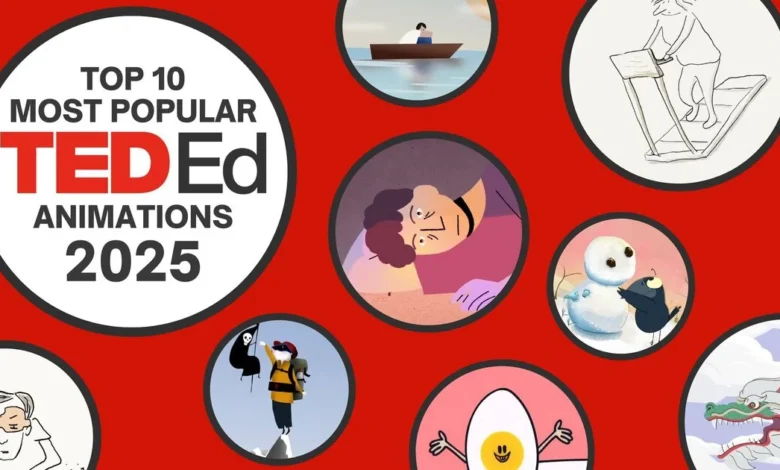
The year 2025 represented a significant milestone for educational digital media, with TED-Ed recording nearly 16 million hours of viewing time across its YouTube platform. This engagement metric, equivalent to over 1,800 years of continuous content consumption, underscores a growing global appetite for high-quality, short-form educational animation. As audiences navigate an increasingly complex information landscape, the shift toward visual storytelling as a primary pedagogical tool has become more pronounced. Data from the 2025 viewership report highlights a diverse range of intellectual curiosity, spanning neuroscience, evolutionary biology, behavioral economics, and global mythology.
Historical Context and Growth of Educational Animation
Since its inception, TED-Ed has functioned as an extension of the TED platform, utilizing a unique collaborative model that pairs educators with professional animators. This partnership is designed to distill complex academic concepts into accessible, three-to-five-minute narratives. Throughout the last decade, the platform has seen a consistent upward trend in viewership, mirroring the broader expansion of "edutainment" as a legitimate sector of the digital economy.
The 2025 figures reflect not just an increase in volume, but a diversification of interest. Unlike previous years, which were often dominated by singular viral hits, the 2025 top-performing list indicates a balanced distribution of interest across hard sciences and existential philosophy. The following list represents the most-watched entries of the calendar year, providing a snapshot of the global zeitgeist.
The 2025 Top Ten: A Curated Breakdown
-
Do You Really Need to Take 10,000 Steps a Day?
The year’s most-watched video challenged the ubiquitous fitness myth of the 10,000-step daily goal. By tracing the history of movement-based health interventions and contrasting them with contemporary physiological research, the video clarified how even incremental increases in physical activity produce significant cardiovascular and metabolic benefits. -
What Happens to Your Brain Without Any Social Contact?
As global discussions regarding the mental health impacts of isolation intensified in 2025, this segment examined the neurobiological consequences of extreme social deprivation. The content synthesized clinical studies to explain how the human brain, evolved for communal survival, reacts to prolonged solitude. -
Why Do So Many Cultures Have Dragon Legends?
This exploration into "geomythology" investigated why disparate civilizations—from the Chinese Loong to the Greek Hydra—developed strikingly similar reptilian folklore. The analysis suggests a cognitive link between environmental phenomena, such as extreme weather or fossil discovery, and the universal human tendency to mythologize the unknown. -
If You Had the Chance to Be Immortal, Would You Take It?
The platform’s engagement with ethics reached a high point with this thought experiment. By presenting a binary choice regarding the cessation of aging, the video prompted viewers to engage with philosophical frameworks surrounding the value of time, the nature of human experience, and the psychological weight of finality. -
Can You See Images in Your Mind? Some People Can’t
This video served as a primer on aphantasia, the condition characterized by the inability to visualize mental imagery. By contrasting the subjective experience of the "mind’s eye" across different demographics, the segment highlighted the diversity of human cognitive processing. -
What Actually Causes High Cholesterol?
In a retrospective look at nutritional science, the video examined the 1968 American Heart Association guidelines on egg consumption. By unpacking how historical clinical advice evolved alongside new data, the piece offered a masterclass in scientific literacy and the necessity of questioning established dietary dogma. -
The Best Way to Become Good at Something Might Surprise You
Challenging the popularized "10,000-hour rule," this video introduced alternative models for skill acquisition. By emphasizing the efficacy of diverse learning environments over hyper-specialization, the content provided actionable insights for students and professionals alike.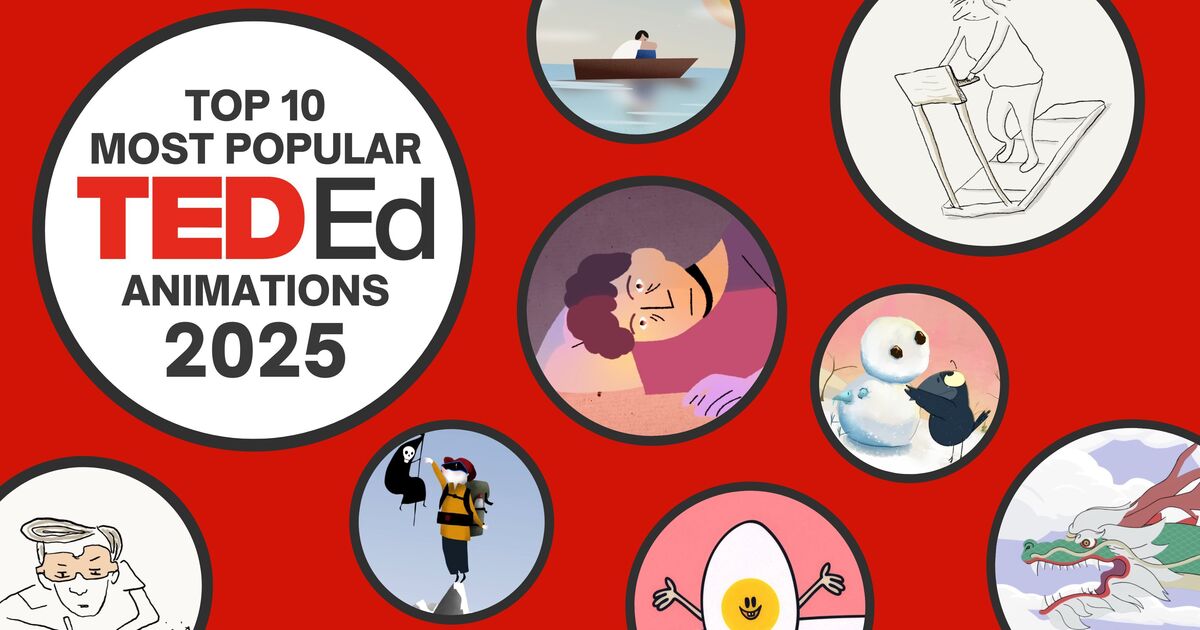
-
What’s the Best Way to Lift People Out of Poverty?
This entry evaluated the effectiveness of unconditional cash transfers in international development. By using the 2018 Ahenyo village experiment as a case study, the video examined the structural impacts of direct aid versus traditional philanthropic intervention models. -
How Smart Are Crows?
The video focused on corvid intelligence, detailing the problem-solving capabilities of birds observed in controlled environments. The narrative illustrated how evolutionary pressures have equipped these animals with complex cognitive tools comparable to those of higher-order primates. -
Why Don’t We Get Our Drinking Water from the Ocean?
As 87 countries face projected water scarcity by 2050, this segment addressed the engineering and environmental challenges of desalination. The video balanced the technological promise of freshwater extraction with the ecological risks of byproduct disposal.
Data Analysis and Viewer Trends
The data suggests that 2025 viewers were particularly drawn to content that bridges the gap between personal well-being and global systemic issues. The presence of topics like water desalination and poverty alleviation indicates a demographic shift toward "pro-social" learning—where audiences are not merely consuming information for entertainment, but to better understand the systemic challenges facing their generation.
Furthermore, the longevity of these videos—many of which remain relevant long after their initial release—demonstrates the "evergreen" nature of educational animation. Unlike news media, which faces rapid decay in relevance, these animations function as a permanent digital archive, consistently drawing millions of views years after their original publication.
The Role of Animation in Modern Pedagogy
Industry experts note that the success of the TED-Ed model relies on a synthesis of three core elements: rigorous academic peer-review, professional-grade narrative scripting, and high-fidelity visual design. By lowering the cognitive barrier to entry, animation allows for the digestion of dense subject matter that might otherwise be relegated to academic journals.
"The goal is to foster a culture of inquiry," says an anonymous source close to the project’s development team. "When a viewer spends time with a video about aphantasia or desalination, they are not just learning a fact; they are engaging in a process of critical inquiry that can be applied to any domain."
Implications for Future Educational Media
The 2025 viewership numbers set a high bar for digital education providers. As artificial intelligence and automated content generation begin to permeate the media landscape, the value of human-curated, artistically-driven educational content appears to be rising. The success of these top 10 videos proves that there is a significant, stable, and growing global audience that prioritizes verified, expert-led information presented with high production values.
Looking toward 2026, the focus for organizations like TED-Ed is expected to remain on expanding accessibility and covering emerging fields such as climate resilience, neuro-ethics, and the intersection of technology and human rights. As the volume of digital content continues to expand, the ability to synthesize, animate, and humanize complex data will remain one of the most critical functions in the global information ecosystem.
For the millions of learners who tuned in throughout 2025, these animations served as a vital bridge between the abstract complexities of science and the practical realities of daily life, confirming that curiosity remains a powerful driver of global engagement.