Unlocking the Professional Voice: How TED-Ed Educator Talks is Transforming the Global Classroom Narrative

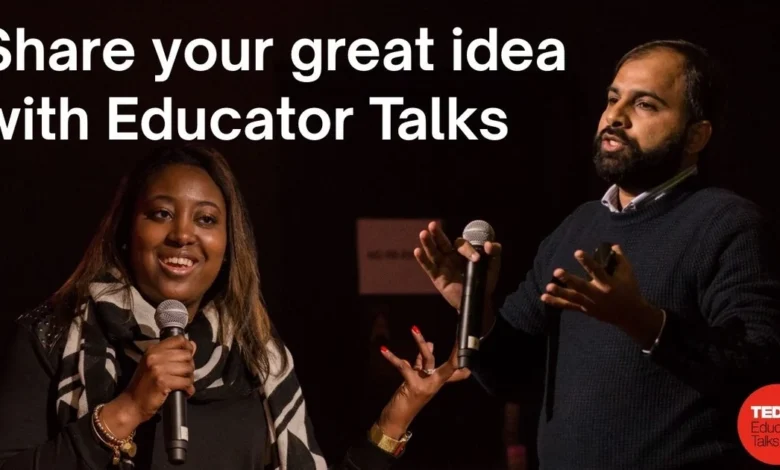
Every educator possesses a unique spark, a classroom-tested insight, or a pedagogical breakthrough that holds the potential to reshape the landscape of modern learning. Yet, for decades, the most profound innovations in education have remained siloed within individual classrooms or restricted to local school districts. The professional narrative of the teacher has frequently been marginalized in broader policy discussions, leading to a disconnect between those crafting educational policy and those executing it on the front lines. To bridge this gap, TED-Ed has launched its Educator Talks initiative, a comprehensive professional development framework designed to move practitioner expertise from the classroom to the global stage.
The Evolution of the Educator’s Voice
The history of educational reform has often been characterized by top-down mandates, with little room for the bottom-up, lived experience of the K-12 workforce. According to research from the Brookings Institution, the most successful educational interventions are those that are iteratively developed by practitioners who understand the nuance of student engagement and systemic barriers. Despite this, educators have historically lacked the formal platforms—and the specialized communication training—to articulate these successes to a broader audience.
TED-Ed’s Educator Talks emerged as a response to this structural deficiency. By leveraging the same storytelling frameworks that have made TED Talks a global phenomenon, the initiative aims to professionalize the public communication of teachers, principals, and school leaders. The program is built upon the premise that when an educator clarifies their vision and learns to communicate it effectively, they become an advocate for systemic change, not just an instructor of a curriculum.
Chronology and Program Architecture
The program operates as a multi-stage professional development funnel, designed to take an educator from an initial, abstract insight to a polished, public-facing presentation. The journey begins with the Idea Workshop, a one-hour, high-intensity virtual session. During this phase, participants are introduced to the architectural principles of storytelling, learning how to isolate a single, actionable idea from the vast, often overwhelming experience of teaching.
Following the workshop, the program moves into a developmental phase characterized by three primary pillars:
- Communication Proficiency: Participants gain access to TED’s official public speaking curriculum. This component is designed to strip away academic jargon and replace it with narrative-driven communication that is accessible to parents, policymakers, and stakeholders outside the education sector.
- Global Peer Review: The program utilizes a global community of practice where educators receive feedback from peers across different cultural and pedagogical backgrounds. This cross-pollination of ideas ensures that insights are not just locally effective but globally relevant.
- Platform Integration: The final stage focuses on dissemination. Through partnerships with local and international TEDx event organizers, the program provides a venue for these educators to present their findings, ensuring their ideas move from the draft stage into the public record.
The Data Behind the Need for Advocacy
The necessity for such a program is underscored by current workforce statistics. Data from the National Center for Education Statistics (NCES) indicates that teacher attrition remains a critical issue, with burnout and a perceived lack of professional agency being primary drivers. By providing a platform for educators to lead the conversation, programs like Educator Talks offer a form of professional empowerment that transcends traditional professional development.
Furthermore, studies from the Learning Policy Institute suggest that when teachers are involved in policy design and school leadership discussions, outcomes for students—including engagement rates and standardized test scores—tend to stabilize. The ability to articulate one’s practice is not merely a soft skill; it is a professional requirement for educators seeking to influence the administrative decisions that affect their working environment.
Expert Perspectives on Pedagogical Influence
Education experts have long argued that the professionalization of teaching requires a shift in how educators are perceived by the public. Dr. Elena Rodriguez, an educational psychologist who has reviewed the impact of similar advocacy programs, notes that "the biggest hurdle for teachers is the transition from ‘teaching’ to ‘advocating.’ Teachers are experts in their domain, but they often speak the language of pedagogy rather than the language of systemic influence. Programs that facilitate this translation are essential for the future of educational equity."
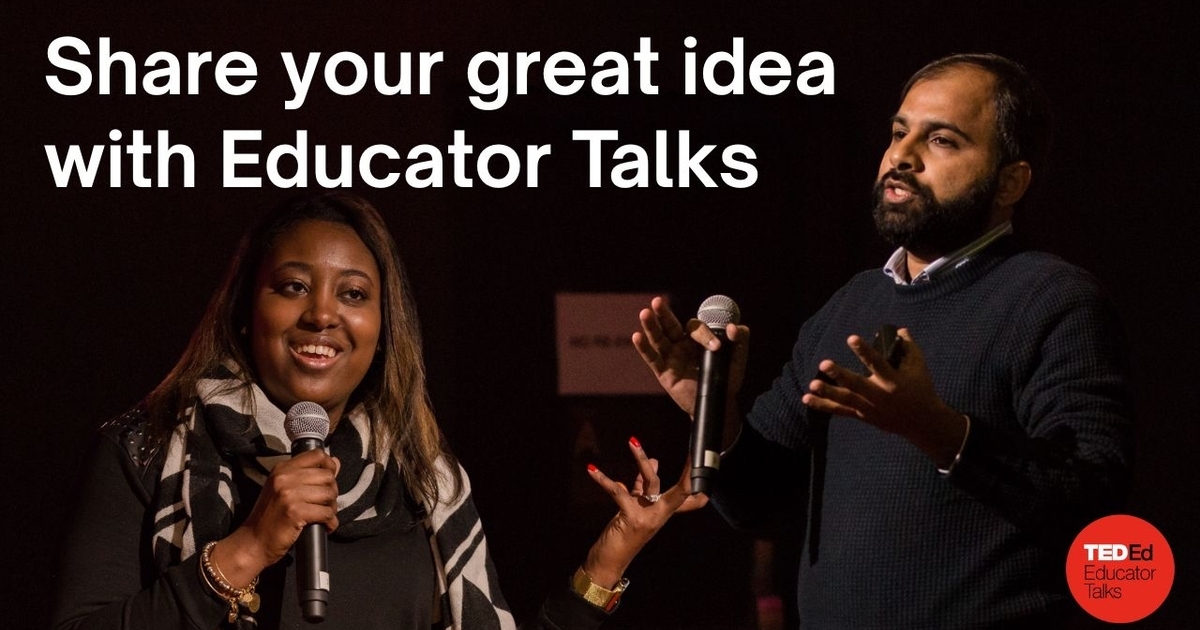
The official stance from TED-Ed emphasizes that the goal is not to standardize the teacher’s voice, but to amplify the diversity of experience. By providing the tools to structure a narrative, TED-Ed allows for a range of topics to be covered—from the mechanics of inclusive learning environments to the psychological aspects of student well-being. This ensures that the global conversation about education is grounded in the reality of the 21st-century classroom rather than abstract theoretical models.
Implications for Future Educational Policy
The implications of this initiative extend far beyond the stage. As educators master the art of public speaking, they become more effective in parent-teacher conferences, school board meetings, and legislative hearings. This shift in communication capability has a cumulative effect. When a school leader or teacher can clearly articulate the ‘why’ behind a specific practice, they are more likely to secure the funding and community support necessary to scale that practice.
Moreover, in an era of rapid technological change and the increasing integration of artificial intelligence into the classroom, the educator’s role as a subject-matter expert is under constant negotiation. By participating in platforms like Educator Talks, educators claim their seat at the table where the future of education is being defined. They are no longer just the recipients of technological disruption; they are the architects of the human-centered learning environments that will define the next decade.
Expanding the Scope: How to Engage
For those currently working in the K-12 sector, the barrier to entry is intentionally low. The initial Idea Workshop is provided as a free, accessible gateway to the broader curriculum. This reflects the program’s democratic mission: to ensure that the best ideas rise to the surface, regardless of the educator’s school budget, geographic location, or institutional affiliation.
For the general public, the impact is found in the consumption of these ideas. The Educator Talks YouTube channel acts as a repository of contemporary educational thought, providing a snapshot of the challenges and triumphs occurring in classrooms today. By sharing these talks, the broader community contributes to a culture that values the educator’s voice, fostering a public discourse that is informed, empathetic, and evidence-based.
A New Standard for Professional Development
The model established by TED-Ed suggests a potential pivot for the entire professional development industry. Traditional workshops—often centered on compliance and standard adherence—are increasingly being viewed as insufficient for the modern educator. Instead, there is a growing demand for programs that emphasize leadership, communication, and public influence.
As the program continues to grow, it faces the challenge of scaling its reach to educators in under-resourced regions who may not have high-speed internet or the time to dedicate to extensive public speaking training. Addressing this digital and temporal equity will be the next major hurdle for the initiative. However, the early data suggests that the demand for such programs is robust, with thousands of educators already tapping into the available resources to refine their messaging.
In conclusion, the professionalization of the educator’s voice is not a luxury; it is a necessity for the survival of a healthy educational system. By providing the structure, community, and platform for educators to share their most meaningful insights, initiatives like Educator Talks are helping to ensure that the classroom experience is not just a job, but a professional practice that informs the future of society. As more educators step onto the stage, the collective narrative of education will shift from one of isolation to one of global, collaborative innovation.